7 Best Stand Mixers for Home Bakers (October 2026)
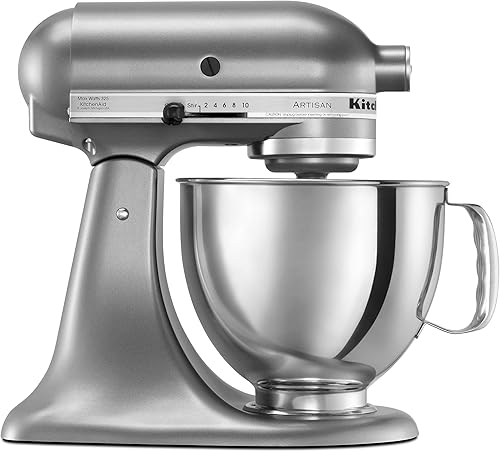
The best best stand mixers for home baking include the KitchenAid Artisan KSM150PS for everyday home baking, the KitchenAid Classic K45SS for standard recipe batches, and the KitchenAid 5.5-Qt Bowl-Lift KSM55SXXX for larger bread batches.
On this page (8 sections)
- Which is the best stand mixer for baking at home?
- How much bowl capacity do home bakers need?
- Which mixer style works for baking?
- How should your recipes guide the choice?
- How do you set up a stand mixer for the first bake?
- How do you keep a stand mixer clean and ready?
- Which common mistakes should you avoid?
- Which stand mixer should you choose for home baking?
The KitchenAid Artisan KSM150PS is the best stand mixer for baking for most home bakers because it balances everyday batch capacity with easy bowl access. Choose the KitchenAid bowl-lift model for larger dough batches, or Hamilton Beach if you'll carry your mixer into storage after each bake.
Start with what you make most: cakes, cookies, bread or a little of everything. Our complete stand mixer buying guide explains the wider category, while the picks below focus on matching a mixer to your actual baking routine.
Our picks at a glance
-
1
-
2

-
3
 Best for larger bread batches
KitchenAid 5.5-Qt Bowl-Lift KSM55SXXX
8.4/10 our score
See it on Amazon
- 4
 Best for easy cleanupCheck it
- 5
 Best for roomy batter batchesCheck it
- 6
 Best for storing between bakesCheck it
- 7
 Check it
Martha Stewart 5.3-Qt Tilt-Head
Best for frequent cake bakers
Which is the best stand mixer for baking at home?
The KitchenAid Artisan KSM150PS is the strongest general choice here for bakers who move between different recipes. A bread-focused household, an occasional baker and someone with limited storage each have good reasons to choose another model.
We compared capacity, bowl access, controls, included tools and storage needs. The order favors a useful everyday fit, so a lower-ranked mixer can still be the better choice for your kitchen.
| Product | Best for | Capacity | Style | Speeds | Our score |
|---|---|---|---|---|---|
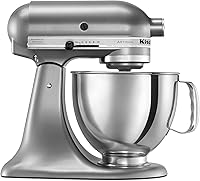
| KitchenAid Artisan KSM150PS | everyday home baking | 5 qt | Tilt head | 10 | 9.1 |
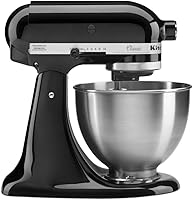
| KitchenAid Classic K45SS | standard recipe batches | 4.5 qt | Tilt head | 10 | 8.8 |
| KitchenAid 5.5-Qt Bowl-Lift KSM55SXXX | larger bread batches | 5.5 qt | Bowl lift | 11 | 8.4 |
| Cuisinart 5.5-Qt Stand Mixer | easy cleanup | 5.5 qt | Tilt back | 12 | 8.3 |
| Vivohome 6-Qt Tilt-Head | roomy batter batches | 6 qt | Tilt head | 10 plus pulse | 7.7 |
| Hamilton Beach 4-Qt 7-Speed | storing between bakes | 4 qt | Stand mixer with head handle | 7 | 7.3 |
| Martha Stewart 5.3-Qt Tilt-Head | frequent cake bakers | 5.3 qt | Tilt head | 12 | 7.2 |
KitchenAid Artisan KSM150PS
- 5-qt bowl
- Tilt-head design
- 10 speeds
- Pouring shield
Choose the Artisan for a baking routine that moves between cakes, cookies and whipped ingredients. Its tilt head gives you access for scraping and adding ingredients in stages.
Pros
- Bowl size suits varied home recipes
- Tilt-head access
- Pouring shield included
Cons
- Optional hub-powered attachments cost extra
- Needs clearance to raise the head
The Artisan suits the baker who wants one mixer for a varied weekly routine. Its 5-qt bowl, 10 speeds and tilt-head layout provide a sensible middle ground between smaller recipe-focused models and a larger bowl-lift setup.
Think cake batter one weekend, cookies the next and whipped cream for dessert. Being able to raise the head helps when you need to scrape the bowl, inspect the mixture or add ingredients in several stages.
The pouring shield helps contain additions, but start slowly when flour goes in. A shield reduces mess; careful pouring and a low starting speed still matter.
Choose the Artisan if you expect your recipes to change more often than your batch size. Its optional hub-powered tools also leave room to add pasta-making or grinding jobs later, with those accessories sold separately.
Skip it if your main reason for buying a mixer is frequent large bread batches. Compare the best stand mixers for bread dough before choosing around occasional cakes and cookies.
KitchenAid Classic K45SS
- 4.5-qt stainless steel bowl
- Tilt-head design
- 10 speeds
- Flat beater, dough hook and wire whip included
The Classic suits bakers who usually follow standard recipes without doubling them. Its included beater, hook and whip cover the main mixing jobs.
Pros
- Three mixing tools included
- Dishwasher-safe bowl
- Metal construction
Cons
- Less bowl room for expanded recipes
- Same footprint as the Artisan
The Classic is a good match for standard recipes made as written. Its 4.5-qt stainless steel bowl and 10 speeds cover a familiar home baking routine without choosing extra bowl volume you rarely use.
A coated flat beater, coated dough hook and 6-wire whip come with it. That gives you separate tools for batter, dough and airy mixtures, rather than asking one attachment to handle every texture.
Choose it if you normally make one recipe at a time and finish that batch before starting another. The dishwasher-safe bowl also helps when a second recipe follows the first.
Don't choose the Classic simply because a smaller bowl sounds like a smaller appliance. It has the same stated footprint and height as the Artisan, so the capacity difference won't save counter space.
Skip it if doubling recipes is already normal for you. Our Classic vs Artisan comparison helps you decide whether the extra bowl room fits your habits.
KitchenAid 5.5-Qt Bowl-Lift KSM55SXXX
- 5.5-qt capacity
- Bowl-lift design
- 11 speeds including 1/2 speed
- 3-point locking bowl
Choose this bowl-lift model when larger dough batches are a regular job. Its locking bowl supports that workflow, while half speed adds a gentle folding option.
Pros
- 3-point locking bowl
- Half speed for folding
- Beater, dough hook and whip included
Cons
- Taller than the Artisan
- Head stays fixed during bowl access
The KitchenAid bowl-lift model is the better fit here for regular larger dough batches. Its 5.5-qt bowl locks at 3 points, giving you a different setup from a mixer whose head tips back.
It includes a coated flat beater, coated dough hook and 6-wire whip. The 11-speed range also includes half speed for gently adding delicate ingredients, though fragile mixtures may still need finishing by hand.
KitchenAid claims twice the power in the bowl compared with the KSM150, measured as peak horsepower above speed 2. That comparison is specific to those conditions; use the manual's kneading instructions rather than treating it as permission to increase dough speed.
Choose this model when bread and substantial batches shape your weekly baking. Skip it if easy, open access for small recipes matters more than its bowl support and capacity.
It stands 16.5 in high, so measure its intended spot. Read our KitchenAid 7-quart bowl-lift review for a larger alternative, alongside the bread dough mixer guide.
Cuisinart 5.5-Qt Stand Mixer
- 5.5-qt bowl
- 12 speeds
- Splash guard with pour spout
- Whisk, dough hook and paddle included
The Cuisinart suits bakers who want a roomy tilt-back mixer with dishwasher-safe tools. Its splash guard has a pour spout for staged ingredient additions.
Pros
- Dishwasher-safe bowl and accessories
- Splash guard included
- Limited 3-year warranty
Cons
- Wider than the KitchenAid tilt-head models
- Optional attachments cost extra
The Cuisinart suits bakers who want roomy bowl access and straightforward cleanup. Its 5.5-qt stainless steel bowl, tilt-back head and included splash guard work well as a feature combination for recipes with several ingredient additions.
A chef's whisk, dough hook and flat paddle are included. The bowl and accessories are dishwasher safe, making this worth considering if hand-washing separate tools would discourage you from using the mixer.
Its 12 speeds give you several control positions, but recipe technique still decides when to stir, beat or whip. More settings don't mean every batter needs a longer or faster mix.
Choose it for mixed baking tasks when you want those tools together in the box. Cuisinart also provides a limited 3-year warranty, subject to its terms.
Skip it if your counter slot is narrow: its stated width is 16.5 in. If optional accessories drive your decision, compare the exact tools you want with our guide to KitchenAid stand mixers.
Vivohome 6-Qt Tilt-Head
- 6-qt bowl
- Tilt-head design
- 10 speeds plus pulse
- Splash guard
The largest bowl here suits bakers who want room for batter and ingredient additions. Check its height carefully if it will sit beneath cabinets.
Pros
- Largest bowl in this group
- Splash guard with pour opening
- Suction-cup feet
Cons
- Tallest mixer in this group
- Extra bowl volume can be unnecessary for small recipes
The Vivohome is for bakers who want extra bowl room for batter and additions while keeping tilt-head access. Its 6-qt bowl is the largest here, so it deserves attention when smaller bowls feel crowded during your usual recipes.
It includes a whisk, dough hook, beater and egg separator, plus a splash guard with a pour opening. Suction-cup feet help secure the base on a suitable clean surface.
Choose it when bowl volume is a clear need, rather than an upgrade you might use someday. Large bowls can be less convenient for very small mixtures if the ingredients don't reach the working part of the tool.
Skip it for a low cabinet space: its stated height is 18.8 in, before allowing room to tilt the head. It is the tallest option in this group.
The 660-watt motor is an electrical specification, not a dough-capacity allowance. Check recipe limits before scaling bread, and inspect the bowl for unmixed ingredients even with a scraping-style beater.
Hamilton Beach 4-Qt 7-Speed
- 4-qt stainless steel bowl
- 7 speeds
- Top carrying handle
- Dough hook, whisk and flat beater included
Choose Hamilton Beach when moving the mixer into a cupboard is part of every bake. Its carrying handle and 8-lb weight make that routine more practical.
Pros
- Built-in carrying handle
- Dishwasher-safe bowl and attachments
- Speed guide on the mixer
Cons
- Smallest bowl here
- Less room for doubled recipes
The Hamilton Beach is the practical pick for moving into storage between bakes. At 8 lb, with a built-in carrying handle, it suits a kitchen where the mixer can't keep a permanent place on the counter.
Its 4-qt bowl is the smallest here, making it a more natural choice for modest recipes than repeated doubled batches. A dough hook, whisk, flat beater and splash guard are included.
The 7-speed control has a slow first setting, and a guide on the mixer helps you choose a starting point. That can be useful when you're learning which tool and speed belong with each task.
Choose it if occasional cakes, cookies and manageable dough batches describe your routine. Dishwasher-safe bowl and attachments help keep the cleanup proportionate to a smaller bake.
Skip it if you regularly need more batch room. Also measure the storage shelf itself: a lighter mixer is easier to carry, but weight doesn't tell you whether the appliance will fit.
Martha Stewart 5.3-Qt Tilt-Head
- 5.3-qt bowl
- Tilt-head design
- 12 speeds
- Silicone-edge flat beater
The silicone-edge beater makes this a useful option for cake batter and frosting routines. A handled bowl and removable splash shield help with pouring and ingredient additions.
Pros
- Silicone-edge flat beater
- Easy-grip bowl handle
- Dishwasher-safe accessories
Cons
- Taller than the KitchenAid tilt-head models here
- Still needs checks for unmixed ingredients
The Martha Stewart mixer suits cake and frosting routines with frequent bowl scraping. Its silicone-edge flat beater is a useful feature for that work, alongside a stainless steel whisk and dough hook.
The 5.3-qt handled bowl gives you something to grip when transferring batter. A removable splash shield with a pour chute helps with additions, and the accessories are dishwasher safe.
Choose it if those handling details matter more to you than moving into a bowl-lift design. Its 12 speeds let you select different mixing rates as a recipe moves from combining ingredients to beating or whipping.
A flexible edge doesn't remove the need to check the bottom of the bowl. Stop the mixer before inspecting for butter, sugar or flour that hasn't joined the mixture.
Skip it if overhead clearance is tight. It measures 16.93 in deep, 10.43 in wide and 16.93 in high, and its tilt-head layout needs extra working room above the appliance.
How much bowl capacity do home bakers need?
A 4.5-qt to 5.5-qt bowl is a useful starting range for mixed home baking. Choose around the size of your usual recipe, then check the manufacturer's limits for the kind of mixture you make.
A bowl's volume describes its space, not an equal allowance for every ingredient. A fluffy cake batter and a stiff dough put different demands on a mixer, even when they occupy similar room.
Think about your last few bakes before choosing. If you usually make one cake or one cookie recipe, buying for a rare holiday marathon can leave you with unnecessary bulk all year.
For bigger baking days, separate batches are often easier to manage than one oversized mix. You can keep ingredient amounts accurate and avoid filling the bowl beyond the model's guidance.
Small quantities deserve attention too. A small amount of cream or egg white must reach the whisk, so a large bowl isn't automatically the best choice for every recipe.
Use our stand mixer size guide to connect capacity with batch sizes. For any model, check minimum quantities as well as maximum amounts when the manual provides them.
Which mixer style works for baking?
Choose a tilt head for open access or a bowl lift for its fixed-head layout and raised bowl position. The better style is the one you can load, scrape and unload comfortably in your kitchen.
Tilt-head mixers let you move the tool up and away from the bowl. That is useful when you're scraping butter from a paddle or adding ingredients that are awkward to pour through a narrow gap.
A bowl-lift mixer keeps the head in place while the bowl moves into position. You'll need to get comfortable securing the bowl and lowering it for access.
Measure operating space, not just the appliance at rest. Leave room for a raised head, the bowl's removal path, your ingredient containers and access to the controls.
If the mixer will sit under cabinets, consider whether you'll need to pull it forward for every recipe. A spot that works for storage may be awkward for baking.
Our tilt-head vs bowl-lift comparison explains those workflow differences in more detail.
How should your recipes guide the choice?
Choose around your most demanding regular recipe, then make sure the mixer also suits your smaller everyday jobs. A bread-focused routine needs different priorities from one built around layer cakes and frosting.
Choosing the best stand mixer for baking cakes and cookies
For cakes and cookies, prioritize bowl access, a suitable beater and manageable batch size. You'll often need to cream ingredients, scrape the bowl and add dry ingredients in stages.
Softened butter should be pliable when the recipe calls for it, rather than melted or cold from the refrigerator. A mixer can't correct the wrong ingredient temperature by simply running longer.
Once flour goes into many cake and cookie mixtures, mix only as much as the recipe needs. Excess mixing can make the finished texture tougher, so the highest speed is rarely the goal.
For cookie dough with nuts or chocolate pieces, slow down before adding them. Finish with a spatula when that gives you better control over an even mix.
Choosing for bread, cream and delicate mixtures
For bread, choose by dough limits and hook suitability before bowl volume. A roomy bowl doesn't make a mixer suitable for unlimited stiff dough.
Stay within the manual's speed and run-time guidance. Don't turn up the control to force a heavy dough through the mixer more quickly.
For whipped cream and egg whites, watch texture closely as volume builds. A whisk can move a mixture past the texture you want while you're preparing another ingredient.
Fold delicate additions only until combined, using a spatula when needed. Even a dedicated low setting can't tell when your batter has reached the right texture.
For task-specific help, see our guide to kneading dough with a stand mixer and our picks for stand mixers for cookie dough.
How do you set up a stand mixer for the first bake?
Start on a level, dry counter with the bowl and tool secured according to the manual. Wash the food-contact parts before use, and read the controls before adding ingredients.
With the mixer unplugged, practice fitting the bowl and changing tools. Make sure you understand the head lock or bowl-lift mechanism before doing it with a full bowl.
Use the attachment intended for the task. A flat beater or paddle handles many batters and cookie doughs, a whisk adds air, and a dough hook works suitable bread dough.
Measure ingredients before starting so you aren't reaching across moving parts. Keep a spatula nearby, but stop the mixer before scraping or checking the bowl.
Start at the lowest suitable speed and increase gradually. Add flour in controlled portions rather than dropping a full measure into a fast-moving bowl.
Check early for unmixed ingredients at the bottom. If a KitchenAid tool needs adjustment, follow the model's instructions and our beater-height adjustment guide instead of bending the attachment.
How do you keep a stand mixer clean and ready?
Clean the bowl and tools soon after baking, before dough and batter dry firmly onto them. Unplug the base and wipe it with a damp cloth rather than putting it in water.
Dishwasher care depends on the exact part. A dishwasher-safe bowl doesn't mean the whisk, coated hook or every optional accessory can go through the same wash cycle.
The Classic's bowl is dishwasher safe; Cuisinart and Hamilton Beach also specify dishwasher-safe accessories. Follow each model's care instructions for individual tools, especially where different metals and coatings are used.
For KitchenAid parts, our attachment dishwasher guide helps you check before loading them. Hand-wash any part whose care instructions are unclear until you confirm the right method.
Dry parts before storing them, and avoid knocking coated tools against the bowl to remove dough. Use a spatula to clear them and inspect for damage before the next bake.
Which common mistakes should you avoid?
Avoid oversized batches, excessive speed and leaving the bowl unchecked. Those choices can spoil a recipe even when the mixer is a good match for the task.
- Doubling every recipe automatically: Check the model's limits for that mixture before increasing quantities.
- Choosing by watts alone: Electrical input doesn't provide a shared measure of usable dough capacity across brands.
- Adding flour at high speed: Start slowly so dry ingredients join the mixture instead of escaping the bowl.
- Skipping scraping: Stop and check the bottom as well as the sides, especially after creaming butter and sugar.
- Following the clock blindly: Use the recipe's texture cues alongside its suggested mixing time.
- Walking away during heavy mixing: Stay nearby and stop if the appliance shifts, struggles or shows unusual behavior.
A stand mixer handles the motion, but you still control the recipe. Good ingredient preparation and timely checks matter more than collecting extra speed settings.
Which stand mixer should you choose for home baking?
The best stand mixer for baking is the one that fits both your normal recipe and the way you'll use your kitchen. Decide with these rules before choosing a color or optional attachment.
- Choose the Artisan for a varied routine of cakes, cookies and whipped ingredients.
- Choose the Classic for standard recipes when you don't need extra bowl room.
- Choose the KitchenAid bowl lift when larger dough batches are a regular priority.
- Choose the Cuisinart for a roomy tilt-back option with dishwasher-safe accessories.
- Choose the Vivohome when batter volume matters and you have plenty of overhead space.
- Choose Hamilton Beach when carrying the mixer into storage is part of every bake.
- Choose Martha Stewart when a silicone-edge beater and handled bowl suit your cake-making routine.
Before ordering, measure the working space and check your most common recipe against the model's limits. If bread is the main reason you're buying, use our bread dough mixer guide to make the final choice around that job.
Our top 3 picks at a glance
-
1
-
2
-
3
Best for larger bread batches
KitchenAid 5.5-Qt Bowl-Lift KSM55SXXX
8.4/10 our score
See it on Amazon
Frequently asked questions
What size stand mixer is best for home baking?
A 4.5-qt to 5.5-qt bowl is a useful starting point for home baking. Match it to the recipes you actually make, including any batches you regularly double.
Smaller recipes need enough contact between ingredients and the tool, while large recipes need room to mix without spilling.
Is a tilt-head or bowl-lift mixer better for baking?
Choose a tilt-head mixer for open bowl access, or a bowl-lift mixer when its fixed-head layout and supported bowl suit your dough routine. Neither style replaces checking the model's recipe limits.
Measure operating clearance too, including room to raise a tilt head or remove a bowl.
Can a stand mixer knead bread dough?
Yes, a stand mixer with a suitable dough hook can knead bread dough within its model-specific limits. Use the manual's kneading speed and batch guidance, and watch the dough rather than relying only on time.
Our guide to kneading dough with a stand mixer explains the process.
Which stand mixer is best for cookie dough?
The KitchenAid Artisan KSM150PS is our first choice for a routine that includes cookies alongside other baking. Choose the Classic K45SS if you usually make standard recipes without expanding them.
Our stand mixers for cookie dough guide helps you narrow the choice around that specific job.
What should I compare before buying a stand mixer?
Compare your usual recipe size, available counter space, bowl access and included tools first. Then consider cleanup and how often you'll carry the mixer into storage.
Our stand mixer buying guide explains those choices so you can choose around your baking habits instead of the largest bowl or highest wattage.