Stand Mixers for Home Bakers: A Complete Guide
Choose a stand mixer that fits your regular recipes and batch size. Start with a 4.5 to 5 qt bowl for everyday baking, then compare dough limits, included tools and counter clearance.
On this page (12 sections)
- How do you choose a stand mixer for home baking?
- What capacity should a home baker look for?
- Which mixer style fits your kitchen?
- What tools and speed controls matter for baking?
- How do the four stand mixers compare?
- Which stand mixer suits different baking routines?
- Can a stand mixer knead bread dough?
- What should you measure before buying?
- How should you set up a stand mixer for its first recipe?
- Which mixing habits prevent common baking mistakes?
- How do you clean and care for a stand mixer?
- Which stand mixer should you choose?
Choose a stand mixer that fits your regular recipes and batch size, with enough working room to use it comfortably. For everyday cakes, cookies and occasional bread, a 4.5 to 5 qt bowl is a useful starting point.
Frequent bread baking calls for closer attention to dough limits, while large cake or cookie batches call for both bowl space and the right mixing tools. Bigger isn't automatically more useful if your usual recipe barely reaches the beater.
For focused picks, see our guides to stand mixers for bread dough, stand mixers for home bakers and choosing a stand mixer.
How do you choose a stand mixer for home baking?
Choose by starting with your recipes, then checking capacity, tools and kitchen fit. A mixer earns its counter space when it makes your regular work easier.
Write down 3 recipes you make often and the batch size for each. Include the amount of flour in your bread recipe, since a bowl that holds a large volume of batter may have a much lower limit for dense dough.
Next, decide which job you most want to stop doing by hand. Long creaming sessions, repeated whipping and kneading point toward different priorities.
Use this order to narrow your choices:
- Identify your main job: batter, cookies, frosting, bread or a mix.
- Choose for your largest regular batch.
- Check the required bowl tools and any extras you'll actually use.
- Read the dough limits if bread is part of your routine.
- Measure the working space, including access above and around the bowl.
- Compare the remaining models within your budget.
A stand mixer also makes sense when a recipe benefits from steady mixing while you measure the next ingredient. You still need to stay nearby, scrape when needed and watch the texture.
If you mainly make a quick boxed cake or whip a small amount of cream, a hand mixer may cover your needs. Our stand mixer vs hand mixer comparison helps you decide which tool fits those smaller jobs.
What capacity should a home baker look for?
Choose bowl size around the batch you make regularly, with some room for mixing and ingredient additions. Buying for a once-a-year event can leave you handling an oversized bowl every other week.
Bowl capacity measures volume, not the weight of dough a motor can knead. Flour type, hydration and recipe size all affect the workload.
| Mixer | Bowl capacity | Best reason to consider it |
|---|---|---|
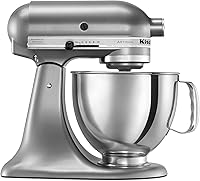
| KitchenAid Artisan KSM150PS | 5 qt | Varied everyday baking with a tilt-head layout |
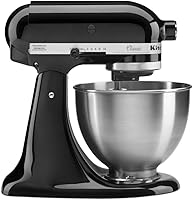
| KitchenAid Classic K45SS | 4.5 qt | Moderate batches and a core set of bowl tools |
| Bosch Universal Plus | 6.5 qt | Frequent bread work and larger planned batches |
| Vivohome 6-Qt Tilt-Head | 6 qt | More bowl room while keeping a tilt-head design |
For cakes, allow space for batter to move without reaching the top of the bowl. For whipping, remember that cream and egg whites expand as they take in air.
Small quantities need attention too. A tiny batch can sit below a tool's useful reach, so check minimum quantities for the jobs you make most.
KitchenAid gives the Classic an 8-dozen-cookie capacity and the Artisan a 9-dozen capacity, both using a flat beater and 28 g portions. Those figures describe a particular batch example, rather than every cookie recipe.
A stiff dough packed with nuts and chips creates a different load from a soft, plain dough. Splitting a recipe into 2 batches is often more practical than filling the bowl to its rim.
Our guide to what size stand mixer you need explains how to match bowl size to your baking routine.
Which mixer style fits your kitchen?
Choose a tilt-head mixer for access from above or consider a bottom-drive design if you prefer an open bowl area. A bowl-lift model is another format to compare when planning your workspace.
The Artisan, Classic and Vivohome tilt their motor heads back for access. You need room for that movement before adding ingredients, changing tools or removing the bowl.
A tilt head can be convenient when you often stop to scrape thick frosting or check cookie dough. Place the mixer where you can raise the head without pulling the whole machine toward the counter edge.
The Bosch places its drive beneath the bowl, leaving the upper area open for ingredient additions. Its central drive shaft also changes how you handle the bowl and clean around its parts.
A bowl-lift mixer raises the bowl toward the mixing tool rather than tilting the head. None of the 4 models here uses that layout, but it's worth comparing if overhead cabinets limit upward movement.
Don't choose a format from appearance alone. Imagine adding flour, reaching the controls and lifting out a full bowl in the spot where the mixer will sit.
For a closer look at the two common head-and-bowl arrangements, see tilt-head vs bowl-lift mixers.
What tools and speed controls matter for baking?
Prioritize the correct bowl tool and useful low-speed control before counting optional accessories. A long list of speeds won't compensate for using a whisk on a job that needs a beater.
A flat beater handles many batters, cookie doughs and frostings. A wire whisk adds air to cream or egg whites, while a dough hook works bread dough within the machine's limits.
A flex-edge beater can help move ingredients off the bowl wall. You should still stop and check the bottom, where unmixed butter or flour can collect.
Start dry ingredients slowly to keep flour inside the bowl. Higher speeds have a place in whipping, but bread kneading needs the speed specified in the manual.
Pulse provides short bursts of mixing. It doesn't replace watching the mixture, and repeated bursts can still scatter loose ingredients if you begin too quickly.
Pouring shields, splash rings and guards help manage additions. They aren't a reason to fill the bowl too high or reach near a moving tool.
Specialty attachments deserve a separate decision. Buy a pasta tool or grinder because you have a clear use for it, and allow space to store its parts.
Read whether KitchenAid attachments are universal before choosing accessories. Hub-powered attachments, extra bowls and tools that mix inside the bowl have different fit requirements.
How do the four stand mixers compare?
These mixers differ most in working layout, included equipment and intended batch routine. Use the comparison to narrow your choice, then check the exact model's instructions for your recipes.
| Mixer | Layout | Speed settings | Equipment to note |
|---|---|---|---|
| KitchenAid Artisan KSM150PS | Tilt-head | 10 | Pouring shield and optional hub-powered attachments |
| KitchenAid Classic K45SS | Tilt-head | 10 | Coated flat beater, coated dough hook and 6-wire whip |
| Bosch Universal Plus | Bottom-drive | 4 plus pulse | Wire whips, dough hook, extender, lid and splash ring |
| Vivohome 6-Qt Tilt-Head | Tilt-head | 10 plus pulse | Beater, hook, whisk, egg separator and splash guard |
The two KitchenAid models make the closest comparison for moderate everyday baking. Choose between them by deciding whether the Artisan's extra bowl room and shield matter to your recipes.
The Bosch deserves a separate look if bread drives the decision. Its bottom-drive layout and bundle differ enough that you should picture the full mixing and cleanup routine before choosing.
The Vivohome gives you a larger bowl in a tilt-head format. That makes it worth considering for roomy batter mixing, but it doesn't make it a substitute for checking dough limits.
Which stand mixer suits different baking routines?
The Artisan suits varied baking, the Classic suits moderate batches, the Bosch suits bread-focused routines, and the Vivohome suits buyers seeking more bowl room. Each also has reasons to pass, depending on your kitchen.
KitchenAid Artisan KSM150PS: stand mixer for varied baking
Choose the Artisan if you move between cakes, cookies, frosting and occasional bread. Its tilt-head access makes sense for recipes that involve several additions and stops to scrape.
The pouring shield is useful when your routine includes adding flour or liquids in stages. It helps contain the work area, though careful pouring and a low starting speed still matter.
The optional hub-powered tools give you a route into jobs such as pasta making or grinding. Treat those as future projects with their own storage needs, rather than a reason to buy accessories immediately.
Skip it if your main goal is frequent large bread batches. Start with the dough recipe and its load requirements before choosing an all-purpose mixer.
It also makes less sense if your usual batches fit comfortably in the Classic and you don't value the shield. Extra bowl room is useful only when it solves a real limit.
KitchenAid Classic K45SS: for everyday recipes and core tools
Choose the Classic for moderate cakes, cookies and whipping jobs when you want the basic bowl tools included. The supplied set covers several common tasks without requiring you to plan specialty accessories first.
Its metal construction and 22 lb weight matter if you plan to move it between a cupboard and the counter. Check the lift from your actual storage position, especially if that cupboard is low.
The head locks in place for mixing, and the removable stainless steel bowl can go in the dishwasher. Those details suit a routine built around familiar recipes and straightforward cleanup.
Skip it if you regularly need room for larger batches or want to combine several loaves into one mixing session. Repeatedly splitting your normal recipe is a sign to compare other sizes.
The Classic still supports optional powered attachments. That gives moderate-batch bakers a way to add other kitchen jobs without choosing a larger bowl solely for those extras.
Bosch Universal Plus: for frequent bread and batch baking
Choose the Bosch if bread is a regular project and you want to compare a bottom-drive machine with the tilt-head options. The open area above its bowl gives you room to watch the dough and add ingredients.
The belt-driven transmission, included extender and removable drive shaft are worth understanding before your first recipe. Follow the instructions for assembling the drive parts and deciding when to use each tool.
Bosch describes a broad batch range, including whipping a single egg white. Still, confirm the recommended tool and method for your small recipes rather than assuming every attachment handles every quantity.
Skip it if you strongly prefer a metal bowl or want the familiar raised-head layout. Its plastic bowl and central drive parts create a different handling and cleaning routine.
This bundle's electrical specification gives 230 volts. Confirm compatibility with your home's supply before ordering; a plug adapter alone doesn't change voltage.
Vivohome 6-Qt Tilt-Head: for more bowl room
Choose the Vivohome if you want a larger mixing bowl while keeping tilt-head access. Its included tools suit a range of baking jobs without requiring a separate whisk or dough hook.
It weighs 11 lb, which is relevant if you plan to put it away between baking sessions. Allow for the size and grip of the whole machine when deciding whether that storage routine is comfortable.
The suction cups need a clean, suitable counter surface to grip. Keep the work area dry and stay close during mixing, particularly as dough begins to gather around the hook.
Skip it if your cabinets leave little vertical room or you usually make very small quantities. Its bowl volume and overall height should solve a need rather than create extra handling.
Don't choose it for bread on motor wattage alone. Compare the manual's flour limits and kneading instructions with the exact recipe you want to make.
Can a stand mixer knead bread dough?
Yes, a suitable stand mixer can knead bread dough within its load, speed and run-time limits. Check all three before scaling a recipe or starting a long knead.
Dense, low-hydration dough can demand more effort than a soft dough of the same weight. Whole-grain flour, seeds and other additions can also change how the dough behaves.
Follow the recipe's ingredient amounts before making corrections. Dough can look rough early on, and adding flour too soon can turn a workable mixture into a stiff one.
Use texture as well as time to judge progress. Many wheat doughs become smoother and more elastic, but rye-rich and very wet doughs behave differently.
A dough that clings to the bottom isn't automatically wrong. Stop the mixer before scraping or repositioning anything, and use the recipe's cues rather than trying to make every dough form a dry ball.
Stop if the machine strains, shifts, smells unusual or becomes hotter than expected. Don't respond by holding it down, increasing speed or forcing it to finish the batch.
For bread-focused choices, compare our best stand mixers for bread dough guide. Follow our guide to kneading dough with a stand mixer for the mixing process.
What should you measure before buying?
Measure the footprint, working clearance and storage route, then check electrical requirements. A mixer must fit while you're using it, not just while it's switched off.
| Mixer | Depth | Width | Height |
|---|---|---|---|
| KitchenAid Artisan KSM150PS | 14.1 in | 8.7 in | 13.9 in |
| KitchenAid Classic K45SS | 14.1 in | 8.7 in | 13.9 in |
| Bosch Universal Plus | 11 in | 12 in | 15 in |
| Vivohome 6-Qt Tilt-Head | 15.2 in | 8.8 in | 18.8 in |
These measurements don't include every movement needed to raise a head or remove a bowl. Leave additional access space around the machine and beneath wall cabinets.
Check nearby drawer handles, outlets and other appliances. You should be able to reach the controls without leaning across the bowl or pulling the cord tight.
For cupboard storage, measure the opening as well as the shelf. Think through lifting the machine out, setting it down and carrying it with dry hands.
Keep the mixer on a stable, level surface away from the edge. Give the bowl and clean attachments their own storage spot so setup doesn't become a search through several cupboards.
How should you set up a stand mixer for its first recipe?
Begin with clean parts, a secure bowl and the correct tool fitted while the machine is unplugged. Read the model's setup instructions before using it with food.
Remove packaging from around the shaft, bowl and tools. Wash the removable food-contact parts as directed, then dry them before assembly.
Fit the bowl fully into its mount and secure the selected attachment. On a tilt-head model, lower and lock the head as instructed before starting.
Keep a spatula nearby for pauses, but remove it before switching on. Tie back loose hair and keep sleeves, cords and towels clear of moving parts.
Start with a familiar, moderate recipe rather than the machine's largest claimed batch. This lets you learn the controls, scraping points and bowl handling without managing a heavy load.
If a beater strikes the bowl or leaves an unusual gap, switch off and check the instructions. For applicable KitchenAid models, our beater-height adjustment guide explains the adjustment process.
Which mixing habits prevent common baking mistakes?
Use the right tool, gradual speed changes and regular checks of the bowl. A stand mixer saves effort, but the mixture still needs your attention.
Start slowly and add ingredients in stages
Begin flour and other loose dry ingredients at a low speed. Add them in manageable portions so they can combine before the next addition.
Pour liquids gradually when the recipe calls for it. A sudden large addition can splash or make it harder for a thick mixture to combine evenly.
Scrape where the beater cannot finish the job
Stop the machine before scraping the sides and bottom. Pay special attention after creaming butter and sugar, since a dense layer can remain beneath lighter-looking ingredients.
A splash guard or flexible edge doesn't remove the need to inspect the mixture. Check again before dividing cake batter or shaping cookie dough.
Let the recipe set the stopping point
Creaming, whipping and combining flour each have different goals. Once flour enters many cake and cookie mixtures, continued mixing can change the texture.
Check whipped cream often as it thickens. Stop when it reaches the recipe's required stage instead of leaving the mixer running while you prepare something else.
Separate ingredients that need different handling
Use butter at the temperature the recipe specifies rather than expecting the mixer to soften a cold block. Cut large pieces into smaller portions when appropriate for the recipe.
Fold delicate mixtures by hand when instructed. Nuts, chocolate pieces and whipped mixtures don't always benefit from more powered mixing.
How do you clean and care for a stand mixer?
Clean each part according to its material and care instructions, and unplug the base before wiping it. Dishwasher guidance for one bowl doesn't automatically apply to every tool.
The Classic's stainless steel bowl and the Bosch bowl are dishwasher safe. Check separate instructions for coated beaters, aluminum parts, wire tools and drive components before choosing a wash cycle.
Remove dough and batter before they dry hard. A short soak can help suitable removable parts, but keep the motor housing, cord and plug out of water.
Use a damp cloth on the base and dry around joints and controls. Avoid pushing flour or sticky residue into openings.
For the Bosch, follow the instructions for removing and refitting the bowl's drive shaft. Make sure all cleaned parts are dry before putting the assembly back together.
Inspect tools for damage as you clean. Stop using a damaged attachment and confirm the exact model fit before ordering a replacement.
Store the tools where they won't scrape against one another. If they go inside the bowl, use a clean protective layer to keep hard edges from knocking against its surface.
Which stand mixer should you choose?
Choose the Artisan for varied everyday baking if the extra bowl room and pouring shield solve a regular need. Choose the Classic if moderate batches and its included core tools cover your recipes.
Put the Bosch on your shortlist when frequent bread work makes its layout and dough equipment useful, after confirming electrical compatibility. Consider the Vivohome when you want more bowl room in a tilt-head machine and have enough height to use it.
Before ordering any stand mixer, check your most demanding regular recipe against its instructions. Confirm the included tools, working clearance and cleanup routine, then choose the machine you'll comfortably use each week.
For a narrower shortlist based on your recipes, continue to our stand mixer guide for home bakers or guide to choosing a stand mixer.
Frequently asked questions
What size stand mixer do most home bakers need?
A 4.5 to 5 qt stand mixer is a useful starting point for everyday cakes, cookies and occasional bread; choose around your largest regular batch, rather than a rare holiday project. For frequent bread baking, compare flour and dough limits separately because bowl volume doesn't establish kneading capacity.
Can a stand mixer knead bread dough?
Yes, a stand mixer with a suitable dough hook can knead bread within its recommended limits; follow the manual for dough quantity, speed and run time. Judge progress by the dough's texture rather than the clock alone, and stop if the machine struggles, smells unusual or moves across the counter.
Is a tilt-head or bowl-lift mixer better?
A tilt-head mixer suits bakers who value access for scraping, adding ingredients and changing tools; a bowl-lift model raises the bowl into position and doesn't need a head to swing upward. Choose around your recipes, working clearance and bowl handling, then compare the exact models' batch limits.
Do stand mixers come with every attachment?
No, included tools vary, and specialty attachments are often sold separately; start by checking for the beater, hook or whisk your recipes require. Then confirm compatibility for the exact model before buying a pasta tool, grinder, extra bowl or replacement beater, since these parts aren't all interchangeable.
Can a stand mixer replace a hand mixer?
A stand mixer can replace a hand mixer for many batters, frostings and whipping jobs, and a suitable model can also knead dough; a hand mixer remains useful for quick tasks in different bowls. Keep your choice tied to batch size, available storage and how often you bake.