How to Choose a Stand Mixer for Home Baking
Here's how to choose a stand mixer: match your usual recipes and batch size to its capacity, tools and dough limits. Then check counter clearance, storage and cleanup.
On this page (10 sections)
- How to choose a stand mixer around your recipes
- What bowl size do you need for home baking?
- Should you choose a tilt-head or bowl-lift mixer?
- What should you check if you bake bread?
- Which attachments do you actually need?
- How much counter and storage space should you allow?
- How should you set up and use a new stand mixer?
- What cleanup routine should you expect?
- Which buying mistakes should you avoid?
- Which stand mixer should you choose?
Here's how to choose a stand mixer for home baking: match your usual recipes and batch size to its tools and dough limits, then check whether it fits your kitchen. Start with what you bake each week, rather than a batch you might make once a year.
For cakes and cookies, focus on bowl access, a suitable beater and manageable cleanup. For bread, give dough limits and kneading instructions more weight than bowl volume or motor wattage.
Our complete stand mixer buying guide explains the wider category. Below, you'll find a practical way to narrow the choice, with 4 mixers that suit different baking routines.
How to choose a stand mixer around your recipes
Choose a stand mixer by writing down your 3 most common recipes, including their ingredient amounts and batch sizes. That gives you a useful basis for comparing machines.
Note the flour weight for bread, the dough quantity for cookies and the amount of cream or egg whites you usually whip. Also record how often you double a recipe, since occasional large batches can often be split.
Use this order:
- Identify the jobs you want the mixer to handle.
- Match normal and larger batches to the model's recipe guidance.
- Check included tools and how you access the bowl.
- Measure the working space and storage spot.
- Compare care needs and optional accessories.
How to choose a stand mixer for your weekly baking
Choose for the work you repeat most often. A weekly bread baker needs a different comparison from someone who makes birthday cakes and a few batches of frosting.
For cakes, useful bowl access makes adding ingredients and scraping easier. For cookies, compare dough quantities and beater guidance, especially if you regularly add nuts, oats or other bulky ingredients.
For bread, find instructions that cover your flour amount and dough type. A machine that fits your regular loaf recipe is a better match than one chosen only for a large bowl.
If your main jobs are quick batters and small amounts of cream, consider whether a stand mixer earns its storage space. Our stand mixer vs hand mixer comparison helps you make that decision before choosing a model.
What bowl size do you need for home baking?
Choose a bowl that fits your normal batch with room for mixing, then check the model's limits for larger recipes. Bowl volume measures space, while dough limits describe a separate part of the job.
A bowl needs room above the ingredients for movement, additions and scraping. Filling it near the rim can turn a manageable recipe into a messy one.
| Your baking routine | What matters most |
|---|---|
| Small cakes and frosting | Tool contact with your normal quantity |
| Regular cookies and cakes | Beater suitability and room for additions |
| Bread or pizza dough | Flour limits, dough type and kneading directions |
| Double batches | Recipe-specific capacity and working headroom |
| Small amounts of cream or egg whites | Minimum batch guidance for the whip |
Check small batches as carefully as large ones. Extra bowl room is useful for bulky mixtures, but a small quantity still needs to reach the mixing tool.
Capacity examples also need context. A cookie count based on small portions won't translate directly to large bakery-style cookies, and a loaf count means little without knowing the dough weight.
Use our stand mixer size guide to narrow the bowl range. Then compare your actual ingredient amounts with the directions for the model.
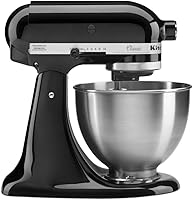
KitchenAid Classic K45SS: for standard cakes and cookies
The KitchenAid Classic K45SS suits bakers who want a familiar tilt-head layout for standard recipes. Its 4.5-quart stainless steel bowl comes with a coated flat beater, coated dough hook and 6-wire whip.
KitchenAid gives a capacity example of up to 8 dozen cookies using the flat beater and 28 g of dough per cookie. Use that as a specific batch example, rather than a promise for every cookie recipe.
Choose it if most of your baking is cakes, cookies, frosting and occasional dough that fits its instructions. Skip it if your usual recipes need more bowl room, or if you mainly want to make large bread batches.
Vivohome 6-Qt Tilt-Head: for roomier family batches
The Vivohome 6-Qt Tilt-Head suits bakers who want more bowl room while keeping a raised-head design. VIVOHOME gives a capacity example of 3 bread loaves or 2.2 lb of flour.
Its included beater, dough hook, wire whip and egg separator cover several common baking tasks. A splash guard provides an opening for adding ingredients, and suction cups help anchor the base.
Choose it for family baking when the batch guidance fits your recipes and the taller body fits your kitchen. Skip it if low cabinets restrict access, or if your main need is a machine with clear guidance for much larger bread batches.
Should you choose a tilt-head or bowl-lift mixer?
Choose the design that gives you easy access in your actual workspace. The way you add ingredients, scrape the bowl and remove tools matters each time you bake.
A tilt-head mixer raises its head so you can reach the bowl and tool. Allow enough clearance for that movement, rather than measuring only the closed machine.
A bowl-lift mixer raises the bowl toward the tool while the head stays in place. Check how the bowl attaches and whether you can comfortably reach around it on your counter.
Bottom-drive mixers place the drive beneath the bowl, giving you another layout to consider. Access from above can be useful for adding ingredients, but you still need space to lift out the bowl and remove parts.
Design alone doesn't establish dough capacity. Compare the model's instructions before deciding that one style must suit heavier work.
Our tilt-head vs bowl-lift mixer comparison explains those two layouts in more detail. Think through a full recipe, including scraping and cleanup, rather than judging access from a closed mixer.
What should you check if you bake bread?
For regular bread baking, choose by flour amount, dough type and kneading limits. A dough hook is necessary for many mixer bread recipes, but its presence doesn't establish a useful batch limit.
Lean dough, enriched dough and stiff dough can place different demands on a mixer. Follow the machine's speed and run-time directions even when another recipe suggests a different method.
Also distinguish flour weight from finished dough weight. Water, eggs, fat and other additions mean a dough batch weighs more than its flour alone.
Don't rank mixers by wattage alone. Motor input is only one part of a system that also includes the drive, gearing and mixing tool.
Bosch Universal Plus: for frequent bread preparation
The Bosch Universal Plus bundle suits bread bakers who want a bottom-drive layout and a dough hook extender. Its 6.5-quart BPA-free plastic bowl has an easy-grip handle and removable drive shaft.
The bundle includes wire whips, a dough hook, a lid, a splash ring and the NutriMill extender. Follow the instructions for fitting the extender and choosing a suitable batch.
Choose it if bread is a regular job and you want top access while adding ingredients. Skip it if you require a stainless steel bowl, or if your main recipes need a standard flat beater included in the box.
Confirm electrical compatibility for the exact bundle before ordering: the supplied specifications identify this version as 230 volts. Match the appliance to your household supply, rather than relying on a plug adapter.
NutriMill Artiste 6.5-Qt: for planned dough batches
The NutriMill Artiste suits bread bakers who want a bottom-drive mixer with a stated dough allowance. NutriMill says it can knead up to 8 lb of dough.
It includes a dough hook, wire whips and a lid with an access window. Suction cup feet help keep the base in place, but the mixer still needs a suitable counter and supervision.
Choose it when your regular dough fits its instructions and you have room for its broad footprint. Skip it if counter width is tight, or if you expect a standard cake and cookie beater among the included tools.
For either bread-focused option, check the full kneading directions before scaling a recipe. Our guide to how to knead dough with a stand mixer explains the method and the dough cues to watch.
Which attachments do you actually need?
Start with the tools your current recipes use. Extra accessories deserve space in your budget only when they replace a task you plan to do.
| Tool | Common use | What to check |
|---|---|---|
| Flat beater | Cake batter, frosting and cookie dough | Suitability for the mixture and batch |
| Dough hook | Kneading bread and pizza dough | Dough limits, speed and run time |
| Wire whip | Whipped cream and egg whites | Minimum quantity and care directions |
| Optional powered accessory | Pasta, grinding or other added tasks | Exact model compatibility |
A wire whip isn't a substitute for a dough hook or a beater in stiff mixtures. Match the tool to the recipe before switching on.
The KitchenAid Classic's power hub accepts compatible optional attachments sold separately. Bosch also offers optional accessories, including tools for tasks beyond mixing.
Keep future plans realistic. If pasta making is only a vague idea, don't let accessory options outweigh bowl fit, access or cleanup for the cakes you bake now.
Read whether KitchenAid attachments are universal before assuming parts fit across models. Bowl tools and powered accessories require their own compatibility checks.
How much counter and storage space should you allow?
Measure the space where you'll operate the mixer, including room for access and removal. A machine that fits beneath a cabinet may still need to move forward before you can use it.
| Mixer | Depth | Width | Height |
|---|---|---|---|
| KitchenAid Classic K45SS | 14.1 in | 8.7 in | 13.9 in |
| Vivohome 6-Qt Tilt-Head | 15.2 in | 8.8 in | 18.8 in |
| Bosch Universal Plus | 11 in | 12 in | 15 in |
| NutriMill Artiste 6.5-Qt | 15.8 in | 16.4 in | 14.2 in |
Use a piece of paper or cardboard to mark the footprint on your counter. Leave space beside it for ingredients and a place to set down a messy tool.
Check lifting weight if the mixer will live in a cupboard. The KitchenAid Classic weighs 22 lb, the VIVOHOME weighs 11 lb and the Artiste weighs 18.4 lb.
Weight matters differently if you plan to leave the machine out. For frequent baking, a permanent working spot can remove the repeated job of lifting it into place.
Check the outlet location too. Plan a dry working area away from the counter edge, with the cord clear of hot surfaces and moving parts.
How should you set up and use a new stand mixer?
Begin with the model's assembly and speed instructions, then use a familiar recipe within its capacity. That makes it easier to learn the controls without also managing an unfamiliar bake.
Wash removable food-contact parts as directed before first use. Dry them, place the base on a clean, level counter and secure the bowl and tool with the appliance unplugged.
For a tilt-head model, return the head to its working position and engage its lock as instructed. Check that covers, lids or splash guards are fitted correctly.
Start slowly when combining dry ingredients. A guard helps contain splashes, but adding too much flour at once or starting too fast can still create a mess.
Stop the mixer before scraping, and unplug it before changing tools or reaching near them. Keep spatulas and fingers away from a moving attachment.
Watch the mixture as well as the clock. Cream should reach the texture your recipe needs, while cake batter may need only brief mixing after the flour goes in.
For dough, follow the approved kneading speed and batch limit. Don't turn up the speed to force a stiff or oversized batch through the machine.
What cleanup routine should you expect?
Choose a mixer whose bowl and tools you can clean after every bake. Easy removal and clear care instructions matter as much as whether one component can go in the dishwasher.
The KitchenAid Classic bowl and Bosch bowl are dishwasher safe. VIVOHOME describes its included accessories as dishwasher safe, but follow the care instructions supplied with your exact components.
A bowl's care rules don't automatically apply to coated tools, wire whips, drives or lids. Separate removable parts only as instructed, and keep the motor base out of water.
Wipe the unplugged base with a damp cloth and dry it. Clear flour from accessible crevices before it becomes mixed with grease or moisture.
Deal with sticky residue promptly, using the washing or soaking method allowed for that part. Let everything dry fully before putting it away.
For KitchenAid tools, our guide to putting mixer attachments in the dishwasher helps you check care by attachment type.
Which buying mistakes should you avoid?
Avoid choosing by one headline number or an imagined future recipe. The right machine needs to suit a whole baking session, from setup to washing the last tool.
- Buying the biggest bowl automatically: Check small-batch use and storage before paying for capacity you rarely need.
- Treating loaf counts as equal: Compare flour and dough weights, since loaf sizes vary.
- Using wattage as a ranking: Compare task guidance and drive design alongside motor figures.
- Assuming every tool is included: Bread-focused bundles may leave you needing another tool for batter or cookies.
- Ignoring working clearance: Leave space for a raised head, bowl removal and adding ingredients.
- Planning to exceed dough limits: Divide a recipe instead of forcing an oversized batch.
- Buying accessories first: Choose a mixer that handles your regular recipes before adding other functions.
A useful final check is to walk through one complete recipe on paper. Note the tool changes, ingredient additions, scraping and cleaning steps, then identify anything the mixer or workspace can't accommodate.
Which stand mixer should you choose?
Choose the KitchenAid Classic K45SS for standard cakes and cookies, or the Vivohome 6-Qt Tilt-Head for more bowl room when its batch guidance fits. For regular bread preparation, compare the Bosch Universal Plus and NutriMill Artiste against your actual dough recipes.
| Choose this mixer | When it fits | When to pass |
|---|---|---|
| KitchenAid Classic K45SS | Standard recipes and a familiar tilt-head routine | Large bread batches are your main job |
| Vivohome 6-Qt Tilt-Head | Roomier family baking with tilt-head access | Cabinet clearance is limited |
| Bosch Universal Plus | Bread preparation with top access and an included extender | You need a steel bowl or a different electrical version |
| NutriMill Artiste 6.5-Qt | Dough batches within its instructions | You lack counter width or need a beater included |
Knowing how to choose a stand mixer means being able to name the recipe, batch and workspace it must fit. Before ordering, confirm those 3 things, along with the included tools and electrical requirements.
For a wider shortlist, compare our best stand mixers for home bakers. Keep the complete stand mixer buying guide handy if you still need to compare styles or accessory options.
Frequently asked questions
What size stand mixer is best for home baking?
Choose bowl capacity around your usual recipes: a 4.5-quart bowl can suit standard home baking, while a larger bowl gives bulky mixtures more room. Check both minimum batch guidance and dough limits, because bowl volume alone doesn't show how well a mixer suits small portions or dense bread dough.
Is a tilt-head or bowl-lift mixer better?
Choose a tilt-head mixer if raising the head gives you convenient bowl access, or a bowl-lift model if its bowl movement fits your workspace better. Measure working clearance as well as storage height, then compare each model's capacity and dough limits instead of choosing by design alone.
What attachments do you need for a stand mixer?
Start with a flat beater for batter and cookie dough, a dough hook for kneading, and a wire whip for cream or egg whites. Confirm those tools come with the exact mixer you choose, and buy extra accessories only when you have a recipe or task that needs them.
Can every stand mixer knead bread dough?
Choose a mixer with a dough hook and kneading directions that cover your recipe and batch size. A large bowl doesn't establish bread capacity, so follow the model's flour limits, speed instructions and run times, and split oversized recipes into smaller batches rather than filling the bowl to its rim.