What Size Stand Mixer Do You Need?
To decide what size stand mixer you need, start with 4.5 to 5 quarts for everyday baking. Choose 3.2 quarts for small recipes and tight storage, or 7 quarts for frequent large batches, then check the model's recipe limits.
On this page (8 sections)
- What size stand mixer do you need for everyday baking?
- When is a compact stand mixer enough?
- Should you choose a 7-quart stand mixer?
- How do you match bowl size to what you bake?
- What else should you measure besides the bowl?
- How should you set up and care for your mixer?
- Is a bigger stand mixer always better?
- Which stand mixer size should you choose?
For most home bakers, the answer to “what size stand mixer do I need?” is 4.5 to 5 quarts. Choose a compact model for small recipes and tight storage, or a larger bowl when big batches are part of your regular routine.
Start with what you actually mix each week. A bowl must leave room for ingredients to move, and its full volume isn't a safe working limit for every recipe.
What size stand mixer do you need for everyday baking?
A 4.5- to 5-quart bowl is a useful starting point for cookies, cakes, frosting, and occasional bread. Choose between these sizes by comparing your usual recipe with each model's capacity guidance.
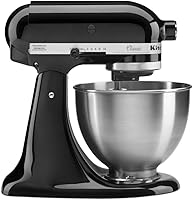
The KitchenAid Classic K45SS has a 4.5-quart stainless steel bowl. KitchenAid gives a capacity of up to 8 dozen cookies using the flat beater and 28 g of dough per cookie.
Choose the Classic if standard recipes cover your needs and you don't often wish you could combine batches. Skip it if your usual recipes already push beyond its guidance, especially with dense dough.
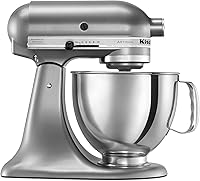
The KitchenAid Artisan KSM150PS has a 5-quart bowl and includes a pouring shield. KitchenAid gives a capacity of 9 dozen cookies under the same flat-beater and cookie-weight conditions.
Choose the Artisan if you want modest extra bowl room without moving to a larger footprint. Both models measure 14.1 x 8.7 x 13.9 in, so choosing the Classic doesn't save counter space.
Skip the Artisan if you're expecting that small capacity increase to replace a large-batch machine. Compare the differences in our KitchenAid Classic vs Artisan guide.
For a broader starting point, use our stand mixer buying guide and guide to choosing a stand mixer for home baking.
When is a compact stand mixer enough?
A compact mixer fits small recipes and limited storage when you rarely need to combine batches. It's a sensible choice for occasional baking if a larger machine would be difficult to keep within reach.
The Kitchen in the Box 3.2-Qt measures 12.9 x 7 x 10.2 in and weighs about 7 lb. Its tilt head gives access to the stainless steel bowl, and it includes a whisk, dough hook, and flat beater.
Choose it if easy storage matters and your usual recipes are small. Kitchen in the box specifically cautions against large batches, so skip it for regular crowd baking or plans to mix several loaves together.
Dividing a recipe can work, but it adds measuring and mixing steps. If you'd split nearly every recipe, choose a larger machine instead.
Our guide to small stand mixers compares more options for kitchens with limited room.
What size stand mixer do I need for one or two people?
For one or two people, size the mixer around recipe yield, rather than the number of people at home. A compact bowl can suit small desserts, while baking full batches to freeze can justify a larger one.
Write down the quantities you actually make, including frosting or dough prepared separately. A small household that supplies holiday cookies may need more capacity than a family that bakes one cake occasionally.
Should you choose a 7-quart stand mixer?
Choose a 7-quart mixer for frequent large batches that would otherwise require repeated mixing. Occasional holiday baking alone is a weaker reason to give up extra counter space all year.
KitchenAid gives the 7-Qt Bowl-Lift KSM70SKXX a capacity of 13 dozen cookies using the flat beater and 28 g portions. It also gives capacities of over 8.5 lb of bread or over 7.5 lb of mashed potatoes.
This model suits bakers who regularly prepare large quantities and have a place to leave it ready for use. Its included double flex edge beater has 2 flexible edges designed to scrape the bowl.
Skip it if most of your work involves small amounts of cream or batter. Check minimum quantities in the instructions, since ingredients must reach the attachment to mix properly.
If bread drives your choice, use our guides to kneading dough with a stand mixer and stand mixers for bread dough to narrow your needs.
How do you match bowl size to what you bake?
Use your largest common recipe as the starting point, then check its demands against the mixer's instructions. A once-a-year project can often be divided instead of setting the size for every other bake.
For cookies, compare ingredient quantities as well as the finished count. KitchenAid's cookie examples above use small, equal portions, so a recipe for fewer oversized cookies could still produce a substantial batch.
For bread, look at flour quantity, total dough weight, and the type of dough. Stiff dough can place more strain on a mixer than softer dough, even when both fit comfortably inside the bowl.
For cakes and frosting, leave space for ingredients to move and for dry ingredients to enter without spilling. Bowl volume measures room, not permission to fill to the rim.
For meringue or whipped cream, check the smallest amount the attachment can reach. More capacity won't help if your usual quantity sits below the whisk.
Map your regular meals and baking projects with our guide to what you can make with a stand mixer.
What else should you measure besides the bowl?
Measure working space and storage access, including room to add ingredients and remove the bowl. Closed dimensions alone won't tell you whether a mixer works beneath your cabinets.
A tilt-head mixer needs space above it when the head opens. A bowl-lift machine needs access to its bowl supports and lift control, so check the movement you'll use during setup and removal.
The 7-quart KitchenAid measures 14.63 x 11.31 x 16.5 in and weighs 28 lb. Check cabinet clearance and decide where it will sit before choosing it for extra capacity.
The Classic weighs 22 lb, which matters if you'll lift it from a low cabinet for every recipe. Measure the shelf opening and the route to your counter, not just the space inside the cabinet.
Compare access and setup in our tilt-head vs bowl-lift stand mixer guide.
How should you set up and care for your mixer?
Start with a level counter, a secure bowl, and the correct attachment. Wash removable food-contact parts as directed before first use, then dry them before assembly.
Unplug the mixer while fitting or removing attachments. Secure the bowl and head or lift mechanism as instructed, and keep spatulas and fingers out while the attachment moves.
Use the flat beater for tasks such as batter and frosting, the whisk for aeration, and the dough hook for kneading where the manual allows it. Start slowly when adding flour or liquids to reduce splashes.
Stop the machine before scraping the sides and bottom. A larger bowl doesn't remove the need to check for unmixed ingredients, particularly after adding dry ingredients.
Follow the model's speed and time guidance for dough. Stop if the mixer struggles or moves across the counter, and reduce the batch rather than increasing speed to force it through.
Check cleaning instructions for each part instead of assuming every accessory can go in the dishwasher. Our guide to washing KitchenAid mixer attachments explains why the attachment's material matters.
Is a bigger stand mixer always better?
A bigger mixer helps when you regularly need its capacity; otherwise, it can add storage and handling work. Avoid buying around the largest batch you can imagine making.
Don't judge dough ability by bowl volume or motor wattage alone. Use the model's recipe limits, since capacity and workload are different things.
Another common mistake is buying a compact machine to save room while expecting it to handle full-size recipes unchanged. Check your favorite recipes before ordering, rather than planning to solve every mismatch later.
If you bake rarely, consider whether a stand mixer is worth it for home baking. For wider model comparisons, return to our stand mixer buying guide.
Which stand mixer size should you choose?
Decide what size stand mixer you need from your normal baking week. Pick the Kitchen in the Box for small recipes and easy storage, or the Classic for everyday batches within its limits.
Choose the Artisan for a little more bowl room in the same closed footprint as the Classic. Move to the 7-quart KitchenAid when repeated large batches make the extra space and weight worthwhile.
Before ordering, check one favorite recipe against the model's instructions and measure its working area. Then use our guide to choosing a stand mixer for home baking to settle the remaining features.
Frequently asked questions
What size stand mixer is best for most home bakers?
A 4.5- to 5-quart stand mixer is a practical choice for everyday cookies, cakes, and occasional bread, provided your recipes stay within the model's limits. Choose from your usual batch size rather than household size alone, since baking to share or freeze can call for more room.
Is a 3.2-quart stand mixer big enough?
A 3.2-quart mixer is enough for small recipes when storage space matters more than making large batches at once. Check your usual recipe against the model's instructions before buying, and choose a larger size if dividing batches would become a regular part of your baking routine.
Is a 7-quart stand mixer too big for home use?
A 7-quart stand mixer suits home bakers who regularly prepare large batches, but it can be an awkward choice for mostly small recipes. Measure its working space and storage route, and check minimum quantities for whipping so extra capacity doesn't leave your usual ingredients out of the attachment's reach.
Does a larger stand mixer bowl mean you can make every recipe?
A larger bowl doesn't guarantee that a mixer can handle every dough or mix very small quantities well. Follow the model's recipe, speed, and batch limits, because dense dough places different demands on the machine than a similar volume of cake batter or whipped cream.