KitchenAid Classic vs Artisan Stand Mixer: Which Is Better? (October 2026)
For KitchenAid Classic vs Artisan, choose the Classic for routine home baking or the Artisan for larger batches and its pouring shield. Match the mixer to the recipes you make most often.
On this page (11 sections)
- KitchenAid Classic vs Artisan: what are the main differences?
- Which bowl capacity fits the recipes you actually make?
- Who should choose the Classic, and who should skip it?
- Who should choose the Artisan, and who should skip it?
- Are the Classic and Artisan good choices for bread dough?
- What tools and attachments will you actually use?
- How much counter space and headroom do you need?
- How should you set up either mixer for the first recipe?
- Which everyday mistakes should you avoid?
- How do you clean and care for the mixer?
- KitchenAid Classic vs Artisan: which should you buy?
Choose the Classic for routine home baking and the Artisan for larger batches and its pouring shield. In this KitchenAid Classic vs Artisan comparison, your usual recipe size matters more than your baking experience.
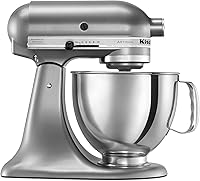
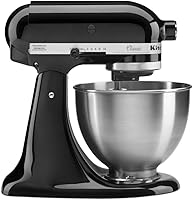
The Classic has a 4.5-quart bowl, while the Artisan holds 5 quarts. Both offer the same basic tilt-head approach, so the choice comes down to useful bowl room, included tools and how you work.
Start with the recipes you make every week. A mixer chosen for those jobs will serve you better than one chosen around a single holiday baking session.

KitchenAid Classic vs Artisan: what are the main differences?
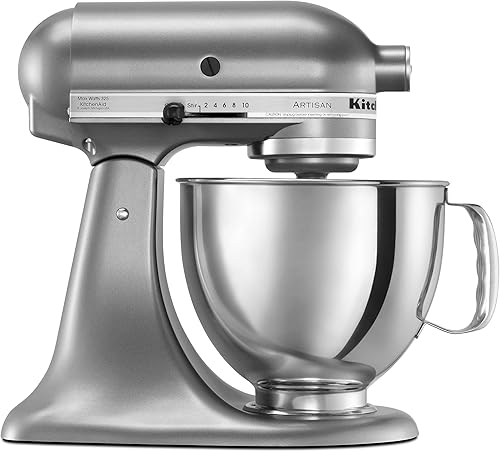
The Artisan provides more bowl room and a pouring shield, while the Classic supplies a clear set of tools for everyday mixing, kneading and whipping. Neither model needs a larger counter space than the other.
Both have 10 speeds and removable bowls. Their shared layout lets you raise the head to reach the bowl, change tools and add ingredients.
The useful differences are:
- Bowl room: the Artisan gives you half a quart more capacity.
- Included tools: the Classic comes with a coated flat beater, coated dough hook and 6-wire whip.
- Ingredient control: the Artisan includes a pouring shield to help contain additions.
The shield is useful when adding flour or other loose ingredients, but you still need to add them slowly. It doesn't replace careful pouring or a low starting speed.
Don't assume the Artisan's larger bowl proves it can handle every heavier dough. Bowl volume tells you how much space is available, while suitable dough quantities depend on the mixer instructions and recipe.
| Product | Best for | Capacity | Speeds | Design | Our score |
|---|---|---|---|---|---|
| KitchenAid Classic K45SS | everyday home bakers | 4.5 quarts | 10 | Tilt-head | 8.8 |
| KitchenAid Artisan KSM150PS | frequent batch bakers | 5 quarts | 10 | Tilt-head | 9.1 |
Which bowl capacity fits the recipes you actually make?
Choose around your normal batch, including the room needed to add and mix ingredients. A bowl filled close to the rim leaves little working space, even if the ingredients technically fit.
Write down 3 recipes you make often, such as a cake, a batch of cookies and a loaf of bread. Note the full recipe quantities rather than just the number of servings.
KitchenAid says the Classic can mix up to 8 dozen cookies, compared with 9 dozen for the Artisan. Both figures use the flat beater and portions of 28 g of dough per cookie.
Those figures help compare the models under the same conditions. They aren't a promise that any recipe with the same cookie count will suit the mixer.
KitchenAid Classic vs Artisan for cookies
Choose the Artisan for frequent larger cookie batches and the Classic when your normal recipe already fits comfortably. The amount of dough mixed at once matters more than the number of baking trays.
Dense dough, large chunks and a doubled recipe can change the workload. Add mix-ins as the recipe directs, and consider folding them in by hand when that gives you better control.
Our guide to choosing a stand mixer size explains how to match bowl capacity to the portions you bake most often.
Who should choose the Classic, and who should skip it?
The Classic suits bakers with established, moderate-size recipes who want tools for several common tasks. It makes sense when cakes, cookies, frosting and occasional dough are the jobs you want help with.
Its appeal is straightforward: choose the right included tool, fit the bowl and work through a familiar recipe. You don't need plans for pasta making or food grinding to have a reason to buy it.
It also suits a beginner who wants to learn one recipe at a time. Starting with a manageable batch makes it easier to notice changes in batter texture and stop mixing at the right point.
Skip the Classic if you're already splitting your usual recipes into batches because of bowl space. Buying a mixer that leaves the same problem unresolved is a poor match for your routine.
Also reconsider it if your main goal is frequent large bread batches. That calls for a closer look at dough limits and other mixer designs, rather than choosing from these 2 on bowl size alone.
Who should choose the Artisan, and who should skip it?
The Artisan suits bakers who will use its extra room often, especially those making cookies for gatherings or several baking projects in a session. Its pouring shield adds help with ingredient handling.
More working room can be useful before the bowl reaches its limit. It gives you space to add ingredients without crowding the bowl as quickly.
The shield is most relevant if you often add dry ingredients in stages. Keep ingredients measured nearby, pour in small amounts and let each addition start to combine before adding more.
Skip the Artisan if you mainly make small recipes and have no clear use for the extra room. A larger bowl doesn't remove the need to scrape down the sides or follow recipe timing.
It also won't solve a storage problem compared with the Classic, because their overall measurements match. If you only need help with brief mixing jobs, consider whether a stand mixer belongs in your routine at all.
Are the Classic and Artisan good choices for bread dough?
Both can knead dough, but choose a bread mixer by suitable recipe quantities and kneading directions. The Artisan's extra bowl room alone doesn't establish an advantage with stiff dough.
Bread dough places different demands on a mixer than cake batter. A dry dough can be hard to work even when the bowl looks far from full.
Follow the speed and quantity limits in the instructions for your exact model. Don't turn up the speed to force dough to come together faster.
Keep recipe flour measurements consistent, preferably by weight when the recipe provides it. Adding extra flour too soon can make dough unnecessarily stiff and change the finished loaf.
Pause and unplug before clearing dough from a tool. If the mixer moves across the counter or seems to struggle, stop and check the batch against its instructions.
Read how to knead dough with a stand mixer for the basic process. If bread is your main reason for buying, compare the best stand mixers for bread dough before settling on either model.
What tools and attachments will you actually use?
Start with tools for your recipes, then consider optional attachments for other food prep. Buying accessories without a clear task adds parts to store and clean.
Use a flat beater for jobs such as cookie dough and many cake batters. A dough hook serves kneading tasks, while a wire whip adds air to mixtures such as cream.
The Classic includes all 3 of those tools. If a particular tool is essential to your Artisan plans, confirm the full box contents for the exact version before ordering.
Both mixers support more than 10 optional hub-powered attachments, sold separately. These expand the tasks beyond the work done by tools inside the mixing bowl.
A pasta maker or food grinder makes sense when you'll use it regularly. Choose the mixer for baking first if those extra tasks are only vague future plans.
Our guide to KitchenAid mixer attachments can help you narrow the choices. Read whether KitchenAid attachments are universal before assuming that a bowl, beater or other accessory will fit.
KitchenAid's mixer attachments page also shows the available options.
How much counter space and headroom do you need?
Both mixers measure 14.1 in deep, 8.7 in wide and 13.9 in high, so choose either only after checking the space where you'll use it. The closed height doesn't include the room needed to raise the head.
Measure beneath overhead cabinets and check that you can reach the controls. Leave enough space to tilt the head, lift out the tool and remove the bowl without awkward movements.
A cardboard rectangle matching the base dimensions can help you picture the space. Add room beside it for ingredients, a spatula and somewhere to put a used tool.
Decide whether the mixer will stay on the counter or move into storage after each use. The Classic weighs 22 lb, and the Artisan is about the same weight, so frequent lifting deserves thought.
Place either on a stable, level counter with the cord clear of the work area. Choose a position that lets you stay nearby and watch the mixture.
For broader help planning a baking station, our complete stand mixer guide covers the main choices and uses.
How should you set up either mixer for the first recipe?
Begin with a familiar, manageable recipe so you can focus on fitting the parts and learning the controls. A large celebration cake or a doubled bread batch adds pressure before you know the workflow.
Read the model's instructions, then wash the food-contact parts as directed. With the mixer unplugged, secure the bowl and fit the tool needed for the recipe.
Lower and lock the head according to the instructions before mixing. Keep a flexible spatula nearby, but never put it into the bowl while the tool is moving.
Measure ingredients before starting and prepare them as the recipe directs. Softened butter, melted butter and cold butter behave differently, so the mixer can't make those steps interchangeable.
Start slowly to reduce flour clouds and splashes. Increase speed only when the task and instructions call for it.
Stop the mixer before scraping the bowl or checking the texture. Our step-by-step KitchenAid use guide walks through the setup and basic controls in more detail.
Which everyday mistakes should you avoid?
Avoid overfilling, rushing speed changes and relying on time alone. These habits can cause more trouble than choosing between the Classic and Artisan.
- Doubling every recipe: a larger bowl doesn't automatically make a doubled dough suitable.
- Starting fast with flour: begin slowly and allow dry ingredients to combine.
- Skipping bowl scraping: stop the mixer and scrape when the recipe calls for it.
- Mixing until a timer ends: check the recipe's texture cues as well as the clock.
- Adding too much flour to sticky dough: give the dough time to develop before changing the recipe.
- Leaving the mixer unattended: stay close enough to notice movement or a struggling mixture.
More mixing isn't always better. Once flour is added, many cakes and cookies need only enough mixing to combine the ingredients.
If a beater consistently misses ingredients at the bottom, check that the bowl and tool are fitted correctly. Use our beater-height adjustment guide for the proper process rather than making random adjustments.
How do you clean and care for the mixer?
Unplug the mixer and clean food residue before it dries hard. Separate the care rules for the bowl, mixing tools, shield and motor body.
The Classic's stainless steel bowl is dishwasher safe. Follow the instructions for each other part rather than assuming all metal or coated tools can go through the same cycle.
Wipe the motor body with a damp cloth and keep it out of water. Remove food around accessible seams and attachment points gently, without pushing water into openings.
Wash removable parts as directed, then dry them before storage. Check coated tools for damage and keep accessories where they won't knock against one another.
Plan a place for a wet bowl and used tools before starting a long baking session. Easy cleanup makes the mixer more practical for frequent use.
If you bake several recipes in a row, clean and dry the bowl between mixtures as needed. Grease left from one recipe can interfere with a later mixture that needs a clean bowl to whip properly.
KitchenAid Classic vs Artisan: which should you buy?
Choose the Classic when your everyday recipes fit comfortably, and choose the Artisan when larger batches and a pouring shield will help each week. Neither choice needs to be based on whether you call yourself a beginner or an experienced baker.
Use this decision rule:
- Routine cakes, cookies and occasional dough: choose the Classic if its capacity matches your recipes.
- Frequent larger batches: choose the Artisan for the added working room.
- Mostly large or stiff bread dough: compare dough-focused options before buying either.
- Limited headroom or difficult storage: resolve the placement problem before choosing a model.
The deciding question in KitchenAid Classic vs Artisan is how often you'll use the Artisan's extra room. If you can't name a regular recipe that needs it, the Classic is the clearer fit.
For a wider comparison, see the best KitchenAid stand mixers. To examine either finalist more closely, read our KitchenAid Artisan KSM150PS review or Classic K45SS review.
Frequently asked questions
What is the main difference between KitchenAid Classic and Artisan?
The main difference is bowl capacity: the Classic K45SS holds 4.5 quarts, while the Artisan KSM150PS holds 5 quarts and includes a pouring shield. Both have 10 speeds and tilt-head designs, so choose around your usual recipe size and how much you value the shield.
Can the KitchenAid Classic make bread dough?
Yes, the KitchenAid Classic K45SS can knead bread dough with its included coated dough hook. Use a recipe suited to the mixer and follow KitchenAid's kneading speed and quantity limits; a bowl with room left over can still contain more stiff dough than the mixer should handle.
Is the KitchenAid Artisan bowl bigger than the Classic bowl?
Yes, the Artisan bowl holds 5 quarts compared with the Classic's 4.5 quarts. That extra half-quart provides more room, but it doesn't make every doubled recipe suitable; check recipe quantities and the instructions for your mixer, especially for dense cookie dough or stiff bread dough.
Do Classic and Artisan mixers use the same attachments?
Both support optional hub-powered attachments, including food grinders and pasta makers. Check the exact accessory's compatibility before buying, because hub attachments and bowl tools are different categories; bowls, beaters, hooks and whips need a fit that matches the mixer model; shared branding alone doesn't establish that fit.
Which KitchenAid mixer should a beginner choose?
Choose the Classic for routine recipes that fit its bowl, or the Artisan if you already bake larger batches and want a pouring shield. Skill level matters less than recipe size and kitchen setup; our KitchenAid mixer buying guide can help you compare these with other models.