How to Use a KitchenAid Stand Mixer, Step by Step
To use a KitchenAid mixer, secure the bowl and fit a compatible attachment while unplugged, then lock the head or raise the bowl as directed. Add ingredients, start slowly, and turn it off and unplug it before scraping or changing tools.
On this page (8 sections)
- How to use a KitchenAid mixer: set up before starting
- Which mixer and attachments should you choose?
- How do you add ingredients and choose a speed?
- Should you scrape the bowl while using a KitchenAid mixer?
- How do you knead dough with a KitchenAid mixer?
- How do you clean and store the mixer?
- What should you do if mixing goes wrong?
- How to use a KitchenAid mixer for your next recipe
To use a KitchenAid mixer, secure the bowl, fit the right attachment while unplugged, and start at the lowest speed after locking the head or raising the bowl. Stop and unplug the machine before scraping, changing tools, or making adjustments.
The next step is learning when to stir, beat, whip, or knead. Choose the tool for the texture you want, then follow your recipe and your model’s speed and batch limits.
How to use a KitchenAid mixer: set up before starting
Place the mixer on a dry, stable counter with room to work, then secure the bowl and attachment while the machine is unplugged. Keep the speed control off throughout setup.
Leave space above a tilt-head mixer so you can raise its head without hitting a cabinet. Set the machine back from the counter edge, with its cord away from water and hot surfaces.
For a tilt-head model, raise the head, seat the bowl, and fit the attachment as the manual directs. Lower and lock the head before starting.
For a bowl-lift model, secure the bowl on its supports and raise it to the working position. A bowl that looks attached but isn't fully seated can leave the tool at the wrong height.
Read through the recipe before adding anything. Soften butter when called for, measure ingredients, and have a spatula ready so you can pause without searching for tools.
Use the KitchenAid manuals and support page to find your model’s instructions. Attachment fitting, bowl placement, and controls can differ between machines.
Using a KitchenAid mixer for the first recipe
Choose a familiar recipe with a clear mixing endpoint, such as a simple cake batter. It lets you focus on bowl setup, slow starts, and scraping before tackling dough or whipped egg whites.
Watch how the ingredients change instead of leaving the mixer to run for an arbitrary time. Once the recipe’s texture is reached, stop even if its suggested mixing time hasn't fully passed.
Which mixer and attachments should you choose?
Buy for the recipes you make regularly, and check the tools you already have before ordering extras. A mixer, scraping beater, wire whip, and dough hook solve different needs.
KitchenAid Artisan KSM150PS: for everyday baking
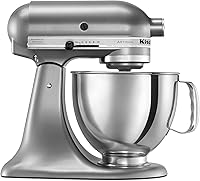
The KitchenAid Artisan KSM150PS is a 5-quart tilt-head mixer with 10 speeds and a pouring shield. Its head design gives access for adding ingredients and removing the bowl.
Choose it if you want a mixer for varied home baking and have space to raise the head. Measure the intended spot against its 14.1-inch depth, 8.7-inch width, and 13.9-inch closed height.
Skip buying a whole mixer if your current machine works and you only need a replacement tool. For broader choices, start with the stand mixer buying guide.
KitchenAid Flex Edge Beater: for batter and creaming
The KitchenAid Flex Edge Beater suits bakers who make cake batter, cookie dough, and other mixtures that collect on the bowl walls. Its flexible edge draws ingredients back into the mixture and can reduce scraping stops.
It fits select 4.5- and 5-quart tilt-head mixers, including the KSM150PS. Choose it for frequent beater jobs; skip it if your main need is whipping cream or kneading bread.
A scraping edge doesn't remove the need to check the bottom of the bowl. Pause when needed and fold any unmixed ingredients into the rest.
KitchenAid K45WW Wire Whip: for adding air
Choose the KitchenAid K45WW Wire Whip for whipped cream, egg whites, and recipes that need an airy mixture. It fits select tilt-head models, including the KSM150PS.
This is the useful choice when you need a compatible replacement whip. Skip it for stiff cookie dough and bread dough, which call for different tools.
Start egg whites in a clean bowl free of grease and yolk. For cream, use cold ingredients and check frequently as peaks form, since extra mixing can quickly change the texture.
ABTER K45DH Coated Dough Hook: for yeast dough
The ABTER K45DH is a C-shaped, nylon-coated aluminum hook for mixing and kneading yeast dough. It is a replacement option for compatible tilt-head mixers, rather than a general mixing tool.
Choose it if your compatible machine needs a hook for bread or rolls. Skip it for cakes, cream, or any mixer whose full model number you haven't confirmed against its compatibility information.
Capacity alone doesn't establish fit, especially with a replacement from another brand. Read whether KitchenAid mixer attachments are universal before choosing a tool for a different mixer.
For recipe ideas matched to each tool, see what you can make with a stand mixer.
How do you add ingredients and choose a speed?
Start slowly and increase speed for a specific purpose, such as creaming butter or adding air. A higher setting won't improve every mixture.
Follow the recipe’s ingredient order. Creaming butter and sugar before adding flour serves a different purpose from stirring everything together, so don't combine those steps to save time.
Keep flour, powdered sugar, and other loose ingredients at a slow stir until they are moistened. A pouring shield helps contain ingredients, but it doesn't make a fast start suitable for dry powders.
Add ingredients during operation only as your manual allows, keeping containers and utensils clear of moving parts. Stop the machine for additions that are awkward to pour safely.
Once flour enters a cake batter, mix only as much as the recipe requires. Prolonged mixing can develop more gluten and leave the finished cake tougher than intended.
When whipping, check the peaks as you approach the desired texture. Soft peaks bend over, while stiff peaks hold their shape.
Should you scrape the bowl while using a KitchenAid mixer?
Stop, wait for the tool to become still, and unplug the mixer before scraping. Use a spatula to reach the sides and bottom, then remove it before restarting.
Scrape during natural recipe breaks, such as before adding eggs or after combining wet and dry ingredients. This helps prevent a smooth-looking surface from hiding butter or flour underneath.
A small batch may sit below the tool’s useful reach. Don't keep increasing speed to make up for poor contact; use a suitable smaller tool or mix that portion by hand.
If normal batches repeatedly leave ingredients untouched, check how to adjust the beater height on a KitchenAid mixer. Follow the procedure for your exact model rather than adjusting by guesswork.
How do you knead dough with a KitchenAid mixer?
Use a compatible dough hook and your manual’s kneading speed, keeping the batch within the mixer’s dough limits. Bowl volume isn't a guide to how much heavy dough the motor can handle.
Add ingredients in the recipe’s order and start slowly to bring them together. Use the stated flour weight when available, since loosely or tightly filled measuring cups can change dough consistency.
Give the flour time to absorb liquid before adding more flour to a sticky dough. Some bread doughs remain tacky even when properly mixed.
Judge progress by the recipe’s texture cues as well as time. Dough type and hydration affect how it behaves, so there is no single kneading duration for every loaf.
Stop if the machine moves across the counter, the head bounces strongly, or the motor struggles. Check the load and setup before continuing, and divide an oversized batch if needed.
For the full process, follow our guide to kneading dough with a stand mixer.
How do you clean and store the mixer?
Unplug the mixer and clean each removable part according to its own care directions. Dishwasher rules vary between attachments, even when they fit the same machine.
The KitchenAid Flex Edge Beater and ABTER K45DH Coated Dough Hook are dishwasher safe. The KitchenAid K45WW Wire Whip is handwash only.
Wash away food before it dries into crevices, then dry parts fully before storage. Inspect coated tools for chips and flexible edges for damage before the next use.
Wipe the mixer exterior according to its manual, keeping water away from electrical parts. Never immerse the motor housing.
If you're sorting several tools, use our guide to putting KitchenAid attachments in the dishwasher. For model-specific care, refer to the manufacturer’s support resources.
What should you do if mixing goes wrong?
Stop and check the cause before running the mixer again. More speed or more time can worsen a setup problem.
If the beater strikes the bowl, check that the bowl and tool are fitted correctly before consulting the adjustment instructions. Don't keep running it while metal parts make contact.
For flour clouds or splashes, restart more slowly and add ingredients in smaller portions. For uneven mixing, scrape the bottom and sides before deciding the recipe needs more mixing time.
If the mixer stops unexpectedly, turn it off and unplug it before checking the manual’s troubleshooting steps. Don't repeatedly restart a machine that continues to struggle.
How to use a KitchenAid mixer for your next recipe
Choose a beater for batter, a whip for air, and a hook for yeast dough when deciding how to use your KitchenAid mixer. Buy a replacement only when it fits your exact model and fills a gap in your current tools.
Choose the Artisan if you need a mixer for varied baking and have room for its tilting head. Keep your first recipe manageable, start slowly, and stop at the texture the recipe describes.
If you're still deciding which machine suits your recipes and kitchen, read the complete stand mixer guide.
Frequently asked questions
What attachment should I use on a KitchenAid mixer?
Use a flat beater for cake batter and cookie dough, a wire whip for cream and egg whites, and a dough hook for yeast dough. Match the tool to your exact mixer model before fitting it, since bowl capacity alone does not confirm attachment compatibility.
What speed should I use on a KitchenAid mixer?
Start on the lowest speed, then increase only as your recipe and mixer manual allow for that attachment. Keep dry ingredients at a slow stir until incorporated, use the recommended kneading setting for yeast dough, and judge whipped mixtures by their texture rather than the clock.
Can I change attachments while the mixer is running?
No, turn the mixer off, wait for the attachment to stop, and unplug it before removing or fitting any tool. Use the same routine before scraping the bowl or adjusting the beater height, and remove all utensils from the bowl before plugging in and restarting.
How do I clean KitchenAid mixer attachments?
Clean each attachment according to its own care directions after switching off and unplugging the mixer. The KitchenAid Flex Edge Beater and ABTER K45DH Coated Dough Hook are dishwasher safe, but the KitchenAid K45WW Wire Whip needs handwashing; dry the tools fully before storing them.