KitchenAid Artisan KSM150PS Stand Mixer Review: Worth It? (October 2026)
The KitchenAid Artisan KSM150PS suits regular home bakers who make cookies, cakes and occasional bread. Choose it for tilt-head bowl access; compare larger mixers if big dough batches are part of your weekly routine.
On this page (11 sections)
- Is the KitchenAid KSM150PS right for your baking routine?
- What do the Artisan's bowl and speeds mean in practice?
- How does the KSM150PS compare with the Classic K45SS?
- Is the Bosch Universal Plus a better choice for bread?
- Should you choose a tilt-head or bowl-lift mixer?
- What should you check before buying the KSM150PS?
- How do you set up and use the Artisan?
- How should you clean and care for the mixer?
- What mistakes should you avoid with the Artisan?
- Which mixer should you choose instead of the KitchenAid KSM150PS?
- Related reading
The KitchenAid KSM150PS is a good fit for regular home baking, especially cookies, cakes and occasional bread. Choose a larger mixer if big dough batches are a weekly job rather than an occasional project.
The Artisan's appeal is easy bowl access and a range of mixing tasks in one machine. This LazierWeekend review compares it with 3 alternatives and explains how to choose, set up and care for the mixer.
Is the KitchenAid KSM150PS right for your baking routine?
The Artisan suits bakers who make several kinds of recipes and want a mixer they can keep ready on the counter. It makes less sense if you rarely bake or mainly need help with large bread batches.
Think about the work you want to hand over: creaming butter, mixing cookie dough, whipping cream or kneading bread. A mixer earns its space when those jobs come up often enough to justify getting out the bowl and tools.
KitchenAid Artisan KSM150PS
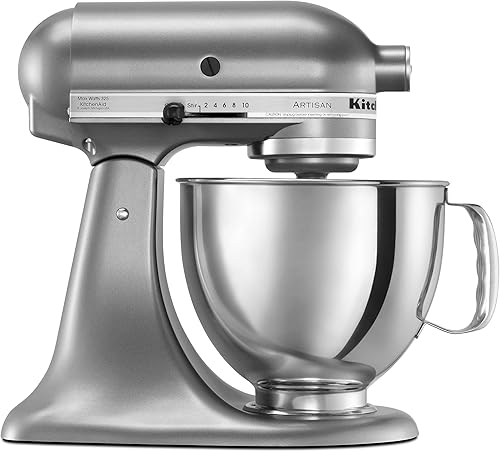
- 5-quart bowl
- Tilt-head design
- 10 speed settings
- Pouring shield
Choose the Artisan for a mix of cookies, cakes and occasional bread. Tilt-head access makes it a practical fit for recipes that need scraping and ingredient additions.
Pros
- Tilt-head access for scraping and adding ingredients
- Speed range covers stirring through whipping
- Pouring shield included
- Supports optional hub-powered attachments
Cons
- Needs clearance above the head
- Large dough batches call for a different mixer
- Optional hub attachments sold separately
Who should buy the KitchenAid KSM150PS?
Choose the Artisan if your normal routine includes a cake one weekend, cookies the next and bread now and then. Its tilt-head layout lets you reach the bowl when adding ingredients or scraping between mixing stages.
Skip it if your main goal is making several loaves at once on a fixed weekly schedule. Start with your dough recipe and required batch size, then choose a machine with suitable kneading limits.
For a larger KitchenAid reference point, our 7-quart KitchenAid bowl-lift review covers another model beyond the alternatives below.
If you're still deciding whether you need a countertop mixer at all, our stand mixer guide explains the main uses and choices.
What do the Artisan's bowl and speeds mean in practice?
The Artisan's 5-quart bowl and 10 speeds suit varied home recipes, but neither figure is a universal batch allowance. Match the recipe, mixing tool and speed instead of filling the bowl to its rim.
KitchenAid says it can mix up to 9 dozen cookies using the flat beater and 28 g dough portions. Larger cookies, stiff dough and bulky additions change how much space a batch needs.
Leave room for ingredients to move and for flour to blend in without spilling. A bowl that holds a mixture before mixing may still be too full for comfortable use.
Start dry ingredients slowly, then increase speed only as the recipe and mixer instructions allow. The fastest setting isn't a shortcut for every task, especially dough or batter that needs gentle mixing.
The pouring shield helps contain splashes and flour as you add ingredients. Pour gradually, since a shield won't prevent a cloud of flour if you add too much at once.
| Detail | KitchenAid Artisan KSM150PS |
|---|---|
| Dimensions (D x W x H) | 14.1 x 8.7 x 13.9 in |
| Weight | 10 kg |
| Cord length | 36 in |
| Color covered here | Contour Silver |
| Full model code | KSM150PSCU |
Use these measurements to plan a working spot, with extra clearance for the raised head and bowl removal. Our stand mixer size guide helps match bowl size to the recipes you actually make.
How does the KSM150PS compare with the Classic K45SS?
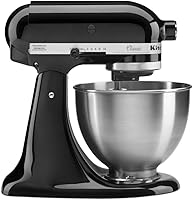
Choose the Classic for smaller recipes and the Artisan when extra bowl room would help your usual batches. The Classic has a 4.5-quart stainless steel bowl, while both mixers share tilt-head access and the same speed count.
That smaller bowl doesn't mean a smaller counter footprint. The Classic has the same stated outside dimensions as the Artisan, so choose it for recipe fit rather than space savings.
The Classic includes a coated flat beater, coated dough hook and 6-wire whip. Those tools cover mixing, kneading and whipping without needing optional hub accessories.
Skip the Classic if your current recipes already crowd a bowl of this size. Buying a smaller mixer and repeatedly splitting batches can add more work than it saves.
Both models support optional KitchenAid hub attachments, sold separately. If pasta or grinding interests you, compare compatibility separately from the main mixing tools.
Our KitchenAid Classic vs Artisan comparison gives you a closer look at that choice.
Is the Bosch Universal Plus a better choice for bread?
The Bosch is the more relevant alternative for frequent batch bread baking, thanks to its larger bowl and dough-focused bundle. Choose the Artisan if bread is only one part of a wider baking routine.
The Bosch has a 6.5-quart BPA-free plastic bowl and a bottom-drive layout that leaves access above the bowl open. Its controls provide 4 speeds plus pulse.
This bundle includes wire whips with a plastic drive, a dough hook, a NutriMill dough hook extender, a lid and a splash ring. The bowl has an easy-grip handle and a removable drive shaft for cleaning.
Don't choose by bowl volume or motor wattage alone. A stiff whole-grain dough and a softer white dough can place different demands on a mixer, so follow the exact model's recipe limits.
Check electrical compatibility before ordering this bundle, particularly if you're buying for a US kitchen. Confirm the exact unit's voltage with the seller rather than assuming all versions use the same supply.
Skip the Bosch if you want a metal bowl or prefer the familiar overhead tilt-head layout. It also measures 12 in wide, so allow more side-to-side counter room than the Artisan needs.
Our best stand mixers for bread dough guide helps narrow the choice around bread recipes.
Should you choose a tilt-head or bowl-lift mixer?
Choose tilt-head access for frequent bowl scraping and ingredient additions; choose a bowl-lift model when its locking bowl and dough features better match your recipes. The KitchenAid KSM55SXXX is the bowl-lift alternative here.
It has a 5.5-quart stainless steel bowl, a three-point bowl lock and 11 speeds. Its half-speed setting is designed for folding delicate additions such as blueberries and egg whites.
KitchenAid describes this model as suited to heavy, dense ingredients. Its included coated flat beater, coated dough hook and wire whip cover the main mixing jobs.
Buy it if dense dough comes up often and you're comfortable lowering the bowl to reach inside. Skip it if easy access under a raised motor head matters more to your baking routine.
Measure carefully: it stands 16.5 in high and is 11.31 in wide. A fixed head avoids the Artisan's upward tilting motion, but the taller body still needs enough cabinet clearance.
Read our tilt-head vs bowl-lift mixer guide for a closer look at how each layout changes bowl access.
What should you check before buying the KSM150PS?
Check your working space, regular recipes and exact package contents before choosing the Artisan. These details matter more than buying capacity you might use once a year.
Measure where you'll mix, rather than only where you'll store the machine. Leave room to raise the head, remove the bowl and set down ingredients without crowding the counter edge.
Plan a spot within reach of a suitable outlet. Keep the cord away from hot surfaces and wet areas, and follow the manual's electrical instructions.
Next, write down your 3 most common recipes and the largest batch you make regularly. A rare holiday bake may be easier to split than a weekly bread recipe.
Finally, match the full model code and included tools before ordering. Don't assume a pouring shield or optional hub attachment means every mixing accessory you want is included.
How do you set up and use the Artisan?
Begin with a stable counter, a secured bowl and the correct tool. Keep the speed control off and unplug the mixer while fitting or removing tools.
Read the manual before the first use, then wash the removable food-contact parts as directed. Dry them before assembly and keep the motor body out of water.
Fit the bowl and tool using the model's instructions, lower the head and engage its lock before mixing. Check that nothing loose can reach the moving tool.
Choose a flat beater for ordinary batter and cookie mixtures, a dough hook for kneading and a whisk for airy mixtures. Use only tools made to fit your mixer, and follow recipe guidance for each job.
Start slowly so ingredients can combine before you raise the speed. Stop the mixer before scraping, and never put a spatula into the bowl while the tool is moving.
For creamed mixtures, use butter at the temperature the recipe calls for. A mixer won't make cold butter behave like softened butter without changing the mixing process.
For bread, judge progress by the recipe's dough cues as well as the clock. Don't add extra flour just because the dough initially looks sticky.
Our step-by-step KitchenAid mixer guide walks through the basic routine.
How should you clean and care for the mixer?
Clean removable parts after use and check care instructions for each piece separately. A dishwasher-safe bowl doesn't mean every beater, whisk, shield or attachment belongs in the dishwasher.
Unplug the mixer before cleaning, then wipe the body with a damp cloth and dry it. Clear batter from accessible crevices before it hardens, without letting water enter the motor housing.
Wash tools promptly so dough and batter don't dry around joints. Inspect coated tools for damage and replace worn parts according to the manufacturer's guidance.
If a tool strikes the bowl or leaves an unusual amount unmixed at the bottom, stop and check its fit and adjustment instructions. Don't try to correct it while the mixer is running.
Store tools dry and keep optional attachments together with their instructions. Buying attachments one at a time also gives you a chance to learn each tool before adding another.
What mistakes should you avoid with the Artisan?
Avoid overfilling, using excessive speed and choosing by bowl size alone. These mistakes create extra cleanup and can lead you to buy the wrong mixer.
Don't double a recipe automatically because its ingredients appear to fit. Dough load, mixing action and room for additions matter as much as the empty space above the mixture.
Don't use a high speed to rush kneading or remove every lump from cake batter. Follow the dough instructions, and stop cake mixing when the recipe's texture cues are met.
Don't expect attachments to solve a capacity problem. A pasta maker or grinder expands what you can make, but it doesn't increase the mixing bowl's working limits.
The Artisan supports more than 10 optional hub-powered attachments, sold separately. Our KitchenAid attachment compatibility guide explains what to check before adding them.
Which mixer should you choose instead of the KitchenAid KSM150PS?
Choose the KitchenAid KSM150PS for varied, regular home baking when easy bowl access fits the way you cook. Before buying, confirm that your usual recipes fit its instructions and that you have room to use it comfortably.
Choose the Classic if smaller batches are your normal routine. Pick the Bosch for batch bread baking, or the KitchenAid bowl-lift model when dense mixtures and a locking bowl take priority.
If the choice is still close, decide using the recipe you make most often. Our best KitchenAid stand mixers guide helps compare the next options.
Related reading
Use these guides to settle batch size, mixer style and everyday use before making your final choice.
For the KitchenAid KSM150PS, the final check is practical: choose a working spot and compare your regular recipes with the manual's limits before committing.
Frequently asked questions
Is the KitchenAid KSM150PS the same as the Artisan?
Yes, the KitchenAid KSM150PS is a 5-quart tilt-head mixer in the Artisan series, and the Contour Silver version covered here has the full model code KSM150PSCU. Match that code when comparing packages, since a series name alone doesn't identify the exact color or included accessories.
How large is the KitchenAid Artisan bowl?
The KitchenAid Artisan KSM150PS has a 5-quart bowl, and KitchenAid gives a capacity example of up to 9 dozen cookies using the flat beater and 28 g dough portions. That example doesn't set a limit for bread, cake batter or every cookie recipe, so follow the instructions for your mixture.
Can the KitchenAid KSM150PS knead bread dough?
Yes, the KitchenAid Artisan KSM150PS is designed to knead bread dough as well as mix and whip, but bread recipes need the correct hook, speed and batch size. Follow the mixer instructions for those limits, and choose a larger dough-focused model if big bread batches are a regular job.
What is the difference between the Artisan and Classic K45SS?
The Artisan has a 5-quart bowl and includes a pouring shield, while the Classic K45SS has a 4.5-quart bowl and includes a coated beater, coated dough hook and wire whip. Both offer tilt-head access and 10 speeds, so choose mainly by your usual batch size and the package contents.