7 Best Stand Mixers for Bread Dough (October 2026)
The best stand mixers for bread dough include the KitchenAid Artisan KSM150PS for mixed baking routines, the Bosch Universal Plus for batch bread bakers, and the Cuisinart 5.5-Qt Stand Mixer for varied baking projects.
On this page (10 sections)
- Which stand mixer is best for bread dough?
- Best stand mixers for bread dough by batch size
- How much capacity do you need for bread dough?
- Does mixer style matter when kneading?
- What should you check before buying a dough mixer?
- How should you set up a mixer for its first bread batch?
- How do you knead bread dough without adding too much flour?
- Which common mistakes cause trouble with bread mixers?
- How should you clean and care for a bread mixer?
- Which stand mixer should you choose for bread dough?
The KitchenAid Artisan KSM150PS is our top pick for the best stand mixer for bread dough if your baking also includes cookies and cakes. For regular large bread batches, choose the Bosch Universal Plus, after confirming the unit's voltage matches your home.
The right choice starts with the recipe you repeat most often. A roomy bowl helps contain ingredients, but the mixer's kneading limits decide how much bread dough belongs inside.
Use our stand mixer size guide to compare capacities, and read how to knead dough with a stand mixer for speed and technique basics.
Our picks at a glance
-
1
-
2

-
3

- 4
 Check it
KitchenAid 7-Qt Bowl-Lift KSM70SKXX
Best for frequent family baking - 5
 Best for freezer bread prepCheck it
- 6
 Best for occasional bread bakingCheck it
- 7
 Best for smaller family bakesCheck it
Which stand mixer is best for bread dough?
The Artisan is the best all-purpose choice here, while the Bosch is the more direct choice for a bread-heavy routine. The KitchenAid bowl-lift and NutriMill Artiste also deserve attention when you regularly prepare larger recipes.
We compared capacity guidance, included tools, bowl access and fit for home baking. The scores reflect those features and the buyer each mixer suits; the highest overall score doesn't make a mixer the right choice for every batch.
Treat the comparison below as a shortlist. Your regular dough weight, available space and willingness to move the machine should settle the final choice.
| Product | Best for | Capacity | Design | Speeds | Our score |
|---|---|---|---|---|---|
| KitchenAid Artisan KSM150PS | mixed baking routines | 5 qt | Tilt-head | 10 | 9.1 |
| Bosch Universal Plus | batch bread bakers | 6.5 qt | Bottom drive | 4 plus pulse | 8.5 |
| Cuisinart 5.5-Qt Stand Mixer | varied baking projects | 5.5 qt | Tilt-back | 12 | 8.3 |
| KitchenAid 7-Qt Bowl-Lift KSM70SKXX | frequent family baking | 7 qt | Bowl lift | 11 | 8.1 |
| NutriMill Artiste 6.5-Qt | freezer bread prep | 6.5 qt | Bottom drive | 6 | 8.0 |
| Aucma 6.5-Qt Tilt-Head | occasional bread baking | 6.5 qt | Tilt-head | 6 plus pulse | 7.8 |
| Vivohome 6-Qt Tilt-Head | smaller family bakes | 6 qt | Tilt-head | 10 plus pulse | 7.7 |
Best stand mixers for bread dough by batch size
Choose a mixer that fits your usual bread recipe and other baking jobs. A family that freezes several loaves has different needs from someone making occasional bread between cakes.
The picks stay in score order, with a clear reason to buy or skip each one.
1. KitchenAid Artisan KSM150PS for bread dough
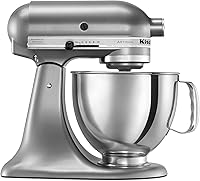
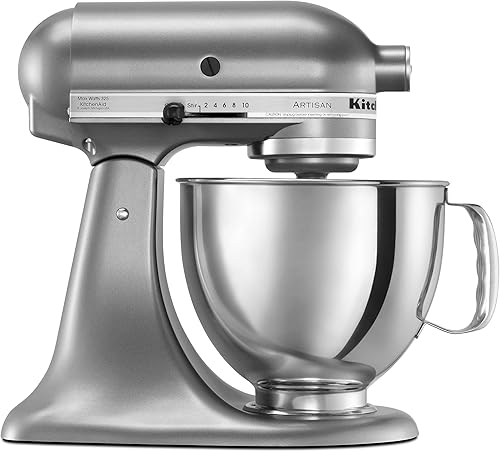
KitchenAid Artisan KSM150PS
- 5-quart bowl
- Tilt-head design
- 10 speeds
- Pouring shield included
Our first choice for bakers who want bread, cookies and cakes from one mixer. Choose a larger-batch model if bread production drives your buying decision.
Pros
- Head lifts for bowl access
- Pouring shield included
- Optional hub-powered attachments
Cons
- Bread batch limits need checking in the manual
- Confirm the exact package includes a suitable dough hook
The Artisan suits bakers who want one mixer for a varied weekly routine. Its 5-quart bowl, tilt head and 10 speeds cover the layout and control needs of bread, cake and cookie preparation.
Lifting the head gives you room to remove a tool or scrape the bowl between stages. That access is useful when a recipe moves from combining ingredients to kneading, though you should stop the mixer before reaching inside.
A pouring shield is included, and optional hub-powered attachments add uses beyond mixing. Those extras matter if the mixer will earn its counter space through several cooking tasks.
Buy it for regular home baking with bread as one part of the plan. Skip it if your main goal is preparing several substantial loaves in one session.
Before choosing this package, confirm that it includes a suitable dough hook and check its bread limits. The bowl's volume alone cannot tell you which doubled recipes will fit.
2. Bosch Universal Plus
Bosch Universal Plus
- 6.5-quart bowl
- Bottom-drive design
- Dough hook and extender included
- 4 speeds plus pulse
A bread-focused choice for households that prepare several loaves together. The open top and included hook extender suit a batch-baking workflow.
Pros
- Hook extender included
- Dishwasher-safe BPA-free bowl
- Removable drive shaft for cleaning
Cons
- Plastic bowl
- 230 V specification needs checking against your household supply
The Bosch Universal Plus is the clearest fit for bakers who organize their week around bread batches. Its bottom-drive layout leaves the top of the bowl open for adding ingredients.
The 6.5-quart BPA-free plastic bowl has a removable drive shaft and is dishwasher safe. A dough hook and NutriMill hook extender are included, making this bundle worth considering for a bread-focused setup.
Bosch describes capacity of up to 14 loaves, but its supplied dough-weight figures vary. Use the manual's guidance for your recipe rather than converting that headline loaf count into permission to fill the bowl.
Buy it for regular batch baking, especially when several loaves will be cooled and frozen together. Skip it if your normal recipe is small and you prefer a steel bowl.
One buying check is essential: this bundle's specifications give 230 V. Confirm the exact unit's electrical requirements match your household supply before ordering.
3. Cuisinart 5.5-Qt Stand Mixer
Cuisinart 5.5-Qt Stand Mixer
- 5.5-quart stainless steel bowl
- Dough hook included
- 500-watt motor
- 12 speeds
A useful alternative for bakers who need a dough hook, whisk and paddle in one package. Its tilt-back head provides access for changing between bread and other recipes.
Pros
- Core mixing tools included
- Stainless steel bowl
- Splash guard with pour spout
Cons
- Bread batch limits need checking in the manual
- Head needs overhead clearance
The Cuisinart suits bakers who want the core mixing tools included and a stainless steel bowl. The package contains a dough hook, flat paddle, chef's whisk and splash guard with a pour spout.
Its 5.5-quart bowl sits between the Artisan and the larger machines here. The tilt-back head gives access for tool changes, while die-cast metal construction makes it an alternative for buyers who prefer a metal body.
There are 12 speed settings, but bread dough still needs the setting specified in the manual. Extra control positions are more useful across different recipes than as a reason to knead faster.
Buy it for bread alongside cakes, batters and whipped mixtures. Skip it if you want a large-batch bread machine with a stated dough-weight figure available for comparison.
Check overhead clearance before deciding where it will live. The head must open fully without hitting a cabinet, and you need room to lift out the bowl.
4. KitchenAid 7-Qt Bowl-Lift KSM70SKXX
KitchenAid 7-Qt Bowl-Lift KSM70SKXX
- 7-quart stainless steel bowl
- Bowl-lift design
- 11 speeds
- Coated dough hook included
Choose this for larger family recipes and a mixer that can stay on the counter. The locking bowl and included dough hook make it a stronger fit for bread-focused shopping than bowl size alone.
Pros
- 3-point locking bowl
- Largest bowl in this group
- Double flex edge beater included
Cons
- Weighs 28 lb
- Requires a suitable permanent counter spot
This KitchenAid is a better match than the Artisan for frequent larger family recipes. Its 7-quart stainless steel bowl attaches at 3 locking points, and the package includes a coated dough hook.
KitchenAid says it can knead over 8.5 lb of bread. Use that as a starting point for checking your recipe against the manual, since dough stiffness also affects the work required.
The included double flex edge beater adds value for other mixing jobs. Its half-speed setting is intended for folding delicate ingredients, so don't mistake that feature for a special bread-kneading mode.
Buy it when larger recipes justify a permanent counter spot. At 28 lb, it is a less convenient choice for someone who must lift the mixer out of a cupboard for every bake.
Skip it if most of your recipes are small and storage is tight. Check that you can attach, lower and remove the bowl comfortably in its intended position.
5. NutriMill Artiste 6.5-Qt
NutriMill Artiste 6.5-Qt
- 6.5-quart bowl
- Bottom-drive design
- Extended dough hook
- 6 speeds
A bread-focused option for bakers who make extra loaves to freeze. Its extended hook, bottom drive and easy-access lid suit repeated dough preparation.
Pros
- Extended dough hook included
- Suction cup feet
- Lid has an access window
Cons
- Plastic bowl
- Broad footprint needs measuring before buying
The NutriMill Artiste fits bread bakers who prepare extra loaves for the freezer. It combines a bottom drive with an extended dough hook and a lid that has an access window.
NutriMill says it can knead batches up to 8 lb. That gives you a useful weight reference, but the recipe and manual still set the working limit.
Its plastic bowl will appeal less to someone who wants stainless steel throughout their mixing setup. Suction cup feet help keep the base in position, provided the counter is clean and suitable for them.
Buy it for a bread-centered routine where the open-top layout makes ingredient additions convenient. Skip it if you mainly want a narrow machine for a crowded counter.
Measure its footprint before choosing a storage spot: it is 15.8 inches deep and 16.4 inches wide. Include room around it to handle the bowl and clean the work area.
6. Aucma 6.5-Qt Tilt-Head
Aucma 6.5-Qt Tilt-Head
- 6.5-quart stainless steel bowl
- Tilt-head design
- Dough hook included
- 6 speeds plus pulse
Consider Aucma for occasional bread alongside cakes and other mixing jobs. Its handled steel bowl is useful for carrying mixtures, but bowl volume should not set your dough batch size.
Pros
- Bowl has dual handles
- Dough hook included
- Splash guard has an access hatch
Cons
- Bread batch limits need checking in the manual
- Roomy bowl does not establish heavy-dough capacity
The Aucma suits occasional bread baking within a broader kitchen routine. Its 6.5-quart stainless steel bowl has dual handles, which are useful when lifting out a bowl of dough or carrying it to the worktop.
A dough hook, whisk and beater are included. The splash guard has an access hatch, so measured additions can go into the bowl without removing the whole guard.
Its 660-watt motor figure should not decide the comparison. Electrical input doesn't establish how much stiff dough the mixer can knead or how long it should run.
Buy it if you want a handled steel bowl and tilt-head access for varied recipes. Skip it if frequent large dough batches are the reason you're shopping.
For that use, prioritize a model with clearer bread-capacity guidance. With Aucma, check the manual's flour limits, dough limits and operating instructions before planning a doubled loaf recipe.
7. Vivohome 6-Qt Tilt-Head
Vivohome 6-Qt Tilt-Head
- 6-quart steel bowl
- Tilt-head design
- Dough hook included
- 10 speeds plus pulse
An option for families making bread alongside everyday batters and whipped mixtures. Match its flour guidance to your recipe rather than assuming every three-loaf batch will fit.
Pros
- Dough hook included
- Suction cups help stabilize the base
- Splash guard included
Cons
- 18.8 inches tall
- Flour capacity is not a total dough weight limit
The Vivohome is an option for smaller family baking sessions that include bread, batter and whipped mixtures. It has a 6-quart steel bowl, an included dough hook and 10 speeds plus pulse.
VIVOHOME describes capacity for 3 bread loaves or 2.2 lb of flour. Loaf sizes vary, and flour weight excludes the water and other ingredients that make up finished dough.
Use that flour figure as a prompt to check the manual's recipe guidance. It is not a total dough-weight allowance, and a different flour blend may need different handling.
Buy it for mixed baking tasks when its flour guidance fits your usual recipe. Skip it if you need a clearly defined heavy-dough allowance for repeated large batches.
Check cabinet clearance carefully because the mixer is 18.8 inches tall. Its suction cups help stabilize the base, but stay nearby during kneading and stop if the machine begins to move.
How much capacity do you need for bread dough?
Choose capacity by flour weight, total dough weight and dough type, using the limits for your exact mixer. Bowl size tells you how much space is available, not how much kneading load the machine can manage.
Start with your largest regular recipe rather than the holiday batch you make once a year. Splitting an occasional oversized recipe can be more practical than storing a large machine every day.
Turn your recipe into a useful batch weight
Add the weights of all ingredients to find total dough weight. A recipe with 500 g flour, 325 g water and 10 g salt makes about 835 g of dough before other additions.
If you double that recipe, you double the whole load. Comparing only flour weight with a total dough limit can lead you to choose the wrong batch size.
Use matching units and matching terms. A flour allowance, a dough-weight allowance and a loaf count describe different things.
Allow for dough stiffness and small batches
A soft, wetter dough behaves differently from a firm bagel-style dough. Stay within any separate guidance for whole grain or stiff dough, even when the bowl has room left.
A large bowl also needs a suitable minimum batch. If a small dough mass rides on the hook without being worked, stop and check the manual rather than running the mixer longer.
See our complete guide to stand mixers for home bakers for a broader comparison of capacity, layout and everyday uses.
Does mixer style matter when kneading?
Mixer style mainly changes access, mounting and the space you need. Choose among tilt-head, bowl-lift and bottom-drive designs after confirming that the model suits your recipe.
A tilt head opens above the bowl, which helps with fitting tools and scraping ingredients. Measure the space with the head open, not just the height of the closed machine.
A bowl-lift design keeps the head in place while you raise the bowl toward the tool. Practice the bowl attachment steps before adding ingredients so you know it is seated correctly.
A bottom-drive design places the drive below the bowl. It leaves the top open, but cleaning around the central parts becomes part of the routine.
None of these layouts removes the need to follow dough limits. Our guide to tilt-head vs bowl-lift mixers explains those two styles in more detail.
What should you check before buying a dough mixer?
Check recipe fit, included tools, electricity and workspace before comparing extras. These details decide whether a mixer will work in your kitchen from the first batch.
- Recipe fit: Find guidance for your flour type and batch weight, including any limits for dense dough.
- Tools: Confirm that the package includes the correct dough hook, plus any extender or drive part needed for your intended batch.
- Electricity: Match the exact unit's voltage to your home, especially when considering an imported bundle.
- Workspace: Allow room to operate controls, remove the bowl and open the head or lid.
- Storage: Consider the lift from shelf to counter, including how securely you can carry the machine.
Don't choose by wattage alone. Drive design, gearing, permitted load and run-time instructions matter more to your bread routine than a larger electrical input number.
Likewise, more speeds don't mean better kneading. A mixer may have many settings for whipping and mixing while allowing only a specific low setting for dough.
Our guide to choosing a stand mixer for home baking helps you weigh these tradeoffs. For broader recipe needs, compare our best stand mixers for home bakers.
If you've narrowed the choice to one brand, see the best KitchenAid stand mixers.
How should you set up a mixer for its first bread batch?
Set up on a clean, dry, level counter, then check bowl and hook attachment before adding ingredients. Keep the mixer away from the counter edge and leave its ventilation areas clear.
Wash removable food-contact parts according to the manual before first use. Dry them fully, then fit the correct kneading tool with the machine switched off and unplugged.
Check that the bowl locks or seats as intended. On models with suction feet, a clean counter helps the feet make contact, but you should still remain nearby during use.
Weigh the recipe before starting and put small additions within reach. Keeping flour, liquid and a scraper ready reduces interruptions and helps you avoid pouring in an unmeasured amount.
Begin with a familiar recipe that fits comfortably within the machine's guidance. Save recipe doubling and unusual flour blends until you understand the setup and dough behavior.
Note the flour weight, hydration and any changes you make. Those notes are more useful for the next loaf than assuming every dough will need the same mixing time.
How do you knead bread dough without adding too much flour?
Use the recipe's measured flour and a pause to assess texture before making corrections. Sticky dough can be normal, especially early in mixing or in wetter bread recipes.
Combine ingredients at the permitted low speed so loose flour doesn't fly out. Once the ingredients come together, follow the recipe and manual for the kneading stage.
If dry pockets remain, stop the mixer before scraping. Don't hold a scraper against moving tools or try to push dough down while the hook turns.
Give flour time to absorb liquid before deciding the dough is too wet. Whole grain mixtures can change as they rest, so immediate flour additions may leave the finished loaf dry.
Check dough development during pauses. Many wheat doughs become more elastic and can stretch into a thin film, while bran-rich dough may tear sooner and need a different judgment.
Keep rich dough recipes in their intended order. Adding butter or other ingredients earlier than directed changes how the dough comes together.
A timer is a reminder to check, not proof that kneading is finished. Don't raise the speed to make a slow-developing dough catch up.
Which common mistakes cause trouble with bread mixers?
The biggest mistakes are overloading, kneading too fast and correcting dough too soon. Each can turn a manageable recipe into unnecessary work for both you and the machine.
Doubling a recipe because the bowl looks empty
Dough can leave plenty of visible space while still creating a heavy load. Check the full recipe weight and any flour-specific limit before doubling.
If you divide a recipe, weigh each ingredient for each batch. Guessing at half the liquid or salt can change the dough more than the mixer choice does.
Leaving the machine running while dough climbs
Stop if dough climbs toward parts that should stay clear. Switch off and unplug before removing it, then check batch size, hook fit and the manual's instructions.
Repeated climbing isn't a reason to keep pushing dough down near a moving tool. A smaller batch or a different recipe approach may be needed.
Ignoring movement, strain or rising dough temperature
Stop if the mixer moves, struggles or gives off an unusual smell. Follow the manual's guidance for pauses and cooling rather than trying to finish the batch at any cost.
Long mixing can also warm dough and change fermentation speed. Check the dough during rests, especially if a recipe depends on keeping its temperature controlled.
How should you clean and care for a bread mixer?
Remove dough from removable parts soon after mixing, and follow the care instructions for each tool. Dried dough takes more work to remove from hooks, seams and bowl fittings.
Switch off and unplug before taking anything apart. Wipe loose flour from the base with a soft cloth, then clean the housing with a lightly damp cloth without soaking it.
Use only the disassembly steps described in the manual. A removable drive shaft, coated hook and wire whip may each need different handling.
Don't assume all parts can go in the dishwasher because the bowl can. Our guide to dishwasher care for KitchenAid mixer attachments explains why the exact tool matters.
Check coatings, mounting points and the cord during routine cleaning. Let everything dry before storage, and keep tools where they won't scrape against each other.
Which stand mixer should you choose for bread dough?
The best stand mixer for bread dough is the one that fits your repeat recipe, your counter and your other baking jobs. Use these choices to settle the shortlist.
Choose the Artisan for a varied home baking routine, or the Cuisinart if its included tool set and steel bowl suit you better. For occasional bread, consider Aucma or Vivohome only after matching the manual's guidance to your batch.
Choose the Bosch for regular batch bread preparation after resolving the voltage check. Consider the KitchenAid bowl-lift for larger family recipes, or the Artiste for a bottom-drive bread setup.
Before ordering, write down your usual flour weight and total dough weight. Then use our guide to kneading dough with a stand mixer alongside your model's manual for the first batch.
Our top 3 picks at a glance
-
1
-
2
-
3
Frequently asked questions
What makes a stand mixer good for bread dough?
A suitable dough hook and a recipe-sized kneading capacity matter most. Compare your flour weight and total dough weight with the manual's limits, then check the permitted speed and run time.
Bowl volume, motor wattage and the number of speed settings cannot establish bread capacity on their own.
Is a tilt-head or bowl-lift mixer better for bread dough?
Choose the model that fits your dough batch and workspace rather than choosing by head style alone. Tilt-head mixers open above the bowl, while bowl-lift mixers raise the bowl toward the tool.
For frequent larger recipes, prioritize documented dough guidance and secure bowl mounting over the convenience of either layout.
Can a stand mixer knead whole wheat dough?
Yes, a suitable stand mixer can knead whole wheat dough, and Bosch specifically describes whole grain bread use for the Universal Plus. Follow recipe-specific capacity guidance because flour type and hydration change the load.
Whole grain dough may need a rest for flour absorption before you judge its final texture.
How long should a stand mixer knead bread dough?
Use your recipe and mixer manual together, then check the dough instead of relying on a fixed timer. Hydration, flour type and batch size affect how it develops.
Our guide to kneading dough with a stand mixer explains the process, including when to pause and assess the dough.