5 Best KitchenAid Stand Mixers (October 2026)
The best Best KitchenAid stand mixers for home baking include the KitchenAid Artisan KSM150PS for everyday baking, the KitchenAid Classic K45SS for first-time bakers, and the KitchenAid 5.5-Qt Bowl-Lift KSM55SXXX for frequent bread bakers.
On this page (10 sections)
- Which is the best KitchenAid stand mixer for your baking?
- How we compared KitchenAid stand mixers
- How much bowl capacity do you actually need?
- How do tilt-head and bowl-lift designs change daily use?
- Which KitchenAid mixer is best for bread dough?
- How should you set up a KitchenAid mixer before the first recipe?
- Which mixing habits prevent the most common mistakes?
- How do you clean and care for the mixer?
- How do you choose between KitchenAid models without overbuying?
- Which best KitchenAid stand mixer fits your final shortlist?
The best KitchenAid stand mixer for most home bakers is the Artisan KSM150PS because it balances everyday batch room with easy bowl access. Choose a different model when your normal recipes, available space or storage routine point clearly toward it.
Start with what you bake in an ordinary week, not the largest holiday recipe you can imagine. A mixer that fits your counter and usual dough is more useful than extra bowl space you rarely fill.
For a broader look at mixer styles, start with our stand mixer buying guide. If your shortlist already has two familiar models, compare the Classic and Artisan.
Our picks at a glance
-
1
-
2

-
3
 Best for frequent bread bakers
KitchenAid 5.5-Qt Bowl-Lift KSM55SXXX
8.4/10 our score
See it on Amazon
- 4
 Check it
KitchenAid 7-Qt Bowl-Lift KSM70SKXX
Best for batch bakers - 5
 Check it
KitchenAid Artisan Mini 3.5-Qt
Best for compact kitchens
Which is the best KitchenAid stand mixer for your baking?
The Artisan is the best general choice, but frequent bread bakers should consider the bowl-lift models first. The Classic suits standard recipes, while the Mini earns its place when a smaller machine makes baking easier to fit into your kitchen.
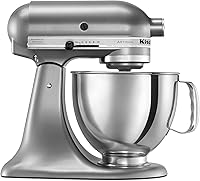
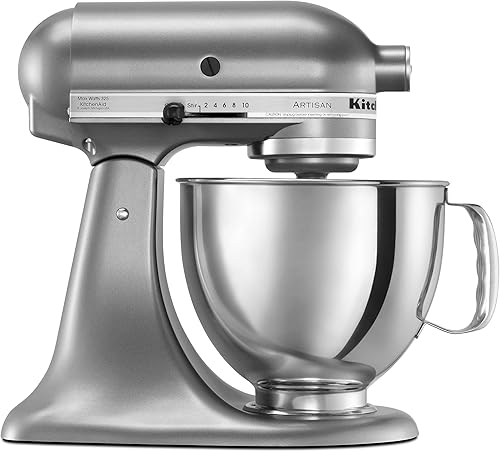
KitchenAid Artisan KSM150PS: best KitchenAid mixer for everyday baking
KitchenAid Artisan KSM150PS
- 5-qt bowl
- Tilt-head design
- 10 speeds
- Pouring shield included
The middle-size choice for bakers who switch between cakes, cookies and occasional bread. Tilt-head access helps when adding ingredients or changing tools.
Pros
- Bowl size suits varied home recipes
- Speed range covers stirring through whipping
- Pouring shield included
Cons
- Less capacity than either bowl-lift pick
- Head needs clearance above the mixer
The Artisan suits bakers who move between cookie dough, cake batter, frosting and occasional bread. Its 5-qt bowl gives you more room than the Classic without moving to a bowl-lift design.
Tilt-head access is useful during recipes with several additions. Stop the mixer, lift the head and you can scrape the bowl or change tools without working around a fixed motor head.
Its 10-speed control runs from slow stirring to fast whipping, and a pouring shield is included. Start dry ingredients slowly even with the shield fitted, since a shield doesn't replace careful pouring.
Choose this model if you want one mixer for a varied home baking routine. It is also the sensible starting point when you haven't found a clear reason to choose either the smallest or largest option.
Skip it if large bread batches are the main job, or if your counter cannot accommodate a raised head. Those needs point toward a bowl-lift model or a different counter position.
Don't choose it over the Classic merely for a smaller exterior: both have the same closed dimensions. Use our stand mixer size guide to decide whether the extra bowl room matters.
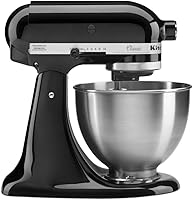
KitchenAid Classic K45SS
KitchenAid Classic K45SS
- 4.5-qt stainless steel bowl
- Tilt-head design
- 10 speeds
- Three mixing tools included
A straightforward fit for standard recipes, with a flat beater, dough hook and wire whip included. Choose it when you don't need extra batch room.
Pros
- Stainless steel bowl is dishwasher safe
- Tools included for mixing, kneading and whipping
- Head lifts for bowl access
Cons
- Less batch room than the Artisan
- Same closed dimensions as the Artisan
The Classic suits a baker building a routine around standard recipes rather than frequent batch doubling. Its 4.5-qt stainless steel bowl is paired with a coated flat beater, coated dough hook and 6-wire whip.
Those tools cover distinct jobs: the beater handles batters and cookie dough, the hook kneads yeast dough, and the whip adds air to cream or egg mixtures. Choosing the right tool matters more than using the fastest setting.
The head tilts for bowl access and locks in place during mixing. Its 10 speeds give you a slow starting point for flour additions and higher settings for recipes that need whipping.
Choose the Classic if your usual recipes fit and you want a straightforward setup. Don't buy a larger mixer solely because you might host one busy baking day each year.
Skip it if you already split normal recipes into several batches. Also skip it as a space-saving alternative to the Artisan, since the smaller bowl doesn't come with a smaller closed footprint.
Our KitchenAid Classic vs Artisan comparison helps you weigh bowl room against your actual baking habits.
KitchenAid 5.5-Qt Bowl-Lift KSM55SXXX
KitchenAid 5.5-Qt Bowl-Lift KSM55SXXX
- 5.5-qt bowl
- Bowl-lift design
- 11 speeds including 1/2 speed
- Three mixing tools included
A practical step toward heavier mixing jobs without choosing the largest bowl. Its three-point bowl support and folding speed serve different parts of a baking routine.
Pros
- Three-point locking bowl
- Half speed for gentle folding
- Flat beater, dough hook and wire whip included
Cons
- Wider and taller than the Classic and Artisan
- Same exterior dimensions as the 7-qt model
The 5.5-qt model is the pick for bakers whose routine puts heavier demands on the mixer. Its three-point locking bowl supports the bowl during mixing, and the head stays fixed while the bowl moves into position.
It includes a coated flat beater, coated dough hook and 6-wire whip. The half-speed setting gives you a gentle option for incorporating delicate additions, though a spatula remains useful when a recipe needs only a few folds.
KitchenAid says it can knead over 7 lb of bread. Match any large dough recipe to the model's instructions rather than treating that figure as permission to fill the bowl with any flour mixture.
Choose it for regular bread making, substantial cookie dough batches or a clear preference for bowl-lift operation. The reason to move up from a tilt head is the overall mixing setup, not just the modest increase in bowl volume.
Skip it if your baking mostly involves standard cake recipes and you prefer lifting the head for access. It also won't save counter space over the 7-qt pick: the two share the same exterior dimensions.
KitchenAid 7-Qt Bowl-Lift KSM70SKXX
KitchenAid 7-Qt Bowl-Lift KSM70SKXX
- 7-qt bowl
- Bowl-lift design
- 11 speeds including 1/2 speed
- Double flex edge beater included
Choose this for repeated large recipes and baking days with several trays to fill. It includes both a standard flat beater and a double flex edge beater.
Pros
- Largest bowl in this group
- Double flex edge beater included
- Pouring shield included
Cons
- 28-lb weight makes storage moves a chore
- Large bowl may be unnecessary for standard single batches
The 7-qt model suits bakers who regularly fill several trays or prepare large amounts for gatherings. Its largest-in-this-group bowl makes sense when reducing the number of mixing batches is a real weekly benefit.
The included tools are a double flex edge beater, coated flat beater, coated dough hook and 11-wire whip, plus a pouring shield. The flexible beater edges are designed to scrape the bowl, but still check the bottom for unmixed ingredients.
KitchenAid says it can knead over 8.5 lb of bread. That capacity is useful only when your recipe and the model's dough instructions support the amount you plan to mix.
Choose it if you can name the recipes that will use the extra room. It shares the smaller bowl-lift model's counter dimensions, so the capacity upgrade doesn't require a wider parking spot.
Skip it if you plan to lift it out of a low cupboard for every use. At 28 lb, it calls for a realistic storage plan and a clear route to the counter.
For a bread-focused shortlist, see our best stand mixers for bread dough.
KitchenAid Artisan Mini 3.5-Qt
KitchenAid Artisan Mini 3.5-Qt
- 3.5-qt bowl
- Tilt-head design
- 10 speeds
- Smaller footprint than the Classic
A smaller mixer for bakers who value counter room and make modest batches. Its attachment compatibility excludes bowls and beaters.
Pros
- Smaller footprint than the Classic
- Lighter than the Classic
- Tilt head gives access for adding ingredients
Cons
- Least batch room in this group
- Bowls and beaters need Mini-specific compatibility
The Artisan Mini suits modest recipes in kitchens where every appliance needs to earn its space. KitchenAid says it has a 20% smaller footprint and is 25% lighter than the Classic K45SSWH.
It weighs 17.1 lb, so smaller doesn't mean effortless to move. Think about the cupboard height, lifting distance and whether you can leave it near its working position.
The tilt-head design gives access for ingredient additions and tool changes. It still needs room above the head when open, so don't judge fit from its closed height alone.
Choose the Mini if your ordinary baking is small enough that a larger bowl would mostly hold empty space. Regular use can still mean modest batches, especially when you bake for one or two people.
Skip it if splitting cookie dough or bread into separate batches would frustrate you. It also needs compatible bowls and beaters, even though its attachment support extends to other KitchenAid accessories.
Before choosing a compact mixer, compare your recipes with the KitchenAid size options. Saving counter space works best when you aren't giving up the batch room you need.
How we compared KitchenAid stand mixers
We compared capacity, bowl access, controls, included tools and counter fit, giving the broadest home-baking uses the most weight. The scores reflect those priorities, while the badges identify buyers whose needs favor a particular model.
The Artisan leads because it sits between the smaller choices and the bowl-lift models. The Classic follows for standard recipes; the larger mixers serve more specific batch needs, and the Mini puts space savings first.
A lower position doesn't make the Mini a poor choice for a crowded kitchen. Likewise, the largest bowl isn't the best upgrade if your ordinary recipes already fit a smaller mixer.
| Product | Best for | Capacity | Style | Speeds | Our score |
|---|---|---|---|---|---|
| KitchenAid Artisan KSM150PS | everyday baking | 5 qt | Tilt head | 10 | 9.1 |
| KitchenAid Classic K45SS | first-time bakers | 4.5 qt | Tilt head | 10 | 8.8 |
| KitchenAid 5.5-Qt Bowl-Lift KSM55SXXX | frequent bread bakers | 5.5 qt | Bowl lift | 11 | 8.4 |
| KitchenAid 7-Qt Bowl-Lift KSM70SKXX | batch bakers | 7 qt | Bowl lift | 11 | 8.1 |
| KitchenAid Artisan Mini 3.5-Qt | compact kitchens | 3.5 qt | Tilt head | 10 | 7.5 |
How much bowl capacity do you actually need?
Choose bowl capacity around your usual recipe and its working space, not household size alone. A couple who batch-bakes bread may need more room than a family making one cake at a time.
Write down your three most common recipes and note how often you double them. Use those recipes to separate a genuine capacity need from an occasional wish.
Bowl volume isn't the same as a safe dough limit. A bowl that holds a large amount of loose flour may not be suited to kneading the dough made from that amount.
Stiff dough creates a different workload from soft cake batter. Check recipe type as well as quantity before assuming a batch fits because it sits below the bowl rim.
Extra space helps contain additions and gives ingredients room to move. Too little mixture can also be awkward if the tool doesn't reach it well, so don't buy the largest bowl merely for future possibilities.
Cookie batch claims need context because cookie size and dough composition vary. Measuring your normal dough is more useful than planning around a dozen count from a different recipe.
Allow a little room for the way you bake now. If your only large batch happens once a year, mixing it in stages may be a better trade than storing a larger machine all year.
How do tilt-head and bowl-lift designs change daily use?
Choose a tilt head for open access or a bowl lift when you prefer a fixed head and a bowl that rises into position. Neither design removes the need to stop and scrape during some recipes.
With a tilt head, check the full movement above and behind the mixer. A machine can fit beneath a cabinet when closed yet require pulling forward before you can change tools.
With a bowl lift, practice the bowl attachment steps before adding ingredients. Secure every support point as directed, then raise the bowl fully before starting.
The Classic and Artisan each measure 14.1 in deep, 8.7 in wide and 13.9 in high when closed. Both bowl-lift picks measure 14.63 in deep, 11.31 in wide and 16.5 in high.
Leave working room beside those measurements for ingredient bowls, the lift control and removing the mixing bowl. A tight parking space isn't always a useful baking station.
For the access trade-offs, read tilt-head vs bowl-lift stand mixers. Pair that with our stand mixer size guide if your recipes and kitchen seem to call for different sizes.
Which KitchenAid mixer is best for bread dough?
The 5.5-qt bowl-lift is the first model to consider for frequent bread making, while the larger bowl-lift suits bakers who need more batch room. Occasional bread doesn't automatically require leaving the Artisan or Classic behind.
Choose around the dough you actually make. A soft, wet dough behaves differently from a stiff dough, and rich doughs can have mixing steps beyond a simple knead.
Follow the model's limits for dough amount, speed and run time. A faster setting isn't a shortcut to better gluten development, and a fuller bowl isn't proof that the machine should knead that amount.
Watch the dough rather than relying only on a timer. Flour absorption, ingredient temperature and the recipe all affect when dough reaches the intended texture.
If the mixer struggles, stop and reassess the batch instead of increasing speed. Keep the machine attended during kneading so movement or a change in operation doesn't go unnoticed.
Our guide to how to knead dough with a stand mixer covers the process. The best stand mixers for bread dough guide helps if bread matters more than general baking.
How should you set up a KitchenAid mixer before the first recipe?
Set the mixer on a stable, level work surface, then learn how the bowl and tool secure before loading ingredients. Unplug it while fitting or removing tools.
Wash the removable food-contact parts according to their care instructions and dry them well. Read the model's setup directions before making adjustments or choosing a dough speed.
Practice attaching the empty bowl and a mixing tool. Confirm that the tilt head locks or the bowl lift engages correctly, depending on the model.
Check tool clearance using the manual's method. A beater should not scrape or strike the bowl, and fitting a different bowl or tool may call for another clearance check.
Set out ingredients in recipe order before starting. This helps you add them steadily instead of leaving the mixer running while you search for the next item.
Keep the speed control off before connecting power. Start slowly, then move to the recipe's required setting once the first ingredients are contained.
For a fuller walk-through, follow how to use a KitchenAid stand mixer. Keep the model manual nearby for the steps that differ between designs.
Which mixing habits prevent the most common mistakes?
Use the right tool and the lowest useful starting speed, then watch how the mixture changes. More speed and longer mixing can spoil texture even when the mixer has plenty of capacity.
Match the tool to the job
Use a flat beater for tasks such as creaming butter and mixing batter. Use the dough hook for kneading and a wire whip when the goal is adding air.
Don't use the whip as a substitute for a dough tool. Thick mixtures need a tool suited to their resistance, not simply the tool already attached.
Stop before scraping or adding tools
Turn the mixer off before putting a spatula into the bowl. Scrape the sides and bottom, remove the spatula, then resume mixing.
Pause after early mixing steps to check for a pocket of flour or butter at the bottom. Scraping once at the right time can prevent excess mixing later.
Add flour gradually and check texture
Start flour additions slowly so they stay in the bowl. Give each addition time to combine before deciding the mixture needs more speed.
Once flour is in cake batter, mix only as the recipe directs. Prolonged beating can change the crumb, even if the batter looks smoother.
Use gentle settings with judgment
The bowl-lift models' half-speed setting is useful for gentle incorporation. For a delicate mixture that needs only a few folds, finish by hand when that gives you better control.
Watch cream and whipped mixtures closely near the end. A mixer keeps working at the same pace after the mixture reaches the texture you wanted.
How do you clean and care for the mixer?
Clean food residue promptly and follow each part's own care instructions. Don't assume a bowl, coated beater and wire whip all share the same dishwasher rules.
Unplug the mixer before cleaning the body or removing tools. Wipe the exterior with a damp cloth, keeping water away from openings, controls and the power connection.
Remove batter from the tool shaft and bowl attachment area so it doesn't dry into a hard layer. Dry removable parts before storing them.
The Classic's stainless steel bowl is dishwasher safe. For other parts, check the specific care directions rather than extending that rule across the whole mixer.
Our guide to putting KitchenAid mixer attachments in the dishwasher explains why material and finish matter. If a coated tool becomes damaged, follow KitchenAid's replacement guidance.
Store tools where they won't knock against one another. If they sit inside the bowl, use a clean protective layer to reduce contact between hard surfaces.
How do you choose between KitchenAid models without overbuying?
Buy for the jobs you'll repeat, then treat optional attachments as separate decisions. A pasta-making plan shouldn't outweigh poor counter fit or a bowl that is wrong for your usual baking.
These mixers support optional hub-powered accessories, sold separately. Bowls and beaters need their own compatibility check, especially with the Mini.
Start with the mixing tasks you already know you'll use. Add specialized accessories when you have a recipe or routine for them, rather than buying several at once.
For the two middle-size tilt heads, use our model comparison. If you rarely bake or prefer quick cleanup for small jobs, consider whether a stand mixer is worth it for home baking.
Which best KitchenAid stand mixer fits your final shortlist?
Pick the Artisan when your recipes vary and no strong space or batch-size need points elsewhere. Pick the Classic when standard recipes fit comfortably and you don't need the Artisan's extra bowl room.
Choose the 5.5-qt bowl lift for a routine built around bread or heavier mixing jobs. Move to the 7-qt model when you regularly need the extra batch room and have a practical place to keep it.
Choose the Mini when a smaller footprint makes the difference between using a mixer often and leaving it stored away. Make sure its batch limits suit your normal recipes before trading capacity for space.
The best KitchenAid stand mixer is the one that fits both your busiest ordinary recipe and your working counter. For the final model decision, continue to which KitchenAid mixer should you buy?.
Our top 3 picks at a glance
-
1
-
2
-
3
Best for frequent bread bakers
KitchenAid 5.5-Qt Bowl-Lift KSM55SXXX
8.4/10 our score
See it on Amazon
Frequently asked questions
Which KitchenAid stand mixer is best for most home bakers?
The Artisan KSM150PS is the best KitchenAid stand mixer for most home bakers. Its 5-qt bowl provides a middle ground between the smaller tilt-head choices and larger bowl-lift models, while the pouring shield helps with ingredient additions.
Choose another model when storage space or frequent large batches drive your decision.
What is the difference between KitchenAid tilt-head and bowl-lift mixers?
A tilt-head mixer raises the motor head for bowl access, while a bowl-lift mixer raises the bowl into mixing position. Tilt-head models need clearance above the head; bowl-lift models need room around the bowl and controls.
Our tilt-head vs bowl-lift guide explains the practical differences.
Is the KitchenAid Mini large enough for regular baking?
The Artisan Mini can suit regular baking when your usual recipes fit its smaller bowl. Frequency alone doesn't call for a larger mixer: a modest batch every weekend is different from several loaves at once.
Choose more capacity if splitting your normal recipes would become a regular chore.
Do KitchenAid stand mixers use the same attachments?
Don't assume every KitchenAid accessory fits every mixer. Hub-powered attachments and bowl tools have different fit requirements, and the Mini's attachment compatibility excludes bowls and beaters.
Match the exact accessory to your mixer model before buying.
Our KitchenAid attachment compatibility guide explains the checks that matter.