Which KitchenAid Mixer Should I Buy?
If you're asking which KitchenAid mixer you should buy, choose the Artisan KSM150PS for everyday baking, the Classic for standard batches, or a bowl-lift model for frequent larger loads.
On this page (9 sections)
- Which KitchenAid mixer should I buy for everyday baking?
- Is the Classic or Artisan a better fit?
- When should you choose a bowl-lift KitchenAid?
- How do you match bowl size to your recipes?
- Will the mixer fit where you plan to use it?
- Which tools and attachments are worth planning for?
- How should you set up and use a new KitchenAid mixer?
- What care habits and mistakes matter most?
- Which KitchenAid mixer should you buy for your routine?
If you're asking which KitchenAid mixer you should buy, start with the Artisan KSM150PS for everyday baking, the Classic for standard batches, or a bowl-lift model for frequent larger loads.
Choose around the recipes you make most weeks. A mixer that suits your regular cookie dough, cake batter or bread routine is a better fit than one bought around a single holiday bake.
For broader choices beyond KitchenAid, see our stand mixer buying guide. Our bread and baking guide covers that topic, while our stand mixers for bread dough guide focuses on choosing equipment for dough.
Which KitchenAid mixer should I buy for everyday baking?
The Artisan is the strongest starting point for mixed everyday baking. Choose the Classic when standard recipes meet your needs, or move to a bowl-lift when larger batches are a regular part of your routine.
These 4 models cover the main decisions: bowl size, access style and how much mixing you plan to do at once.
| Model | Style | Bowl capacity | Speed settings | A sensible fit |
|---|---|---|---|---|
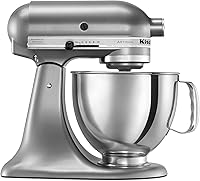
| KitchenAid Artisan KSM150PS | Tilt-head | 5 qt | 10 | Cakes, cookies and varied home baking |
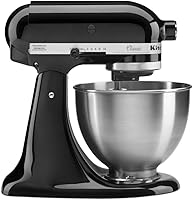
| KitchenAid Classic K45SS | Tilt-head | 4.5 qt | 10 | Standard recipes without a need for extra bowl room |
| KitchenAid 5.5-Qt Bowl-Lift KSM55SXXX | Bowl-lift | 5.5 qt | 11 | Frequent larger batches and dense mixing |
| KitchenAid 7-Qt Bowl-Lift KSM70SKXX | Bowl-lift | 7 qt | 11 | Regular bulk baking and large family batches |
Start by writing down your 3 most common recipes and their usual batch sizes. Note any doubled recipes, bulky additions or doughs that already crowd your current bowl.
Then separate routine needs from rare ones. Mixing 2 batches on an occasional busy day may be more practical than making space for a larger machine every day.
Tilt-head mixers let you raise the head to reach the bowl. Bowl-lift mixers keep the head in place and raise the bowl toward the tool, which changes how you add ingredients and remove attachments.
Our tilt-head vs bowl-lift mixer comparison explains those handling differences in more detail.
Is the Classic or Artisan a better fit?
Choose the Artisan for extra bowl room or the Classic when your normal recipes fit a smaller bowl. Their shared tilt-head design makes this mainly a question of capacity and included equipment.
Which KitchenAid mixer should I buy for everyday cakes and cookies?
Buy the Artisan KSM150PS if your baking shifts between cookies, cake batter and other family recipes. It gives you room above the Classic without moving to a bowl-lift design.
KitchenAid says the Artisan can mix up to 9 dozen cookies using the flat beater and 28 g of dough per cookie. Treat that as a defined recipe comparison, rather than a target for every dough you make.
Its included pouring shield helps contain ingredients as you add them. Start slowly with flour even when the shield is fitted, since a shield doesn't replace careful pouring.
The Artisan suits someone who adds ingredients in stages and wants the head out of the way between steps. Think creaming butter and sugar, adding eggs, then scraping the bowl before the dry ingredients go in.
Skip it if large dough loads drive your choice. Compare the bowl-lift options first rather than choosing this model simply because it's the familiar name.
It also supports over 10 optional hub-powered attachments, sold separately. Buy around the mixing jobs first, then add a tool once you have a clear use for it.
For the closest comparison, see KitchenAid Classic vs Artisan.
KitchenAid Classic K45SS: choose it for standard recipes
The Classic K45SS suits bakers who make one standard recipe at a time. Its smaller bowl makes sense when you have no regular need for the Artisan's extra capacity.
It includes a coated flat beater, coated dough hook and 6-wire whip. Those tools cover different tasks: mixing batter, kneading suitable dough and whipping air into ingredients.
KitchenAid gives a maximum of 8 dozen cookies using the flat beater and 28 g of dough per cookie. Large cookies, nuts and other additions change how much dough you can comfortably work with.
Choose it for a routine built around cakes, cookies and occasional dough within its instructions. The head locks in place during mixing, then lifts for access when the machine is stopped.
Skip the Classic if you already double recipes often. Buying a smaller bowl and repeatedly splitting your normal batches defeats the reason for choosing it.
Don't choose it to save counter space compared with the Artisan, either. Their external dimensions are the same, despite the difference in bowl capacity.
Our guide to using a KitchenAid mixer walks through setup and basic operation.
When should you choose a bowl-lift KitchenAid?
Choose a bowl-lift when larger batches and a locking bowl fit your normal workload. The smaller bowl-lift here is the first model to consider; the largest needs a clear reason in your recipe routine.
Both models use a 3-point bowl lock. Secure the bowl fully before raising it into position, rather than assuming it is seated because it looks level.
KitchenAid 5.5-Qt Bowl-Lift KSM55SXXX: choose it for frequent larger batches
The KSM55SXXX fits bakers who want a bowl-lift without the largest bowl here. It is a sensible step up when your usual work includes larger dough batches, dense mixtures or family meal preparation.
KitchenAid gives capacities of 11 dozen cookies, over 7 lb of bread dough or 6 lb of mashed potatoes. The cookie figure uses the flat beater and 28 g of dough per cookie.
KitchenAid also claims twice the power in the bowl compared with the KSM150. That comparison measures peak horsepower in the bowl above speed 2; it isn't permission to increase kneading speed or exceed recipe limits.
The included tools are a coated flat beater, coated dough hook and 6-wire whip. Its 1/2 speed setting is designed for gently folding delicate additions such as blueberries and egg whites.
Choose this model if you want the bowl-lift layout and your normal batches fit its limits. The extra-low setting is useful when you want a gentle start with ingredients that can break apart.
Skip it if bowl access matters more than larger loads. Someone who mainly makes single cakes and often changes tools may prefer the tilt-head workflow.
KitchenAid 7-Qt Bowl-Lift KSM70SKXX: choose it for regular bulk baking
The KSM70SKXX is for bakers with a repeated need for large batches. It makes more sense for planned bulk baking than for occasional hopes of making bigger recipes.
KitchenAid gives capacities of 13 dozen cookies, over 8.5 lb of bread dough or over 7.5 lb of mashed potatoes. Again, the cookie figure uses the flat beater and 28 g portions.
It includes a double flex edge beater, coated flat beater, coated dough hook, 11-wire whip and pouring shield. The flexible edges are designed to scrape the bowl during mixing.
That tool can reduce scraping work, but check the mixture before finishing. A flexible edge doesn't remove the need to stop and inspect the bottom of the bowl.
Like the smaller bowl-lift, it has a 1/2 speed setting for folding. Stop once delicate ingredients are combined, since a slow speed can still overmix a recipe if it runs too long.
Skip this model if most of your recipes are small. A large bowl doesn't establish how well a tool will reach a tiny quantity, so check minimum amounts in the instructions for your intended recipes.
For more on the change in size and workflow, read our KitchenAid Artisan vs 7-qt bowl-lift comparison.
How do you match bowl size to your recipes?
Choose capacity around your usual finished mixture and its working needs, rather than the number of people in your household. A small household that batch-bakes may need more room than a large household that makes one cake at a time.
Start with the whole batch
For bread, count the full dough weight, including flour, water and other ingredients. Flour weight alone doesn't describe the load the mixer will handle.
For cookies, consider bulky additions and the amount of dough before portioning. A cookie count based on small portions can sound much larger than the batch you picture.
Cake batter needs room to move without splashing. Don't treat the bowl rim as a fill line or assume a doubled recipe will mix properly because the ingredients fit while still.
Match capacity to the texture
Stiff dough and loose batter place different demands on a mixer. More bowl space doesn't automatically mean a recipe is within the machine's dough limit.
Follow the model's instructions for flour type, quantities and speed. When a recipe exceeds those limits, split it instead of forcing the full load through.
Small amounts need attention too. If you mainly whip a little cream or mix tiny batches, confirm that your planned quantity is suitable before choosing the largest bowl.
Our guide to what size stand mixer you need helps connect recipe size with kitchen space.
Will the mixer fit where you plan to use it?
Measure the working space as well as the storage space. A mixer that fits under a cabinet while closed may still be awkward to load, scrape or clean there.
The Classic and Artisan each measure 14.1 in deep, 8.7 in wide and 13.9 in high. Both bowl-lift models measure 14.63 in deep, 11.31 in wide and 16.5 in high.
Allow extra overhead room for a raised tilt-head. For either style, leave space around the bowl to add ingredients, remove tools and lift out a full batch.
Check the route from storage to the counter if you won't leave the mixer out. The Classic weighs 22 lb and the 7-qt model weighs 28 lb, which matters if you need to lift one from a low cupboard.
Also check the outlet position. The Artisan has a 36 in cord, so plan its location before choosing a permanent spot.
A stable, level work surface is essential. Keep the mixer away from the counter edge and avoid placing it where its cord crosses a sink or hot cooking area.
Which tools and attachments are worth planning for?
Start with the tools needed for your actual recipes, then consider optional attachments. A long accessory wish list shouldn't decide which bowl size you buy.
A flat beater is the usual choice for batters and cookie dough. Use a dough hook for suitable kneading tasks and a wire whip when the recipe needs air beaten into cream or eggs.
Those roles aren't interchangeable. Using a whip on a dense mixture or treating a dough hook as a general batter tool creates avoidable problems.
Hub-powered attachments are a separate choice from bowl tools. Pasta makers and food grinders connect differently from bowls, beaters and hooks, so check compatibility by exact model.
If you already own accessories, write down their model numbers before choosing a new mixer. Don't assume that a bowl tool will transfer just because both machines are KitchenAid.
Our KitchenAid mixer attachment guide helps you plan useful additions. Read the attachment compatibility explainer before ordering a specific tool.
How should you set up and use a new KitchenAid mixer?
Set up the bowl and tool securely, then begin at a low speed. Correct assembly and a sensible mixing order matter more than rushing to a higher setting.
Unplug the mixer before fitting or removing tools. Seat the bowl according to the instructions, then lock the tilt-head or secure and raise the bowl-lift bowl as required.
Check that the tool clears the bowl correctly. If it strikes the bowl or leaves an unusual gap, stop and follow the model's adjustment procedure rather than bending the attachment.
For that task, use our KitchenAid beater-height adjustment guide. Correct clearance won't remove every need to scrape, but it helps the tool work where intended.
Measure ingredients before starting and follow the recipe's order. Adding flour or liquid in stages is easier to control than pouring everything into a running mixer at once.
Start slowly to contain dry ingredients, then increase speed only as the recipe and mixer instructions allow. Stop and unplug before scraping or reaching near the tool.
For bread, follow the prescribed kneading speed instead of choosing a faster setting to save time. Use dough texture as well as elapsed time to judge progress.
What care habits and mistakes matter most?
Clean the bowl and tools promptly, and check care instructions for each part. Don't assume every accessory can go through the same wash cycle.
The Classic's stainless steel bowl is dishwasher safe. That doesn't establish dishwasher safety for its coated tools, wire whip or any accessory bought separately.
Unplug the mixer before wiping the body, and keep water out of openings. Remove flour and batter from attachment areas so dried residue doesn't interfere with fitting parts later.
Let washed pieces dry fully before putting them away. Check coated tools for damage during cleaning and follow KitchenAid's guidance if a coating begins to deteriorate.
Avoid these common buying and use mistakes:
- Buying for one rare event. Match the mixer to your normal week, then decide whether splitting occasional large batches is acceptable.
- Comparing cookie counts without portion sizes. The capacity figures here use small, defined portions, not every cookie recipe.
- Filling to the rim. Ingredients need room to circulate, expand and accept additions.
- Using speed to force progress. More speed won't correct an oversized dough load or replace the right tool.
- Running past the recipe's finish point. Stop when the mixture reaches the needed texture, especially after adding flour.
- Skipping assembly checks. A loose bowl, unlatched head or poorly fitted tool needs attention before mixing begins.
Which KitchenAid mixer should you buy for your routine?
Buy the model that fits the batch you repeat most often. If you're still asking which KitchenAid mixer you should buy, use this decision path before making your choice.
Choose the Classic if standard recipes meet your needs and you don't regularly want more bowl room. Remember that its smaller capacity doesn't reduce its footprint compared with the Artisan.
Choose the Artisan if you want tilt-head access for varied everyday baking and some extra capacity. It is the practical middle choice when cakes and cookies drive the decision.
Choose the 5.5-qt bowl-lift if frequent larger loads justify the bowl-lift layout. Move to the 7-qt bowl-lift when your normal batches need that additional room or its included tools serve a clear purpose.
Before ordering, check your usual recipe against the instructions, measure the working space and confirm any accessories you plan to reuse. For bread-focused baking, make our guide to kneading dough with a stand mixer your next read.
Frequently asked questions
Which KitchenAid mixer is best for most home bakers?
The Artisan KSM150PS is the best starting point for everyday home baking; its 5-qt bowl gives you more room than the Classic while keeping tilt-head access. Choose a bowl-lift instead if larger dough loads are part of your normal week, rather than an occasional holiday project.
Is the KitchenAid Classic big enough for cookies?
The Classic suits standard cookie recipes, with a 4.5-qt bowl; KitchenAid gives a maximum of 8 dozen cookies using the flat beater and 28 g of dough per cookie. Bulky additions and different doughs change the space needed, so follow the model's instructions rather than judging by cookie count alone.
Should I buy a tilt-head or bowl-lift KitchenAid mixer?
Buy a tilt-head for open bowl access when adding ingredients and changing tools; choose a bowl-lift for its locking bowl and larger batch options. Measure your working space first: a tilt-head needs clearance when raised, while a bowl-lift still needs room around the bowl for tools and ingredients.
Do KitchenAid mixers use the same attachments?
Check each attachment against your exact mixer model before buying; hub-powered tools such as pasta makers are a different fit question from bowls, beaters and dough hooks. A shared brand name doesn't establish compatibility for every accessory, as our KitchenAid attachment compatibility guide explains in more detail.
What size KitchenAid mixer do I need for bread dough?
Choose around your usual dough weight and recipe, rather than bowl volume alone; KitchenAid gives the 5.5-qt bowl-lift a bread dough capacity of over 7 lb and the 7-qt model over 8.5 lb. Follow the instructions for your model, flour type, kneading speed and batch size.