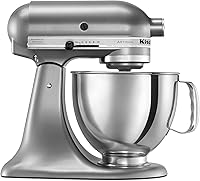
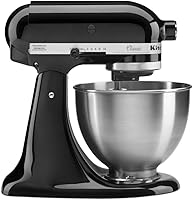
KitchenAid 7-Quart Bowl-Lift KSM70SKXX Review: Worth It? (October 2026)
The KitchenAid 7-quart bowl-lift stand mixer suits frequent large-batch baking, especially when you want its included double flex edge beater. Choose it for recipes that need the extra bowl space and a counter where it can stay within reach.
On this page (10 sections)
- The KitchenAid 7-quart bowl-lift stand mixer at a glance
- How much capacity will you actually use?
- What do the speeds and included tools help you do?
- Will it fit your counter and storage routine?
- How should you set up and care for the mixer?
- How does the smaller bowl-lift model compare?
- How does the Artisan tilt-head compare?
- What about the Bosch Universal Plus?
- Which mistakes should you avoid with a large mixer?
- Should you buy the KitchenAid 7-quart bowl-lift stand mixer?
The KitchenAid 7-quart bowl-lift stand mixer is a good choice for frequent large-batch baking, especially if you want the included double flex edge beater. Buy the KSM70SKXX when your normal recipes need the room, rather than choosing it for an occasional holiday batch.
Its main tradeoff is space and handling. A large mixer earns its place when you can leave it ready to use and regularly avoid splitting recipes into smaller batches.
For everyday cakes, modest cookie batches or occasional bread, a smaller model deserves equal attention. The alternatives below serve different routines, so start with what you bake each week.
The KitchenAid 7-quart bowl-lift stand mixer at a glance
The KSM70SKXX combines a large bowl, a folding setting and a broad accessory set. Those are its strongest reasons to buy, particularly for bakers who switch between dough, batter and whipped mixtures.
KitchenAid 7-Qt Bowl-Lift KSM70SKXX

- 7 qt capacity
- 11 speeds, including 1/2 speed
- Double flex edge beater
- 3-point locking bowl
Choose this bowl-lift mixer for frequent batch baking and the included double flex edge beater. It makes the most sense with a permanent counter spot.
Pros
- Largest bowl among these four mixers
- Includes a folding speed
- Double flex edge beater and pouring shield included
- 3-point locking bowl supports dense mixtures
Cons
- 28 lb weight makes frequent storage awkward
- Extra capacity may go unused with small recipes
- Tall body needs clear access under cabinets
KitchenAid describes its 3-point locking bowl as providing stability for heavy, dense ingredients. Secure bowl support matters for dough, but it doesn't remove the need to follow recipe and batch limits.
Who should buy the KitchenAid 7-quart bowl-lift stand mixer?
Choose it if you often double recipes, prepare dough for several loaves or bake enough cookies to divide among several households. The useful gain is fewer separate mixing batches, which can simplify weighing ingredients and preparing a large recipe.
It also suits bakers who want a flex edge tool included from the start. The double flex edge beater has 2 flexible edges designed to scrape the bowl and improve ingredient incorporation.
Who should choose a smaller mixer?
Skip this model if you mostly make small recipes and won't use the extra room. With very small amounts, check that the attachment reaches and works the mixture properly before assuming a larger bowl will help.
Frequent storage is another reason to reconsider. Compare the KitchenAid Artisan vs 7-quart bowl-lift mixer if lifting the head and using a smaller bowl better matches your routine.
How much capacity will you actually use?
Choose capacity around your normal recipe size, including room for ingredients to move as they mix. Filling a bowl to its rim leaves no useful working space.
KitchenAid gives examples of 13 dozen cookies, over 8.5 lb of bread dough or over 7.5 lb of potatoes. The cookie example uses the flat beater and 28 g dough portions, so it doesn't translate directly to large bakery-style cookies.
Treat those examples as a sense of scale. A stiff dough places different demands on a mixer than a soft batter, even when both occupy similar bowl space.
Before choosing, write down your 3 most common recipes and their usual batch sizes. Include how often you double them, since a mixer chosen for one annual baking day can be oversized for the rest of the year.
Also check what happens after mixing. Your oven capacity, baking sheets and proofing containers may limit production before the mixer bowl does.
If bread drives the decision, our guide to kneading dough with a stand mixer explains how dough type and technique affect the job. More bowl space doesn't justify increasing every recipe without checking the manual.
What do the speeds and included tools help you do?
The 11 speeds include a gentle 1/2-speed folding setting, while the accessory set covers mixing, kneading and whipping. Match the tool and speed to the recipe instead of using one attachment for everything.
KitchenAid designed the folding setting for delicate additions such as blueberries and egg whites. Stop as soon as the ingredients are combined, since a slow setting can still overwork a mixture if it runs too long.
Start flour and other loose ingredients slowly to reduce scattering. Increase speed only when the recipe and manual call for it, and avoid using a high setting to hurry dough along.
The box contains a stainless steel bowl, double flex edge beater, coated flat beater, coated dough hook, 11-wire whip and pouring shield. The shield helps contain ingredients, but adding dry ingredients in controlled portions still matters.
Use a beater for suitable batters and creaming tasks, the hook for dough and the whip for mixtures that need air. A flex edge beater can reduce scraping, but stop the machine and check the bottom of the bowl when the recipe needs even mixing.
KitchenAid's power comparison with the KSM150 measures peak horsepower in the bowl above speed 2. That comparison doesn't establish a kneading speed or promise a shorter mixing time.
Will it fit your counter and storage routine?
Plan for working access as well as the machine's dimensions. You need room to reach the controls, lower the bowl and remove it without squeezing past nearby appliances.
| Detail | KitchenAid KSM70SKXX |
|---|---|
| Dimensions (D x W x H) | 14.63 x 11.31 x 16.5 in |
| Weight | 28 lb |
| Bowl size | 7 qt |
| Bowl support | 3-point locking |
| Model number | KSM70SKXXBK |
Measure below cabinets and shelves at the exact spot where you'll use it. Leave space beside the mixer for ingredients and a place to set down a bowl or attachment.
A sturdy, level counter is the right starting point. Keep the work area dry and clear, and stay nearby while the mixer runs.
If storage requires carrying it across the kitchen or lifting it from a low cupboard, think through that movement before buying. A machine that's inconvenient to retrieve is easier to leave unused.
How should you set up and care for the mixer?
Seat the bowl correctly, check tool clearance and clean each part according to its instructions before settling into a routine. These steps matter more than starting with the largest recipe you can find.
Unplug the mixer before fitting the bowl or changing attachments. Follow the manual to engage the bowl supports and locking point, then raise it to the correct mixing position.
Check clearance with the attachment and method specified by KitchenAid. If ingredients remain untouched at the bottom or a beater contacts the bowl, use our guide to adjusting the beater height before continuing.
For your first recipe, choose a familiar batch so you can focus on the controls and bowl access. Add ingredients in the recipe's order, pause for scraping when needed and judge mixing by the mixture's condition.
After use, unplug the mixer and remove food before it dries onto the tools. Wipe the body rather than immersing it, and dry cleaned parts before storage.
Don't assume the bowl, coated tools, flex edges and wire whip share the same cleaning instructions. Our guide to putting KitchenAid mixer attachments in the dishwasher explains why you should check each part separately.
How does the smaller bowl-lift model compare?
The KSM55SXXX suits moderate batches in the same bowl-lift format, but it doesn't save counter space. Choose it because its capacity and included tools meet your needs.
Its 5.5 qt stainless steel bowl comes with the same number of speed settings and a folding option. It also uses a 3-point locking bowl.
The included tools are a coated flat beater, coated dough hook and 6-wire whip. The larger model adds the double flex edge beater and pouring shield, and includes an 11-wire whip.
Skip the smaller model if reducing split batches is your main reason for upgrading. Conversely, don't move up solely for a larger bowl you'll rarely fill.
How does the Artisan tilt-head compare?
The Artisan KSM150PS is the better fit for modest recipes and buyers who prefer tilt-head access. Its narrower body also helps when counter width matters.
It has a 5 qt bowl, 10 speeds and a pouring shield. It measures 14.1 in deep, 8.7 in wide and 13.9 in tall with the head down.
Allow extra overhead space to raise the head. Compare the way you'll add flour, scrape batter and remove a finished mixture, since access can matter as much as capacity.
Skip the Artisan if your regular recipes already require multiple mixing batches in a bowl this size. For more options, see the best KitchenAid stand mixers or work through what size stand mixer you need.
What about the Bosch Universal Plus?
The Bosch Universal Plus deserves a look for bread-focused baking and open access above the bowl. Its bottom-drive layout is a different working setup from either KitchenAid design.
This bundle has a 6.5 qt BPA-free plastic bowl, 4 speeds, wire whips, a dough hook and a NutriMill dough hook extender. The removable drive shaft and dishwasher-safe bowl are useful cleaning features.
Bosch describes large bread and cookie capacities, but those examples don't establish a direct recipe-for-recipe comparison with KitchenAid. Choose around your dough and the machine's instructions rather than the biggest batch claim.
The supplied specifications identify this bundle as 230 V, so confirm the exact unit's voltage and your electrical supply before ordering. Skip it if those requirements don't match, or if you prefer a stainless steel bowl.
Compare the best stand mixers for bread dough if kneading is your main use and you want to weigh several layouts.
Which mistakes should you avoid with a large mixer?
Don't confuse bowl volume with permission to overload the mixer or raise the kneading speed. Dough stiffness, attachment choice and the manual's limits all matter.
Avoid adding extra flour simply because dough looks sticky early in mixing. Give the recipe its intended mixing and resting stages before changing its balance.
Don't leave a spatula in the bowl while the attachment moves. Stop and unplug the machine before reaching inside to scrape or clear ingredients.
Finally, don't buy accessories on the assumption that all KitchenAid bowls and beaters fit every model. Match replacements to the exact model and accessory compatibility guidance.
For a wider view of mixer types and common baking jobs, our stand mixer guide for home bakers puts capacity, design and tools in context.
Should you buy the KitchenAid 7-quart bowl-lift stand mixer?
Buy the KitchenAid 7-quart bowl-lift stand mixer for regular batch work, with a clear counter spot and recipes that benefit from its room. The included flex edge beater strengthens the case if you'd otherwise seek that tool separately.
Choose the smaller bowl-lift for moderate batches when you still want that layout. Pick the Artisan for everyday recipes and tilt-head access, or consider the Bosch for a bread-focused routine after confirming electrical compatibility.
Before ordering, measure your work area and check the batch requirements of your favorite recipe. Then follow our step-by-step KitchenAid mixer guide to get comfortable with setup and use.
Frequently asked questions
Is the KitchenAid KSM70SKXX worth it?
The KSM70SKXX is worth choosing for frequent large recipes and its included double flex edge beater. Give it an accessible counter spot, then check that your normal batches justify the larger bowl; occasional bakers making modest recipes have less reason to choose it over a smaller mixer.
How much can the KitchenAid 7-quart mixer hold?
KitchenAid gives examples of 13 dozen cookies, over 8.5 lb of bread dough or over 7.5 lb of potatoes. The cookie example uses the flat beater and 28 g dough portions; follow recipe-specific limits in the manual because bowl volume alone doesn't establish a safe dough load.
What comes with the KSM70SKXX?
The KSM70SKXX includes a stainless steel bowl, double flex edge beater, coated flat beater, coated dough hook, 11-wire whip and pouring shield. Use the hook for dough, the whip for aerating mixtures and the beaters for suitable mixing tasks, following the manual's attachment and speed guidance.
Is the KSM70SKXX a bowl-lift mixer?
Yes, the KSM70SKXX uses a bowl-lift design with a 3-point locking bowl. The head stays in place while the bowl rises into its mixing position; stop and unplug the mixer before changing tools, and follow the manual when seating the bowl and checking attachment clearance.