KitchenAid Classic K45SS Stand Mixer Review: Worth It? (October 2026)
The KitchenAid K45SS suits everyday home baking when its 4.5-quart bowl fits your recipes. Choose it for routine cakes, cookies and occasional bread; compare larger models if you regularly double recipes or make large dough batches.
On this page (9 sections)
- The KitchenAid K45SS at a glance
- How does the K45SS compare with other KitchenAid models?
- Is the bowl big enough for your recipes?
- Will the Classic fit your counter and storage routine?
- How should you set up and use the K45SS?
- Can the K45SS handle bread dough?
- When do the larger alternatives make more sense?
- What care and attachment habits matter most?
- Should you choose the KitchenAid K45SS?
The KitchenAid K45SS is a sensible choice for everyday baking if you make regular batches of cookies, cakes and occasional bread. Choose a larger model when doubling recipes or kneading large dough batches is part of your normal routine.
The Classic covers the main mixing jobs without requiring extra accessories. The buying decision comes down to recipe size, counter space and how often you expect it to work through dense dough.
The KitchenAid K45SS at a glance
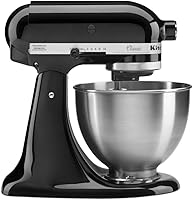
The K45SS combines tilt-head access and the core baking tools in a metal-bodied mixer. It suits a home baker who wants help with repeat tasks such as creaming butter, mixing batter and whipping cream.
KitchenAid Classic K45SS

- 4.5-quart stainless steel bowl
- Tilt-head design
- 10 speeds
- Flat beater, dough hook and wire whip
Choose the Classic for routine cakes, cookies, whipped cream and occasional bread within its recipe limits. Its tilt head gives you access for adding ingredients and scraping the bowl.
Pros
- Stainless steel bowl is dishwasher safe
- Included tools cover beating, kneading and whipping
- Tilt head opens access to the bowl
- Power hub accepts optional attachments
Cons
- Less bowl room than the alternatives here
- 22-pound weight matters if stored in a cabinet
- Optional hub attachments cost extra
KitchenAid gives a maximum cookie capacity of 8 dozen, based on a flat beater and 28 g of dough per cookie. Use that as a reference for that specific batch, rather than a promise that every cookie recipe or doubled mixture will fit.
The mixing action has 59 touchpoints around the bowl. You'll still need to stop and scrape when a recipe calls for it, especially after adding eggs or dry ingredients.
Who should buy the KitchenAid K45SS?
Buy it if your usual recipes fit comfortably within its limits and you bake often enough to benefit from a fixed mixing station. Cakes, cookies and whipped toppings make a stronger case for this model than a plan centered on large bread batches.
It also suits someone moving from a hand mixer who wants the bowl held in place while ingredients mix. You still need to watch the mixture and stop at the right texture.
Skip it if your main aim is to combine several bread batches into one. If you bake only a few times a year, consider whether you want to store and move a substantial appliance for those few sessions.
How does the K45SS compare with other KitchenAid models?
The Artisan is the closest upgrade for more bowl room, while the KSM55SXXX changes both capacity and operating style. Choose between them around the work you do most, rather than the number of speed settings.
| Model | Bowl capacity | Mixer style | Speeds | Main reason to choose it |
|---|---|---|---|---|
| KitchenAid Classic K45SS | 4.5 qt | Tilt-head | 10 | Everyday recipes with straightforward bowl access |
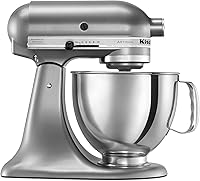
| KitchenAid Artisan KSM150PS | 5 qt | Tilt-head | 10 | A little extra room and an included pouring shield |
| KitchenAid 5.5-Qt Bowl-Lift KSM55SXXX | 5.5 qt | Bowl-lift | 11 | A 3-point locking bowl and half-speed folding setting |
| Bosch Universal Plus | 6.5 qt | Bottom drive | 4 plus pulse | Larger bread batches and open access above the bowl |
The Artisan makes sense when your existing recipes need a little more space for mixing and adding ingredients. Skip this modest size increase if your real goal is a much larger bread-making routine.
The bowl-lift model suits frequent work with dense mixtures and bakers who want a bowl secured at 3 points. Its half-speed setting also gives you a slow option for folding delicate additions such as blueberries into batter.
Choose the Classic if the extra room and different controls won't solve a problem in your baking. A larger machine is useful when you use that capacity, but it also needs a suitable place to work.
Read our KitchenAid Classic vs Artisan comparison for the closer choice between the tilt-head models. Our best KitchenAid stand mixers guide covers the broader lineup.
Is the bowl big enough for your recipes?
Judge capacity by the batches you make regularly, including their ingredients and mixing method. An occasional party bake can be split into batches; a weekly recipe that always needs splitting points toward a larger mixer.
Start with 3 recipes: your usual cake, your thickest cookie dough and any bread you make often. Compare their quantities with the mixer's directions before deciding that a bowl size suits all 3.
Leave room for ingredients to move and for flour to enter without spilling. Filling a bowl near the rim makes adding, scraping and removing the mixture harder, even when everything physically fits.
Dough density matters as much as volume. A soft cake batter and a stiff bread dough can place very different demands on a mixer, so don't use the cookie capacity to set a dough limit.
Tiny batches need thought too. If you mostly whip a spoonful of cream or mix a very small portion, a hand tool may be simpler than setting up a stand mixer.
Our guide to choosing the right stand mixer size helps you weigh regular recipes against occasional larger jobs.
Will the Classic fit your counter and storage routine?
The Classic needs space to operate with its head raised, not just space to stand with it closed. Its closed dimensions are 14.1 in deep, 8.7 in wide and 13.9 in high.
Measure the counter beneath your cabinets, then allow room to lift the head, change tools and remove the bowl. A mixer that fits under a cabinet may still need to slide forward before you can use it.
At 22 lb, this is worth planning around if you'll store it below the counter. Choose a location where you can lift it securely without reaching around other appliances.
Use a firm, level surface with clear access to the controls. Keep the cord away from a hot cooktop, sink edge or a spot where someone could catch it.
The K45SS is a 120-volt appliance. Buyers using a different household supply need to resolve compatibility before treating it as a ready-to-use kitchen purchase.
How should you set up and use the K45SS?
Start with a seated bowl, a secure tool and a locked head, then begin at low speed. Good setup helps prevent avoidable splashes and keeps the tool working where it should.
- Wash the bowl and tools according to their care directions before first use.
- With the mixer off and unplugged, secure the bowl and fit the correct attachment.
- Lower and lock the head before mixing.
- Start slowly, then increase speed only as the recipe requires.
- Stop the mixer before scraping the bowl or changing tools.
Use the flat beater for cookie dough, cake batter and creaming butter with sugar. The dough hook is for kneading, while the wire whip is for adding air to cream or egg mixtures.
Prepare ingredients before switching on. Butter that needs softening should reach the recipe's intended texture first; extra speed is a poor substitute for the right ingredient temperature.
Add flour in portions at low speed so it has time to mix into the wet ingredients. Stop and scrape the bottom and sides when needed, keeping spatulas and fingers clear of moving tools.
If the beater misses ingredients at the bottom or strikes the bowl, check the setup before continuing. Follow the model-specific steps to adjust the beater height on a KitchenAid mixer rather than bending an attachment.
For a fuller walkthrough, see how to use a KitchenAid stand mixer.
Can the K45SS handle bread dough?
The K45SS can knead bread dough within its operating limits, but its cookie capacity does not tell you how much bread dough to load. Follow the mixer instructions for quantity, speed and kneading time.
Begin with a bread recipe sized for the machine. Don't double it simply because the ingredients leave space at the top of the bowl.
Watch the dough as it comes together rather than adding flour until the bowl looks perfectly clean. Some doughs remain tacky, and excess flour can turn a soft loaf into a dry, heavy one.
Stop if the machine struggles or behaves unusually, then check the instructions and batch size. Increasing speed is not a way to make an oversized dough batch manageable.
The mixer also doesn't replace the recipe's cues for dough development. Follow the dough's texture and the stated method, including any rests, rather than kneading for an arbitrary extra few minutes.
Our guide to kneading dough with a stand mixer explains how to work through those steps.
When do the larger alternatives make more sense?
Choose a larger alternative when your normal workload exceeds the Classic's comfortable role. The Artisan, bowl-lift KitchenAid and Bosch each answer a different need.
Artisan: for a little more room
The Artisan suits bakers who want to keep tilt-head access while gaining some space around their usual mixture. Its pouring shield is useful when adding ingredients that tend to scatter.
Skip it as a capacity upgrade if you expect it to transform how much bread you can make at once. The increase in bowl size is modest.
Bowl-lift KitchenAid: for frequent dense mixtures
The KSM55SXXX suits bakers who often knead or mix dense ingredients and want a locking bowl. It measures 14.63 in deep, 11.31 in wide and 16.5 in high, so check the working space before choosing it.
Skip it if you prefer lifting the head clear for tool changes and mostly make ordinary cakes or cookies. Learn the bowl attachment and lifting routine before deciding that this style fits you.
Bosch Universal Plus: for batch bread baking
The Bosch suits bread bakers who want a bottom-drive layout with access from above. This bundle includes wire whips, a dough hook, a dough hook extender, a lid and a splash ring.
Its plastic bowl and removable drive shaft offer a different handling and cleaning routine from the KitchenAid designs. Skip it if a stainless steel bowl is a firm requirement.
Confirm the exact unit's voltage before ordering: this bundle specifies 230 volts. That makes electrical compatibility a buying requirement for a household with a 120-volt supply.
What care and attachment habits matter most?
Clean promptly and follow each tool's own care directions. The Classic's stainless steel bowl is dishwasher safe, but that does not establish the cleaning method for its coated tools or wire whip.
Unplug the mixer before removing tools or wiping the body. Keep the body out of water, and clear away flour and batter before they harden around controls or seams.
Use a soft cleaning tool on coated attachments to avoid unnecessary scraping. Dry removable parts before storage, and check coatings for damage during normal cleaning.
The power hub supports more than 10 optional attachments, including pasta makers and food grinders. Buy one for a task you already plan to do, rather than building an accessory collection before learning the mixer.
Keep accessory storage in mind as well. A tool that needs several parts washed and stored should earn its place through regular use.
Should you choose the KitchenAid K45SS?
Choose the KitchenAid K45SS for regular home recipes when its capacity and counter needs fit your routine. Make the Artisan your next comparison if you only need a little extra bowl room.
Choose the bowl-lift KitchenAid for frequent dense mixtures, or consider the Bosch for a larger bread-making routine after confirming electrical compatibility. If moving a heavy mixer from storage would discourage you from baking, settle its working location before buying.
Write down your usual batch size and measure your counter first. Then use our stand mixer guide for home bakers to make the final choice around how you'll actually cook.
Frequently asked questions
What size bowl does the KitchenAid K45SS have?
The KitchenAid K45SS has a 4.5-quart stainless steel bowl; KitchenAid gives a capacity of up to 8 dozen cookies using the flat beater and 28 g of dough per cookie. Use your usual recipe size and the mixer's instructions to decide whether it provides enough room.
Can the KitchenAid K45SS knead bread dough?
Yes, the K45SS includes a coated dough hook for kneading bread dough; follow the mixer's directions for dough quantities, speed and mixing time. Cookie capacity does not establish a bread-dough limit, so avoid scaling a bread recipe around how much empty space remains in the bowl.
What comes with the KitchenAid K45SS?
The K45SS includes a 4.5-quart stainless steel bowl, coated flat beater, coated dough hook and 6-wire whip; these tools cover everyday beating, kneading and whipping. Pasta makers, food grinders and other power-hub attachments are separate purchases, so choose those around meals you actually plan to make.
Is the KitchenAid K45SS bowl dishwasher safe?
Yes, the K45SS stainless steel bowl is dishwasher safe; follow separate care directions for the coated beater, coated dough hook and wire whip, since the bowl's cleaning instructions do not cover every tool. Unplug the mixer before cleaning, and wipe the mixer body rather than immersing it.