5 Best Small and Compact Stand Mixers (October 2026)
The best small stand mixers include the KitchenAid Artisan Mini 3.5-Qt for countertop bakers, the bella 3.5-Qt Hand and Stand Mixer for flexible prep, and the Kitchen in the Box 3.5-Qt for small households.
On this page (10 sections)
- Which small stand mixer should you buy?
- How much space does a compact stand mixer really need?
- What bowl size suits your usual baking?
- Do hand and stand mixer combinations save space?
- Which features matter more than motor watts?
- Can a small stand mixer handle regular bread dough?
- How should you set up a compact mixer for the first batch?
- How do you clean and store a small mixer?
- Which mistakes make a compact mixer less useful?
- Which small stand mixer belongs in your kitchen?
The KitchenAid Artisan Mini 3.5-Qt is our top small stand mixer for countertop baking and access to KitchenAid attachments. Choose the bella for handheld flexibility, or Kitchen in the Box 3.5-Qt if you want a light machine to put away after baking.
The right compact mixer should fit both your kitchen and your usual recipe. A small bowl helps with storage, but it becomes a drawback if you must split nearly every batch.
Start with our stand mixer size guide if you are unsure how much capacity you need. Our complete stand mixer buying guide explains the main mixer styles and uses.
Our picks at a glance
-
1

-
2

-
3
- 4
 Best for narrow shelvesCheck it
- 5
 Check it
Hamilton Beach Classic Stand and Hand 4-Qt
Best for shared baking projects
Which small stand mixer should you buy?
Choose the Artisan Mini for a dedicated counter spot, the bella for mixed handheld and countertop work, or a Kitchen in the Box model for small household batches. Hamilton Beach offers more bowl room if you can spare the storage space.
The comparison below separates bowl capacity from physical size. All dimensions follow depth, width and height, so check each measurement rather than assuming the lowest-capacity mixer takes up the least room.
| Product | Best for | Capacity | Dimensions | Weight | Our score |
|---|---|---|---|---|---|
| KitchenAid Artisan Mini 3.5-Qt | countertop bakers | 3.5 qt | 7.8 x 12.3 x 12.3 in | 17.1 lb | 7.5 |
| bella 3.5-Qt Hand and Stand Mixer | flexible prep | 3.5 qt | 9.65 x 10.55 x 12.28 in | 4.6 lb | 7.1 |
| Kitchen in the Box 3.5-Qt | small households | 3.5 qt | 11.5 x 7.28 x 10.8 in | About 5 lb | 7.0 |
| Kitchen in the Box 3.2-Qt | narrow shelves | 3.2 qt | 12.9 x 7 x 10.2 in | About 7 lb | 6.9 |
| Hamilton Beach Classic Stand and Hand 4-Qt | shared baking projects | 4 qt | 8.2 x 13.25 x 14.25 in | 6.7 |
KitchenAid Artisan Mini 3.5-Qt
- 3.5 qt capacity
- 20% smaller footprint than KitchenAid Classic
- 25% lighter than KitchenAid Classic
- 10 speeds
Choose this Mini if you want a dedicated countertop mixer and may add KitchenAid attachments. Its tilt head opens access to the bowl, but its weight deserves thought if you store appliances after each use.
Pros
- Smaller footprint than KitchenAid Classic
- Tilt head for bowl access
- Compatible with KitchenAid attachments, excluding bowls and beaters
Cons
- Heavier than the bella and both Kitchen in the Box models
- Attachment compatibility does not extend to bowls and beaters
The KitchenAid Artisan Mini makes the most sense for someone who wants a regular countertop baking station. Its smaller footprint compared with the Classic model leaves more working room, while the tilt head gives access for adding ingredients and changing tools.
KitchenAid says it can stir ingredients, knead bread dough and whip cream. That range suits a baker who moves between different recipes, though each task still needs the correct accessory and batch size.
Its attachment compatibility is a reason to choose it if you plan to expand beyond bowl mixing. Bowls and beaters are excluded, so do not assume accessories from another KitchenAid mixer will transfer.
At 17.1 lb, this is a more demanding lift than the bella or either Kitchen in the Box pick. Choose it for a reachable counter or shelf rather than a high cabinet you use every weekend.
Skip it if easy carrying is your main need or you specifically want a detachable hand mixer. Attachment compatibility adds little value if you only want to mix an occasional cake batter.
bella 3.5-Qt Hand and Stand Mixer
- Two 3.5 qt bowls
- Detachable hand mixer
- Parts nest inside bowls
- Dishwasher-safe bowls and accessories
A detachable hand mixer and two bowls suit recipes with separate mixing steps. Nesting storage helps keep the parts together between baking sessions.
Pros
- Hand and stand mixer modes
- Includes stainless steel and plastic bowls
- Cover plate also works as a bench scraper and dough cutter
Cons
- Base still needs storage space when using handheld mode
- Small bowls require separate batches for larger recipes
The bella is the strongest fit here for someone whose recipes involve separate mixing steps and different bowls. You can use it on its base, then detach the hand mixer when moving the tool to the ingredients makes more sense.
It includes two bowls, one stainless steel and one plastic. That is useful when a recipe needs a batter and a separate mixture, since you can set one bowl aside without immediately washing it.
The viewing window lets you watch the contents, while the cover plate doubles as a bench scraper and dough cutter. Those extras suit a small prep area where loose tools can quickly crowd the counter.
Its parts nest inside the bowls for storage, which helps keep the set together. Still, check space for the whole appliance rather than judging storage needs from the handheld unit alone.
Choose the bella if you would otherwise keep both mixer formats. Skip it if you already like your hand mixer and mainly need a dedicated stand mixer, or if your normal recipes routinely overflow a compact bowl.
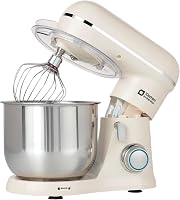
Kitchen in the Box 3.5-Qt
- 3.5 qt capacity
- 10 speeds
- Planetary mixing action
- Dishwasher-safe bowl and accessories
A light, narrow mixer for small household baking and regular cabinet storage. It includes separate tools for batter, dough and whipping, plus a splash guard.
Pros
- Low weight for moving between shelf and counter
- Includes dough hook, flat beater, whisk and splash guard
- Stainless steel bowl
Cons
- Capacity guidance focuses on 1–2 people
- Large recipes need smaller batches or a larger mixer
The Kitchen in the Box 3.5-Qt is a practical choice for 1–2 people who bake modest batches. Its roughly 5 lb weight makes it worth considering when the mixer must travel between a storage shelf and the counter.
It includes a dough hook, flat beater, whisk and splash guard. That gives a beginner distinct tools for dough, batter and whipping rather than one attachment expected to cover every task.
Kitchen in the Box gives capacity examples of one loaf, two pizzas or 12 cupcakes. Use these as a starting point for recipe planning, since loaf size, dough stiffness and cupcake portions vary.
The bowl can also go into the refrigerator, which helps when a recipe calls for chilling the mixture. Leave shelf room for the bowl before you begin, especially if you usually keep the refrigerator full.
Choose this model for small household baking and easy carrying. Skip it if you expect to double recipes often, and see our Kitchen in the Box 3.2 qt mixer review if you are comparing the two sizes.
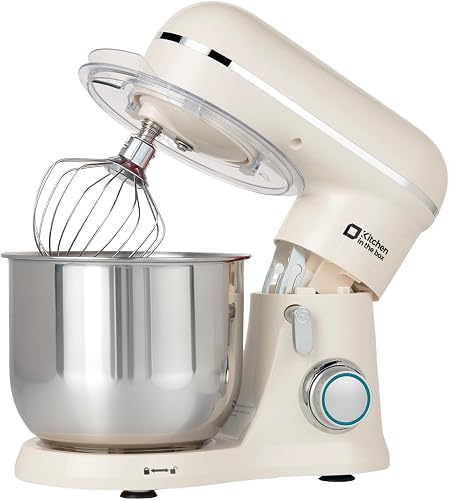
Kitchen in the Box 3.2-Qt
- 3.2 qt capacity
- 7 in width
- 6 speeds
- Tilt head and splash lid
Choose this model for modest recipes and a narrow storage spot. Check shelf depth as well as width, since its body extends farther back than the brand’s 3.5 qt model.
Pros
- Narrow body for limited storage width
- Tilt head and anti-splash lid
- Includes dough hook, flat beater and whisk
Cons
- Brand advises against large batches
- Greater depth than the Kitchen in the Box 3.5-Qt
The Kitchen in the Box 3.2-Qt suits a baker with a narrow shelf and small recipes. Its 7 in width is useful in a tight storage gap, but check depth before deciding it fits.
This model is deeper than the brand’s 3.5 qt pick, so the smaller bowl does not mean a smaller body in every direction. A shallow cabinet may favor a different choice even when this one fits its opening.
The tilt head helps with bowl and tool access, and a transparent splash lid lets you watch the mixture. Its dough hook and flat beater are aluminum, while the whisk is stainless steel.
Kitchen in the Box specifically advises against large batches. Choose it for a new baker or couple whose usual recipes already fit a small bowl, rather than planning to stretch its capacity on busy weekends.
Skip it if you want room to grow into larger baking sessions. Our best budget stand mixers offers a broader comparison if compact storage is only one part of your decision.
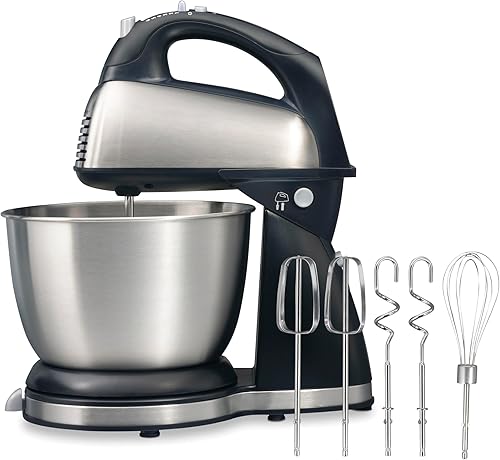
Hamilton Beach Classic Stand and Hand 4-Qt
- 4 qt capacity
- Detachable hand mixer
- 6 speeds plus QuickBurst
- Shift and Stir bowl lever
The larger bowl and detachable hand mixer suit baking sessions with several prep tasks. Allow extra storage width and height compared with the other picks.
Pros
- Largest bowl capacity in this group
- Includes 2 beaters, 2 dough hooks and a whisk
- Dishwasher-safe bowl and attachments
Cons
- Tallest and widest mixer in this group
- Shift and Stir bowl coverage involves user input
The Hamilton Beach Classic suits someone who wants more bowl room and a detachable hand mixer. Its 4 qt capacity gives it the largest bowl in this group, though usable batch size still depends on the recipe.
The Shift and Stir lever lets you move the bowl from side to side during mixing. That gives you a way to bring different parts of the mixture toward the beaters, but it calls for your attention.
The set includes two traditional beaters, two dough hooks and a whisk. QuickBurst adds a brief boost at any speed, though a boost button is not a reason to exceed dough or batch limits.
This model needs the most width and height among these picks. Measure the storage spot carefully if an upper cabinet, shelf lip or nearby appliance limits access.
Choose it if bowl room matters more than the smallest body. Skip it if you need a low-profile machine, and compare our stand mixer alternatives to KitchenAid if you prefer a dedicated countertop design.
How much space does a compact stand mixer really need?
A compact mixer needs working clearance as well as storage space. The closed dimensions tell you where it can sit, but not whether you can open it, fit an attachment or lift out a full bowl.
Measure the actual shelf opening, including hinges and any raised front edge. A cabinet may have enough room inside while its door opening makes the appliance awkward to move through.
Also leave a nearby landing area for the bowl and attachment. If you must clear the sink or move another appliance every time you scrape the bowl, the setup may discourage regular use.
Measure a small stand mixer in its working position
Check depth, width and height separately, then allow room for the head to open where applicable. Closed height is not operating clearance, so do not plan to mix directly under a low shelf without checking access.
Use a piece of paper cut to the base dimensions to judge how much prep space remains. Position it near the outlet you intend to use so the cord will not cross your main working area.
Think through the lifting route, too. A mixer stored at waist height is easier to handle than the same machine tucked behind pans or placed above shoulder level.
If you cannot find a comfortable storage route, favor lower weight or a permanent counter spot. A smaller footprint will not solve an awkward lift.
What bowl size suits your usual baking?
Choose bowl size around the recipes you repeat, rather than the biggest recipe you might make once. Write down your normal cake, cookie and bread batches before comparing capacities.
Bowl volume is not usable mixing volume. Ingredients need room to move, and flour or cream can rise and splash as the tool turns.
A thick cookie dough also places a different demand on a mixer than the same volume of cake batter. Do not treat a bowl’s quart capacity as a promise that it can knead that much dough.
For small households, a compact bowl can keep portions manageable and reduce the temptation to make excess food. If you bake for gatherings most weekends, splitting every recipe may erase the convenience of a smaller machine.
Very tiny mixtures deserve thought as well. A small bowl does not guarantee that the whisk reaches one egg white or a spoonful of cream well enough to whip it.
Keep a hand whisk available for amounts that sit below the attachment’s reach. Our guide to choosing a stand mixer for home baking helps connect batch size with the tasks you do most.
Do hand and stand mixer combinations save space?
A combination mixer can save space when it replaces two appliances you would otherwise keep. The bella and Hamilton Beach models suit cooks who want supported mixing for one task and handheld control for another.
Handheld mode helps when you want to move the beaters around a separate bowl. Stand mode supports the mixer, leaving you free to measure the next ingredient while staying nearby.
You still need somewhere to keep the base, bowls and accessories. A detachable motor does not make the rest of the appliance disappear into a drawer.
If you already own a hand mixer that meets your needs, consider whether another handheld option adds anything useful. Put more weight on bowl access, storage and recipe fit than on having two modes.
A stand also does not remove the need to check the mixture. Stop as needed to scrape, inspect texture and make sure ingredients at the bottom are joining the mix.
Which features matter more than motor watts?
Recipe limits, attachment choice and useful speed control matter more than a watt figure alone. Electrical input does not provide a direct measure of how much stiff dough a mixer can handle.
Peak power figures also should not be treated as continuous output. Avoid ranking these mixers by motor numbers when the figures describe different things.
Speed range matters because different stages need different treatment. Dry ingredients call for a gentle start, while whipping requires a different pace.
More settings give you more steps between speeds, but the number alone does not establish better mixing. Choose around the controls and tasks you need instead of paying attention only to the highest count.
Suction feet help a light base grip a suitable surface, but they cannot make an oversized dough batch appropriate. Clean the counter and keep the mixer away from its edge before starting.
For attachments, separate included mixing tools from optional accessories. A dough hook in the box and compatibility with add-on equipment solve different needs.
Can a small stand mixer handle regular bread dough?
A small mixer can suit modest bread batches within its instructions. If bread is your main reason for buying, confirm dough limits before considering color, storage extras or additional speeds.
KitchenAid includes kneading among the Artisan Mini’s uses, while Kitchen in the Box gives a one-loaf example for its 3.5 qt model. Neither point makes every loaf recipe suitable without checking its size and method.
Dense dough, large amounts of whole-grain flour and a double batch can place different demands on the machine. Compare the recipe’s flour amount with the manual’s guidance rather than relying on the finished loaf count.
Use the dough hook and kneading speed specified for the model. Raising the speed to finish sooner can work against the intended method and puts unnecessary strain on the mixer.
Stay nearby and stop if the machine struggles, moves across the counter or develops an unusual smell or sound. Follow any operating and cooling intervals in the manual before continuing.
Our guide to kneading dough with a stand mixer covers the process. If larger loaves dominate your baking, compare the best stand mixers for bread dough before settling on a compact model.
How should you set up a compact mixer for the first batch?
Start with a clean, level counter and a modest recipe that fits the mixer’s instructions. Wash removable food-contact parts as directed and dry them before assembly.
With the mixer unplugged, fit the bowl and correct attachment securely. Lower and lock the head where applicable, then check that nothing loose sits near the moving parts.
Measure ingredients before turning the mixer on. This makes it easier to add them in the right order without leaving the running appliance to search for flour or another tool.
Use softened ingredients when the recipe calls for them. Trying to beat a cold, firm block of butter puts a different load on the mixer than working with properly softened butter.
Begin slowly when adding dry ingredients. A splash guard can reduce mess, but pouring flour into fast-moving beaters can still send it outside the bowl.
Stop and unplug before scraping near the attachment or changing tools. Keep spatulas, fingers, hair and loose clothing clear while it runs.
Check the bottom of the bowl as well as the surface. A mixture can look smooth on top while dry flour or butter remains below.
How do you clean and store a small mixer?
Clean removable parts promptly, and follow the care directions for each piece. Bowl material and attachment material can differ, so one cleaning rule may not cover the whole set.
The bella, Kitchen in the Box 3.5-Qt and Hamilton Beach include dishwasher-safe bowls and accessories. Follow their loading and cycle instructions, and confirm care directions before putting other attachments in the dishwasher.
For dough residue, remove the bulk with a suitable scraper, then soak washable parts if needed. Avoid forcing hardened dough out of narrow joints with a sharp tool.
Wipe the motor housing with a damp cloth after unplugging it. Never immerse the electrical unit or run it under the tap.
Dry parts fully before nesting or storing them. Keep the whisk somewhere it will not be crushed by a heavy bowl or loose pans.
Release suction feet as directed instead of pulling hard on the head or motor unit. Carry the appliance by the points identified in its manual, and use two hands when its weight or shape calls for them.
Which mistakes make a compact mixer less useful?
The biggest mistakes are overfilling the bowl and choosing around storage alone. A mixer should fit the food you make as comfortably as it fits the shelf.
- Doubling a recipe without checking limits: two small batches may be necessary, but frequent splitting is a sign you need more capacity.
- Using the wrong tool: use the attachment suited to the task rather than treating a whisk, beater and dough hook as substitutes.
- Starting at high speed: begin gently so flour and liquids have time to combine.
- Skipping bowl scraping: stop the machine and check for ingredients left on the sides or bottom.
- Leaving it unattended: supported mixing still requires you to monitor movement, texture and progress.
- Assuming all accessories fit: check the exact mixer model before buying another bowl, beater or add-on.
Another mistake is mixing longer to fix every texture problem. Once flour is added to many batters, extra mixing can make the result tougher instead of smoother.
Follow the recipe’s cues for when to stop, not just its timer. Ingredient temperature and batch size can change how quickly a mixture reaches the intended texture.
Which small stand mixer belongs in your kitchen?
Choose the Artisan Mini if it can stay within easy reach and you want KitchenAid attachment options. Choose the bella if detachable handheld use and separate prep bowls match how you cook.
Pick the Kitchen in the Box 3.5-Qt for a light machine and small household recipes. Choose the 3.2-Qt when its narrower body fits your shelf, after checking the extra depth.
The Hamilton Beach suits buyers who want the largest bowl here and handheld flexibility, with room for its taller, wider body. If none fits your normal batch, reconsider capacity before committing to a small stand mixer.
Use our stand mixer size guide with one of your regular recipes beside you. Match the bowl to that recipe and the appliance to its storage route before choosing.
Our top 3 picks at a glance
-
1
-
2
-
3
Frequently asked questions
What is the best small stand mixer?
The KitchenAid Artisan Mini 3.5-Qt is our top choice for countertop baking and KitchenAid attachment compatibility, excluding bowls and beaters. Choose the bella instead if you want handheld use, or Kitchen in the Box 3.5-Qt if moving the mixer between a cabinet and counter is your main concern.
How small is a compact stand mixer?
The compact mixers here have bowls from 3.2 to 4 qt, but bowl size does not define their storage needs. Compare depth, width and height separately, then allow space to open the head and remove the bowl; a mixer that fits on a shelf may still need a different working spot.
Is a 3.5 qt stand mixer big enough?
A 3.5 qt mixer can suit small household baking, provided your recipes fit its limits. Kitchen in the Box gives examples of one loaf, two pizzas or 12 cupcakes for its 3.5 qt model; those examples do not establish a dough limit for every mixer with the same bowl size.
Can a small stand mixer knead bread dough?
Some small stand mixers can knead bread dough, but the model’s dough capacity and operating instructions matter more than bowl volume alone. Use the correct hook, speed and batch size from the manual; if dense bread dough is your main task, choose around that requirement before considering storage convenience.
Should I choose a stand mixer or a hand mixer?
Choose a stand mixer for supported countertop mixing, or a hand mixer to move the beaters through your own bowl. The bella and Hamilton Beach picks combine both formats; our stand mixer vs hand mixer guide explains which style fits different recipes and storage needs.