6 Best Stand Mixers for Cookie Dough (October 2026)
The best stand mixers for cookie dough include the KitchenAid Artisan KSM150PS for frequent cookie bakers, the KitchenAid Classic K45SS for standard family recipes, and the Cuisinart 5.5-Qt Stand Mixer for roomy batch preparation.
On this page (9 sections)
- How we chose stand mixers for cookie dough
- The best stand mixers for cookie dough
- How do you choose the right mixer for your cookie recipes?
- Which attachments matter most for cookie dough?
- How should you set up a mixer for cookie dough?
- How should you mix cookie dough without overworking it?
- What common mistakes should cookie bakers avoid?
- How do you clean and care for a cookie dough mixer?
- Which stand mixer should you choose for cookie dough?
The best stand mixer for cookie dough for most home bakers is the KitchenAid Artisan KSM150PS because its bowl size, speed range and ingredient access suit regular cookie making. Choose the Classic for standard recipes, Cuisinart for extra bowl room, or Hamilton Beach if you put your mixer away after baking.
Your usual recipe matters more than the biggest bowl or highest wattage. A stiff oatmeal dough with nuts asks something different of a mixer than a soft sugar cookie dough.
If you're deciding on capacity, read our stand mixer size guide. Our home baker stand mixer guide covers broader baking needs, including dough and batter.
Our picks at a glance
-
1
-
2

-
3

- 4
 Best for mixing bulky additionsCheck it
- 5
 Best for storing between bakesCheck it
- 6
 Check it
Martha Stewart 5.3-Qt Tilt-Head
Best for easier bowl scraping
How we chose stand mixers for cookie dough
The KitchenAid Artisan ranks first for its balance of bowl room, speed control and access during cookie preparation. LazierWeekend compared the supplied specifications and features, with scores reflecting their fit for cookie baking.
We gave attention to the flat beater, low-speed ingredient additions, bowl size and everyday handling. Scraping the bowl, lifting it out and cleaning the attachments are part of every batch, so those details deserve weight alongside capacity.
A larger bowl helps contain ingredients, but it doesn't establish how much stiff dough the motor and attachment can handle. Manufacturer batch limits take priority over bowl volume, advertised wattage or a cookie count based on a different recipe.
| Product | Best for | Bowl capacity | Speeds | Head style | Our score |
|---|---|---|---|---|---|
| KitchenAid Artisan KSM150PS | frequent cookie bakers | 5 quarts | 10 | Tilt-head | 9.1 |
| KitchenAid Classic K45SS | standard family recipes | 4.5 quarts | 10 | Tilt-head | 8.8 |
| Cuisinart 5.5-Qt Stand Mixer | roomy batch preparation | 5.5 quarts | 12 | Tilt-back | 8.3 |
| Vivohome 6-Qt Tilt-Head | mixing bulky additions | 6 quarts | 10 plus pulse | Tilt-head | 7.7 |
| Hamilton Beach 4-Qt 7-Speed | storing between bakes | 4 quarts | 7 | 7.3 | |
| Martha Stewart 5.3-Qt Tilt-Head | easier bowl scraping | 5.3 quarts | 12 | Tilt-head | 7.2 |
The best stand mixers for cookie dough
The Artisan is the strongest starting point for regular home cookie baking, while the other picks suit different batch and storage needs. Choose the features that solve a recurring problem in your kitchen rather than collecting extras you won't use.
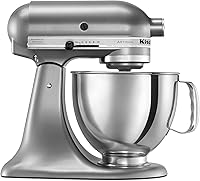
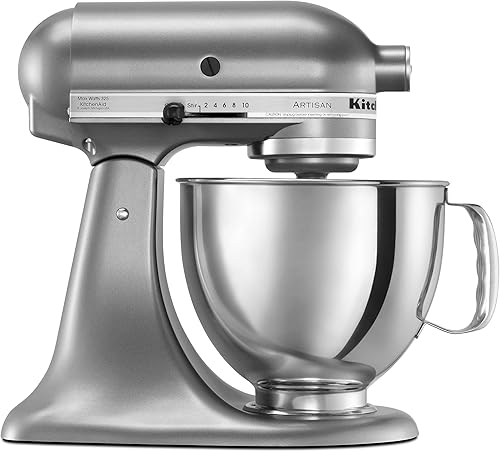
KitchenAid Artisan KSM150PS
- 5-quart bowl
- 10 speeds
- Tilt-head design
- Pouring shield included
Our first choice for regular cookie baking balances bowl room with easy access for ingredient additions. The pouring shield helps contain flour as you add it.
Pros
- Room for regular home baking
- Slow stir setting for ingredient additions
- Pouring shield included
Cons
- Needs clearance above the mixer to raise the head
The Artisan's 5-quart bowl and 10 speeds suit bakers who rotate through drop cookies, cutout doughs and other home recipes. Its tilt head gives you access for scraping and ingredient additions, while the included pouring shield helps contain dry ingredients.
KitchenAid gives a capacity of up to 9 dozen cookies using the flat beater and 28 g portions. That is a specific reference batch, so don't assume every nut-heavy dough or oversized cookie recipe fits in the same quantity.
This is the pick for someone who bakes often enough to value a dedicated place on the counter. Before choosing that place, allow space to raise the head and remove the bowl without working around a low cabinet.
Skip it if your main goal is the largest bowl in this group or easy cupboard storage after every use. Our KitchenAid Artisan KSM150PS review gives a closer look at the model.
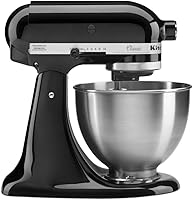
KitchenAid Classic K45SS
- 4.5-quart bowl
- 10 speeds
- Tilt-head design
- Coated flat beater included
Choose the Classic for familiar cookie recipes rather than a habit of scaling every batch up. Its included flat beater handles the mixing role most relevant to cookies.
Pros
- Coated flat beater included
- Dishwasher-safe stainless steel bowl
- Metal construction
Cons
- Less bowl room than the Artisan
- 22-pound weight matters for storage
The Classic fits bakers who make standard family recipes and don't need to scale every batch up. Its 4.5-quart stainless steel bowl comes with a coated flat beater, plus a dough hook and wire whip for other baking tasks.
KitchenAid gives a capacity of up to 8 dozen cookies with the flat beater and 28 g portions. Use that as context rather than permission to double any recipe, especially one packed with oats, nuts or dried fruit.
The bowl is dishwasher safe, which helps after sticky dough, but attachment care should follow the manual for each piece. Keep coated surfaces away from sharp utensils while removing dough.
Choose it if you want the smaller KitchenAid bowl here and expect the mixer to stay in place. Skip it if you frequently need more bowl room or would struggle to move its 22-pound weight; our KitchenAid Classic K45SS review covers the tradeoffs.
Cuisinart 5.5-Qt Stand Mixer
- 5.5-quart bowl
- 12 speeds
- Flat mixing paddle included
- Splash guard with pour spout
Cuisinart suits bakers who want more bowl room than either KitchenAid pick. The paddle, pour-spout guard and dishwasher-safe accessories support a straightforward cookie-making routine.
Pros
- Extra bowl room
- Paddle and splash guard included
- Bowl and accessories are dishwasher safe
Cons
- 16.5-inch width needs counter space
Cuisinart is the choice for bakers who want more working room than either KitchenAid pick. Its 5.5-quart bowl, flat paddle and splash guard with pour spout suit adding flour gradually without crowding the bowl opening.
The 12-speed control gives you more settings to choose from, though cookie dough rarely needs the upper end of a mixer's range. Use the setting that matches the recipe stage rather than assuming a higher number finishes the job better.
The bowl and accessories are dishwasher safe, making this appealing if cleanup is a deciding factor. The included whisk and dough hook also cover tasks beyond cookies without requiring those basic accessories separately.
Skip it if counter width is tight: it measures 16.5 in wide, so mark out its space before ordering. Choose it for bowl room and cleanup convenience, and use our KitchenAid vs Cuisinart comparison if you're deciding between those brands.
Vivohome 6-Qt Tilt-Head
- 6-quart bowl
- 10 speeds plus pulse
- Flex edge beater
- Splash guard
The largest bowl here gives bulky ingredients more space, within the mixer's batch limits. Vivohome says its flex edge beater scrapes the sides and bottom during mixing.
Pros
- Largest bowl in this group
- Flex edge beater included
- Suction cups help secure the base
Cons
- 18.8-inch height needs cabinet clearance
- Bowl volume is not a cookie dough weight limit
Vivohome suits bakers who want room around bulky additions such as oats, chopped nuts and chocolate chunks. Its 6-quart bowl is the largest here, and Vivohome says the flex edge beater scrapes the sides and bottom as it mixes.
Extra room helps with ingredient handling, but it doesn't make every dense recipe suitable for a single batch. Keep the manual's dough limits in view, and fold bulky additions by hand when your recipe calls for that approach.
Suction cups help secure the base, so the counter should be clean and dry before you start. The splash guard also provides an opening for ingredients, though flour should still go in gradually at low speed.
Skip this model if you usually make very small recipes or have low cabinets above your mixing spot. Its 18.8 in height needs planning, and a larger bowl isn't a reason to make more dough than you can comfortably portion and bake.
Hamilton Beach 4-Qt 7-Speed
- 4-quart bowl
- 7 speeds
- Flat beater included
- Slow first speed
An 8-pound weight and built-in handle make this worth considering if your mixer lives in a cupboard. Its smaller bowl suits recipes that stay within modest batch limits.
Pros
- Built-in handle for moving
- Slow first speed for dry ingredients
- Dishwasher-safe bowl and attachments
Cons
- Smallest bowl in this group
- Fewer speed settings than the other picks
Hamilton Beach is worth considering if your mixer lives in a cupboard between baking days. At 8 pounds, with a built-in handle, it puts moving and storage higher on the feature list than the heavier KitchenAid Classic does.
The 4-quart bowl is the smallest here, which suits modest recipes within the manual's limits. A slow first speed helps with dry ingredient additions, and the guide on top helps you choose a setting for the task.
Its flat beater handles the cookie-mixing role, while the included guard helps contain splatter. The bowl and attachments are dishwasher safe, so you can plan cleanup without hand-washing every removable piece.
Choose it for manageable handling and occasional home batches, rather than a plan to mix large holiday quantities at once. Skip it if you regularly scale up recipes; dividing dough into several batches could erase the convenience you're buying a stand mixer to gain.
Martha Stewart 5.3-Qt Tilt-Head
- 5.3-quart bowl
- 12 speeds
- Flat beater with silicone edge
- Removable splash shield
The silicone-edged flat beater suits bakers who prioritize help gathering ingredients from the bowl walls. A handled bowl and removable splash shield also help with ingredient handling.
Pros
- Silicone-edged flat beater included
- Easy-grip bowl handle
- Dishwasher-safe accessories
Cons
- Taller and wider than the KitchenAid models
- Edged beater does not remove the need to check the bowl
Martha Stewart's mixer suits bakers who want help gathering ingredients from the bowl walls. Its flat beater has a silicone edge, a useful feature when butter and sugar cling around the bowl during the early stages of a recipe.
The 5.3-quart bowl has an easy-grip handle, and the removable splash shield includes a pour chute. Those details help with moving the bowl and adding ingredients, though you should still pause to check the bottom for unmixed flour.
The accessories are dishwasher safe, which keeps the cleanup routine simple. Its tilt head also gives access for changing attachments and checking dough texture between stages.
Skip it if the silicone edge is only a bonus and the mixer's shape doesn't fit your counter. At 16.93 in deep and high, it needs a measured storage spot; choose it when the edged beater and handled bowl address tasks you repeat every time you bake.
How do you choose the right mixer for your cookie recipes?
Choose by your normal batch, dough texture and storage routine before comparing extra attachments. The right mixer should make your weekly recipe easier without pushing you to fill a larger bowl or rearrange the kitchen.
Choosing the best stand mixer for thick cookie dough
For thick cookie dough, prioritize a suitable flat beater and clear batch guidance over headline motor wattage. Wattage describes electrical power use, but it doesn't provide a common measure of how much stiff dough different mixers can handle.
Start with the recipe you make most often and note its flour quantity and bulky additions. Compare those amounts with the manual's guidance before planning larger batches.
Cold butter can make a mixture stiff before the flour even goes in. Use butter at the temperature your recipe specifies rather than asking the mixer to break down hard chunks.
Match bowl room to the whole recipe
Choose enough room for mixing, scraping and adding ingredients, not just enough volume to hold finished dough. Flour can sit loosely above the wet ingredients before it begins to combine.
Cookie counts are a weak way to compare recipes because portion sizes vary. A batch of large bakery-style cookies can contain more dough than a recipe yielding many small cookies.
For very small batches, check that the attachment reaches the ingredients effectively. Buying the largest bowl can create more scraping work if your usual recipe barely covers the bottom.
Measure working space and storage space separately
A tilt-head mixer needs room above it during use, as well as a footprint that fits the counter. Measure with cabinet doors and nearby appliances in mind, and leave a clear place to set the bowl down.
If you'll move the mixer each time, think about the full route from shelf to counter. A convenient handle won't solve an awkward high shelf or a cupboard opening that's too narrow.
Our complete stand mixer guide covers the wider choice of mixer styles and uses. Read it if cookies are only one reason you're adding a mixer to the kitchen.
Which attachments matter most for cookie dough?
A flat beater or paddle is the main cookie attachment, while a whisk and dough hook serve different jobs. Don't choose a mixer mainly for optional pasta or grinding accessories if cookies are what you'll make each week.
The flat beater combines butter, sugar, eggs and flour. A whisk is designed to add air to mixtures such as cream or egg whites, and stiff cookie dough can be difficult to remove from its wires.
A dough hook is intended for kneading yeast dough, not as a stronger replacement when a paddle struggles. If the batch exceeds the mixer's limits, changing attachments doesn't make that batch appropriate.
A flexible or silicone edge can help collect ingredients from the bowl walls. It doesn't replace a check under the dough or around the attachment, where pockets of flour can remain.
A splash shield is helpful when you add dry ingredients, but a slow start matters too. Pour flour in manageable additions rather than dropping a full measure onto a fast-moving beater.
How should you set up a mixer for cookie dough?
Set the mixer on a level, dry counter, secure the bowl and attachment, and check that you have room to work. Read the model's instructions before the first batch, especially its attachment, speed and capacity guidance.
Wash and dry food-contact parts before use as directed in the manual. Fit the bowl and beater with the mixer unplugged, then lock the head or bowl into its working position.
Measure ingredients before starting so you don't leave the mixer running while searching for flour or eggs. Keep a spatula nearby, with a separate clear spot for the attachment after mixing.
Use the flat beater unless the recipe specifies another method. Follow our step-by-step guide to using a stand mixer for KitchenAid setup and controls.
If a KitchenAid beater leaves a persistent layer untouched at the bottom, check the fit before adding more mixing time. Our guide to adjusting KitchenAid beater height explains that separate adjustment.
How should you mix cookie dough without overworking it?
Follow the recipe's method and visual cues, using low speed for flour additions and stopping once the dough is combined. Mixing time changes with ingredient temperature, batch size and the style of cookie.
Cream butter and sugar only when the recipe calls for it
For a creamed cookie recipe, use butter softened to the recipe's intended texture. It should yield to pressure without being melted or greasy.
Start slowly to bring butter and sugar together, then use the recipe's recommended setting. Stop and scrape the bowl so a soft mixture near the beater doesn't hide firm butter against the sides.
Some cookies use melted butter or call for little added air. Don't apply a long creaming stage to every recipe simply because the mixer makes it easy.
Add eggs and flour in controlled stages
Add eggs in the order the recipe gives, pausing to scrape when needed. Ingredients gathered at the bottom should be incorporated before the next stage covers them.
When flour goes in, start at low speed and watch the dough. Once the dry streaks disappear, avoid extra mixing unless the recipe calls for it, since prolonged mixing can make some cookies tougher.
Stop and unplug the mixer before scraping or changing attachments. Keep fingers and utensils clear while the beater moves, even when using a splash shield.
Finish chunky dough with care
Add chips, nuts or dried fruit near the end, following the recipe's method. A brief low-speed mix may be enough, while hand folding gives you control over fragile pieces.
Turn the finished dough with a spatula to check underneath for dry pockets. This final check is more useful than running the mixer longer just to feel certain.
If the recipe calls for chilling, chill the finished dough before portioning or baking as directed. The mixer combines ingredients; it doesn't replace the resting steps that help establish the dough's final texture.
What common mistakes should cookie bakers avoid?
The most costly mistake is forcing an oversized or overly stiff batch, followed by mixing past the point the recipe needs. More speed won't correct either problem.
- Doubling without checking limits: A recipe that fits comfortably once may overload the mixer when doubled, especially after chunky additions.
- Adding flour too fast: A large pile can escape the bowl before it combines, even with a shield.
- Using extra flour to fix warm dough: Check butter temperature and chilling instructions before changing the recipe's balance.
- Leaving the mixer unattended: Stay nearby to watch texture, ingredient incorporation and any unusual movement.
- Using time as the only cue: Stop to check the dough rather than continuing because a timer hasn't finished.
- Ignoring strain: If the beater stalls, the base moves unusually or the motor struggles, switch off and follow the manual before continuing.
Divide a large recipe into separate batches when needed, measuring each batch accurately. Splitting ingredients by guesswork can change the ratio of flour, fat and eggs.
How do you clean and care for a cookie dough mixer?
Clean removable parts before dough dries onto them, and follow the care instructions for each material. A dishwasher-safe bowl doesn't automatically mean every attachment from the same brand belongs in the dishwasher.
Unplug the mixer, remove the attachment and scrape excess dough into the bowl with a suitable spatula. Wash dishwasher-safe pieces as directed, or hand-wash parts that require it.
Pay attention to joints and attachment fittings where dough can collect. Avoid using sharp tools on coated beaters or silicone edges.
Wipe the mixer body with a damp cloth and keep water out of vents and controls. Don't immerse the motor housing.
Dry removable pieces before storage, and avoid stacking them so hard edges press into coated surfaces. Our KitchenAid attachment dishwasher guide helps if you're sorting several KitchenAid accessories with different care needs.
Which stand mixer should you choose for cookie dough?
Choose the Artisan for frequent cookie baking, the Classic for standard family recipes, or Cuisinart when extra bowl room is your priority. Hamilton Beach makes sense for regular cupboard storage, Vivohome for roomy ingredient handling, and Martha Stewart for its silicone-edged beater.
Before ordering, check your usual recipe against the manual's batch guidance and measure the mixer's working space. Those 2 checks make the best stand mixer for cookie dough a practical choice for your kitchen.
If bread is also a regular project, compare our best stand mixers for bread dough. For a wider mix of cakes, cookies and whipped toppings, use our home baking picks to make the final choice.
Our top 3 picks at a glance
-
1
-
2
-
3
Frequently asked questions
What kind of beater is best for cookie dough?
A flat beater or paddle is the usual choice for cookie dough because it combines butter, sugar, eggs and flour without the kneading action intended for bread. Use the recipe's mixing method, keep flour additions slow, and stop the mixer before scraping ingredients from the bowl or attachment.
How large should a stand mixer bowl be for cookies?
A 4- to 5-quart bowl is a useful starting point for many standard home cookie recipes, while larger bowls offer more room for bulky additions. Choose by the manufacturer's dough limits and your recipe's ingredient amounts, since bowl volume alone cannot tell you whether a doubled batch is suitable.
Can a stand mixer mix thick cookie dough?
Yes, a stand mixer can mix many thick cookie doughs when you use the proper attachment and stay within its batch limits. If the beater stalls or the mixer struggles, stop rather than increasing speed, then check the manual and reduce the batch instead of forcing the mixture through.
Should I use a dough hook for cookie dough?
Use a flat beater or paddle for most cookie dough; a dough hook is meant for kneading yeast dough and is not a substitute for an overloaded paddle. Our guide to kneading dough with a stand mixer explains the different attachment and mixing approach used for bread recipes.