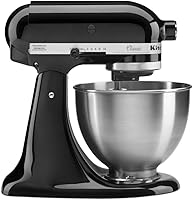
KitchenAid vs Cuisinart Stand Mixer: Which Is Better? (October 2026)
In this KitchenAid vs Cuisinart stand mixer comparison, choose KitchenAid for narrow counters or Cuisinart for larger batches and an included splash guard. Match the mixer to your usual recipes, available space and planned attachments.
On this page (10 sections)
- KitchenAid vs Cuisinart: which stand mixer fits your counter?
- Which bowl capacity suits your usual recipes?
- How do the included tools and speeds compare?
- Which mixer should you choose for bread dough?
- Can you add pasta, grinding or dessert attachments later?
- How should you set up and care for either mixer?
- What should you include in the buying budget?
- KitchenAid Classic K45SS: who should choose it?
- Cuisinart 5.5-Qt Stand Mixer: who should choose it?
- KitchenAid vs Cuisinart stand mixer: which should you buy?
KitchenAid wins for narrow counters; Cuisinart wins for extra bowl room and an included splash guard in this KitchenAid vs Cuisinart stand mixer comparison. Choose around the recipes you make each week and the space where the mixer will work.
This comparison covers the KitchenAid Classic K45SS and Cuisinart 5.5-Qt Stand Mixer, rather than every mixer from either brand. Their differences matter most when you measure your counter, plan batches and decide which accessories you need.
Both cover basic mixing, kneading and whipping with their included tools. Neither brand name should outweigh a poor fit for your kitchen.


KitchenAid vs Cuisinart: which stand mixer fits your counter?
The KitchenAid needs less counter width, while the Cuisinart needs less depth. Measure the working area and storage location before choosing either one.
The KitchenAid measures 14.1 in deep, 8.7 in wide and 13.9 in high. The Cuisinart measures 11.2 in deep, 16.5 in wide and 15.9 in high.
A narrow strip of counter favors the KitchenAid, provided its deeper body fits fully on the surface. A wide, shallow work area may suit the Cuisinart better, especially if nearby appliances leave little front-to-back room.
Both heads tilt back, so closed height is only part of the space needed. Allow room to raise the head, change tools and lift out the bowl without hitting a cabinet.
Leave a clear spot beside the mixer for ingredients and the removed bowl. A machine that fits tightly between appliances can still be awkward to use when you need to scrape batter or add flour.
Storage deserves equal attention if the mixer won't stay out. The KitchenAid weighs 22 lb, compared with 17 lb for the Cuisinart, so think through the lift from shelf to counter.
If neither fits comfortably, consider a compact stand mixer. Our stand mixer guide also explains the main choices before you commit to a particular model.
Which bowl capacity suits your usual recipes?
Choose the Cuisinart's 5.5-qt bowl for extra mixing room, or the KitchenAid's 4.5-qt bowl for recipes that comfortably fit the smaller size. Start with your normal batch rather than your largest holiday bake.
Write down the recipes you make most often and whether you usually double them. Occasional large batches can be split, while a routine need for more room makes the larger bowl more useful.
Extra space helps you add ingredients and fold in additions without crowding the rim. It does not mean you should fill the bowl to the top or ignore a recipe limit.
For very small quantities, think about tool contact as well as total volume. A larger bowl is not automatically better for a little cream or a small amount of batter.
Our guide to choosing a stand mixer size can help you connect bowl capacity with your baking habits.
KitchenAid vs Cuisinart stand mixer for cookie dough
Choose around recipe size and dough thickness, rather than cookie count alone. A soft drop-cookie dough and a stiff dough with lots of additions place different demands on a mixer.
KitchenAid says the Classic can mix up to 8 dozen cookies, using the flat beater and 28 g of dough per cookie. Use that as a specific brand example, not a promise for every dough or cookie size.
For either mixer, cream softened butter and sugar with the flat tool, then add the remaining ingredients in the recipe's order. Stop and scrape the bowl as needed so dry pockets do not remain beneath the mixture.
Add chips, nuts or other bulky ingredients near the end, using the recipe's method. Continued mixing after the flour is incorporated can change the texture of cookies that need only brief mixing.
If cookies will be the mixer's main job, compare our stand mixers for cookie dough. Prioritize the batches you actually make over the largest bowl you can fit.
How do the included tools and speeds compare?
Both include the 3 basic mixing tools, while Cuisinart adds a splash guard with a pour spout. You can begin ordinary baking with either package.
KitchenAid includes a coated flat beater, coated dough hook and 6-wire whip. Cuisinart includes a flat mixing paddle, dough hook and chef's whisk, plus the guard.
Use the flat tool for batters, creaming and many cookie doughs. The hook handles kneading, while the whisk adds air to suitable mixtures such as cream.
KitchenAid has 10 speeds, and Cuisinart has 12. More settings give you more choices on the control, but the right setting still depends on the recipe and fitted tool.
Start slowly when combining loose flour or other dry ingredients. Increase speed only after they begin to blend, rather than using a fast start to save a few seconds.
A splash guard helps contain ingredients, but it doesn't replace sensible bowl fill or a slow start. Add flour gradually through the opening rather than pouring in a large amount at once.
For fitting tools and choosing settings on the Classic, follow our KitchenAid mixer use guide. Keep the exact model's manual nearby for instructions that apply to your machine.
Which mixer should you choose for bread dough?
Choose by the manual's dough limits and your bread recipe, not by bowl size or motor wattage alone. Both include a hook, but neither should be chosen for an unspecified oversized batch.
Cuisinart has a 500-watt motor. That number does not provide a direct measure of how much stiff dough it can knead compared with the KitchenAid.
Check dough amounts, permitted speed and kneading time before starting. If your normal recipe exceeds the guidance, divide it or choose a mixer suited to that workload.
Let the recipe guide changes to hydration, since dough can look rough early in mixing. Adding flour repeatedly just to clear the bowl can leave you with a drier loaf than intended.
Watch the dough as it develops rather than relying only on a timer. Stop and assess it at the recipe's checkpoints, with the machine off before touching the mixture.
Our guide to kneading dough with a stand mixer explains the process. Frequent bread bakers should also compare the options in our stand mixers for bread dough guide.
Can you add pasta, grinding or dessert attachments later?
Both support optional attachments sold separately, so KitchenAid is not your only route beyond baking. Choose the specific add-on first if it is a main reason for buying the mixer.
KitchenAid's power hub supports more than 10 optional attachments. Examples include pasta tools, food grinders, vegetable-noodle tools and an ice cream maker.
Cuisinart has a power outlet for optional attachments such as a pasta roller and cutters, pasta extruder, meat grinder, spiralizer and ice cream maker. Compare the exact tools you expect to use rather than counting every available option.
Check compatibility at the model level before buying an attachment or reusing one you already have. A bowl tool, such as a beater, and a powered add-on can have different fit requirements.
Read whether KitchenAid mixer attachments are universal before building a KitchenAid setup. Include the add-ons in your spending plan, especially if pasta or grinding matters more to you than baking.
How should you set up and care for either mixer?
Set the mixer on a dry, level counter and fit each part as directed before starting. A clear workspace makes ingredient changes and cleanup easier.
Wash the food-contact parts before first use according to the manual, then dry them. With the mixer unplugged, secure the bowl and fit the tool for your recipe.
Lower and secure the head as instructed; the KitchenAid head locks in place for mixing. Keep spatulas, fingers, loose clothing and other objects clear of moving tools.
Build a simple mixing routine
Measure ingredients before switching on the mixer, especially when a recipe calls for additions in stages. Place the next ingredient within reach so you don't leave the machine running while searching a cupboard.
Stop the mixer before scraping the bowl or changing tools. Scrape the sides and bottom where needed, then resume at a suitable speed.
Don't keep mixing simply because the machine can do the work for you. Follow the recipe's texture cues so a smooth batter or whipped mixture doesn't go past its intended stage.
Match cleanup to the part
The KitchenAid bowl is dishwasher safe; check its care instructions for each mixing tool. Cuisinart's bowl and included accessories are dishwasher safe.
Remove residue before it dries hard, especially around tool fittings and bowl edges. For whisking cream, start with clean equipment so leftover food does not enter the mixture.
Unplug the base before wiping it, and don't immerse it in water. Let washed parts dry fully before putting them away.
What should you include in the buying budget?
Compare the complete setup you need, including any optional accessories. A mixer that already includes a useful item can save you a separate buying decision.
For Cuisinart, the included guard matters if you want a covered opening for adding ingredients. For KitchenAid, confirm whether you want any accessories beyond the basic tools before deciding on your total spend.
Don't buy several powered attachments just because the mixer supports them. Start with the task you already do often enough to justify storing another tool.
Check warranty terms as part of the comparison. Cuisinart provides a limited 3-year warranty, with policies and conditions explained in its manual.
For other choices, browse our best budget stand mixers and KitchenAid alternatives. Compare each option with the same shortlist of recipes, workspace limits and required tools.
KitchenAid Classic K45SS: who should choose it?
Choose the KitchenAid Classic for a narrow workspace and regular home baking when its bowl suits your recipes. It also makes sense if a compatible KitchenAid add-on is already part of your plan.
The Classic is a good match for someone who wants to leave a mixer beside other counter appliances without giving up much side-to-side room. Its metal construction is another concrete feature, though weight matters if you plan to put it away after every bake.
Skip it if your routine requires more bowl room or you want a guard included from the start. Also rule it out if its deeper body leaves too little clear counter in front for safe, comfortable use.
Choose it for a real fit advantage or a specific attachment plan. Buying it solely for the brand name won't solve a batch-size or storage mismatch.
Cuisinart 5.5-Qt Stand Mixer: who should choose it?
Choose the Cuisinart for batch baking and the included guard if you have room for its wider body. Its dishwasher-safe accessories also suit buyers who want a simple cleanup routine.
The Cuisinart makes sense when you regularly want more room around ingredients while mixing. Its die-cast metal construction and tilt-back head provide a different package from simply buying a bigger loose bowl.
Skip it if counter width or cabinet clearance is tight. Its lower weight may help with storage, but only if the shelf opening and lifting path also work.
Do not choose it purely because it has more speed settings or a stated wattage. Those details should follow your recipe and space requirements in the decision.
KitchenAid vs Cuisinart stand mixer: which should you buy?
For this KitchenAid vs Cuisinart stand mixer choice, pick the machine that clears your hardest constraint first. Then use your recipes and attachment plans to settle any remaining tie.
- Choose KitchenAid if counter width is limited, standard batches meet your needs and its compatible add-ons appeal to you.
- Choose Cuisinart if you regularly want extra bowl room, value the included guard and can give it a wider workspace.
- Keep comparing if frequent stiff bread dough or unusually large recipes are your main reason to buy, until you confirm the required batch limits.
Before ordering, mark out the mixer's footprint and check overhead working room. That simple step can settle the choice more clearly than another feature comparison.
If KitchenAid fits your kitchen but you're unsure about the model, read our KitchenAid Classic vs Artisan comparison next.
Frequently asked questions
Is KitchenAid or Cuisinart better for a stand mixer?
KitchenAid is the better fit for a narrow counter, while Cuisinart suits buyers who want more bowl room and an included splash guard. Choose between these exact models by measuring your workspace, checking your usual recipe sizes and deciding which optional attachments you would actually use.
Does the Cuisinart stand mixer have a bigger bowl?
Yes, the Cuisinart has a 5.5-qt bowl compared with the KitchenAid Classic's 4.5-qt bowl, giving you an extra quart of space. That helps with bowl room, but follow each manual's recipe limits rather than treating bowl volume as a guide to maximum bread-dough capacity.
Which mixer includes more tools?
Cuisinart includes a splash guard with pour spout alongside its chef's whisk, flat mixing paddle and dough hook. KitchenAid includes a coated flat beater, coated dough hook and 6-wire whip, so both cover mixing, kneading and whipping without requiring you to buy those basic tools separately.
Can these mixers knead bread dough?
Yes, both mixers include a dough hook for kneading bread dough, provided your recipe stays within the exact model's instructions. Follow the manual for batch size, speed and kneading time, and divide the recipe when needed instead of assuming a bowl with spare room can handle more dough.
Do KitchenAid attachments fit a Cuisinart mixer?
Don't assume KitchenAid attachments fit a Cuisinart mixer, since support for optional tools does not mean the connections are interchangeable. Check the attachment's exact model compatibility before buying, and use our guide to whether KitchenAid mixer attachments are universal to understand which fit details matter.