Can You Use a Stand Mixer for Bread Dough?
Yes, you can use a stand mixer for bread dough with a compatible dough hook and a batch within its dough limits. Follow the manual's kneading speed and use the recipe's texture cues to decide when to stop.
On this page (9 sections)
- Can you use a stand mixer to knead bread dough?
- What should you check before mixing dough?
- How do you set up and knead bread dough safely?
- Which mixer suits your bread-baking routine?
- What mistakes make stand mixer bread dough harder to handle?
- When should you stop the mixer and finish by hand?
- Should you buy a separate dough hook?
- How should you clean up after kneading bread dough?
- Can you use a stand mixer for bread dough at home?
Yes, you can use a stand mixer for bread dough with a compatible dough hook and a batch within the machine's dough limits. The hook reduces hand kneading, while you control speed, watch the dough, and decide when it's ready.
The best choice depends on what you bake most often. A mixer for occasional sandwich loaves has a different job from one used for several batches of stiff dough each week.
Can you use a stand mixer to knead bread dough?
Yes, a stand mixer can knead many yeast bread doughs by stretching and folding the dough with a hook. It handles the kneading stage, but the dough still needs any rests, rises, and shaping your recipe requires.
Sandwich bread, pizza dough, and enriched dough can suit mixer methods when the recipe and machine allow them. Some wet or sourdough recipes rely on folds during fermentation instead, so don't add continuous kneading to every recipe.
Start with a recipe written for a stand mixer or one with clear mixer instructions. That gives you a useful baseline for ingredient order and dough texture.
For a full walkthrough, see how to knead dough with a stand mixer. Our step-by-step guide to using a KitchenAid mixer covers controls and attachment setup.
What should you check before mixing dough?
Check the dough limit, hook fit, and operating instructions before adding ingredients. Bowl volume alone doesn't show how much bread dough a machine can knead.
- Dough limit: Look for flour or dough-weight limits, including any separate guidance for whole-grain recipes.
- Hook: Confirm that it fits your exact mixer model and bowl.
- Speed and time: Find the permitted kneading setting and any required breaks.
- Recipe size: Count the full dough weight when comparing it with a dough-weight limit.
Flour weight and dough weight aren't interchangeable. Water, milk, eggs, butter, and other ingredients all add to the load.
Stiff dough places more demand on a mixer than a softer dough of similar weight. Start below the maximum while learning a new recipe, and split oversized recipes into separate batches.
Our guide to choosing a stand mixer for home baking explains the broader choices. For batch planning, read what size stand mixer you need.
How do you set up and knead bread dough safely?
Use a stable counter, a secured bowl, and the manual's dough setting. Keep the machine within reach so you can stop it as the dough changes.
- Place the mixer on a clean, dry counter, away from the edge.
- With the machine off and unplugged, fit the bowl and compatible hook as directed.
- Add ingredients in the recipe's order, measuring carefully.
- Close or secure the mixer as required, then combine ingredients at the permitted setting.
- Knead within the manual's limits, pausing to check texture.
Stop the mixer before scraping the bowl or pulling dough down from the hook. Unplug it before removing attachments, and keep utensils and fingers out while it runs.
If your recipe calls for a rest after combining flour and water, allow it. Hydration and rest can make dough easier to work without extra machine time.
For a common KitchenAid setup issue, see how to set the beater height on a KitchenAid mixer. That adjustment isn't permission to change hook clearance beyond your model's instructions.
Which mixer suits your bread-baking routine?
Choose by normal batch size, dough type, and other baking jobs. Wattage and bowl size are useful details, but neither gives a complete picture of bread capacity.
Using a Bosch stand mixer for bread dough
The Bosch Universal Plus suits bakers who want a bread-focused machine with a bottom drive and open access above the bowl. Its belt-driven transmission, included hook, and dough hook extender make it worth considering for regular batch baking.
The bowl is BPA-free plastic with an easy-grip handle and removable drive shaft. Choose it if those handling and cleaning features appeal to you; skip it if a metal bowl is a firm requirement.
Confirm the exact version's electrical requirements before buying. The supplied specifications give 230 volts, which matters if your kitchen uses a different supply.
KitchenAid Artisan for bread and other baking
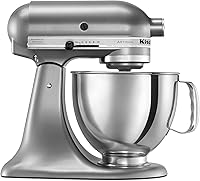
The KitchenAid Artisan KSM150PS suits home bakers who want one mixer for bread, cakes, and other mixing jobs. Its tilt-head design gives access to the bowl, and it includes a pouring shield.
Choose it when bread is part of a varied baking routine and your recipes fit its manual's limits. Skip it if your main goal is frequent, large batches of stiff dough without dividing recipes.
Its 10 speeds cover different mixing tasks, rather than 10 kneading choices. Also allow room to raise the head where you plan to use it.
NutriMill Artiste for planned dough batches
The NutriMill Artiste suits bakers who want a bottom-drive mixer with a stated dough capacity. NutriMill gives an 8 lb dough limit, and the machine includes an extended dough hook and an easy-access lid.
NutriMill says the suction-cup feet help prevent movement during kneading. Keep the counter clean and dry, and stay nearby even when the feet hold firmly.
Choose it if your regular recipes fit its capacity and you prefer this bowl layout. Skip it if you need more dough in one batch or can't spare its roughly 16-inch-wide footprint.
Compare these choices with other stand mixers for bread dough. Our complete stand mixer guide also covers uses beyond bread.
What mistakes make stand mixer bread dough harder to handle?
The most common mistakes are adding flour too soon, increasing speed, and chasing a fixed kneading time. Each can turn a workable recipe into dry dough or put needless strain on the machine.
Sticky dough doesn't always need more flour. Pause as the recipe allows so flour can absorb liquid, then judge the dough against its intended texture.
Don't expect every dough to wipe the bowl completely clean. Wet dough can cling to the bowl, while enriched dough may change as butter becomes fully mixed in.
Higher speed isn't a shortcut for dense dough. Use the manual's setting, and reduce the batch if the machine struggles.
A timer is a reminder to check, rather than a target you must reach. Dough that's smooth and elastic may be ready sooner, while another batch may need a rest before further kneading.
For recipes that use a windowpane check, stop the mixer and gently stretch a small piece. Whole-grain particles can interrupt that thin sheet, so use the recipe's other cues too.
When should you stop the mixer and finish by hand?
Stop immediately if the mixer moves, strains, makes an unusual sound, or becomes unusually hot. Dough climbing toward the attachment shaft also needs attention before you continue.
Turn off and unplug the machine before handling the dough. Follow the manual's cooling and troubleshooting guidance rather than restarting repeatedly.
A smaller batch may solve an overload problem. If the recipe permits, finish by hand so you can control the pressure and feel the dough develop.
For very wet dough, the recipe may call for folds instead of more kneading. For unusually stiff dough, check your measurements before assuming extra mixing will fix it.
Should you buy a separate dough hook?
Buy a replacement only if you need one and its fit matches your exact mixer. A different hook doesn't increase the machine's dough limit or make an oversized batch suitable.
The Mttobo Stainless Dough Hook is a coating-free, one-piece 304 stainless steel replacement. It fits compatible KitchenAid 4.5- to 5-quart tilt-head models and is dishwasher safe.
Choose it if you need a replacement or prefer an uncoated hook. Skip it for bowl-lift machines, mixers over 5 quarts, or any model outside its compatibility guidance.
Keep an approved original hook if it's sound and meets your needs. Read which KitchenAid attachments fit different mixers before choosing a replacement.
How should you clean up after kneading bread dough?
Remove dough before it dries and follow each part's care instructions. Unplug the mixer, detach removable parts, and wipe the base with a damp cloth without immersing it.
Use cool or lukewarm water to loosen flour and dough residue before washing. Check around the hook connection and bowl fittings, where small pieces can collect.
The Bosch bowl is dishwasher safe, but that doesn't make every part of the assembly suitable for the same treatment. Follow its instructions for removing and cleaning the drive shaft.
For KitchenAid parts, use our guide to which mixer attachments can go in the dishwasher. Dry parts fully before putting them away.
Can you use a stand mixer for bread dough at home?
Yes, use a stand mixer for bread dough when its limits match your recipes. Choose around the batches you make most often, with room for the other baking jobs you value.
Pick the Bosch for its bottom-drive layout and included extender, after confirming electrical compatibility. Consider the Artiste for batches within its stated limit, or the Artisan for a varied home-baking routine.
If your current mixer already handles your recipe, start with its approved hook rather than buying another machine. Next, follow how to knead dough with a stand mixer for the mixing process.
Frequently asked questions
Can you use a stand mixer for bread dough?
Yes, you can use a stand mixer for bread dough with a compatible dough hook and a batch within the machine's dough limits. Follow the manual for speed and operating time, watch the dough's texture, and stop if the machine moves, strains, or becomes unusually hot.
What stand mixer attachment do you use for bread dough?
Use a compatible dough hook to knead yeast bread dough, following your mixer's instructions for attachment fit and speed. Some recipes use a flat beater to combine ingredients first, but switch when directed and don't assume a hook for another bowl size or mixer style will fit.
What speed should you use to knead dough in a stand mixer?
Use the dough-kneading speed in your mixer manual, even if the machine offers much faster settings for other jobs. If a recipe calls for a speed your manual doesn't allow, choose a method that fits the machine's limits rather than increasing speed to shorten the kneading time.
How do you know when stand mixer bread dough is kneaded?
Judge kneading by the recipe's texture cues, such as dough becoming smoother, more elastic, and able to stretch without tearing quickly. A windowpane check can help with suitable recipes, but whole-grain dough may tear sooner, and wet dough can remain sticky even after enough gluten has developed.