Why Are KitchenAid Mixers So Expensive?
Why are KitchenAid mixers so expensive? Metal construction and optional powered attachments are reasons to consider the premium, but similar features exist elsewhere.
On this page (8 sections)
- Why are KitchenAid mixers so expensive?
- What do you get with the KitchenAid Classic and Artisan?
- Does the attachment hub make the price worthwhile?
- Are KitchenAid mixers better built than alternatives?
- How much mixer do your recipes actually need?
- Will it fit your counter and your routine?
- How do you use and care for a stand mixer well?
- When is the KitchenAid premium worth paying?
KitchenAid mixers are expensive, and metal construction plus optional powered attachments are the clearest features to weigh against that premium. Those features don't explain the full price or make KitchenAid the right choice for every baker.
To answer why KitchenAid mixers are so expensive in a useful way, separate what the mixer does today from extras you might buy later. Pay for a bowl, tools, and setup that fit your recipes, rather than a kitchen project you haven't started.
Why are KitchenAid mixers so expensive?
The KitchenAid package combines a metal body, everyday mixing functions, and a hub for optional tools. These give you reasons to consider the expense, but they aren't exclusive to KitchenAid.
The Classic has metal construction, while the Artisan uses zinc. Both offer 10 speeds, a tilt-head design, and a power hub that can run compatible attachments sold separately.
The speed range helps you move between gentle stirring and faster whipping. It doesn't mean every recipe should run at high speed, and a greater number of settings alone doesn't prove better mixing.
The hub adds another use for the appliance beyond the bowl. Its value depends on whether you'll make pasta, grind food, or use another compatible tool often enough to justify buying and storing it.
Why expensive KitchenAid mixers aren't always the better buy
A premium makes sense only when the features earn their place in your routine. A mixer used every week has more chances to save effort than one brought out for a holiday cake.
Don't assume the price proves a longer service life or stronger dough performance. Construction materials, bowl capacity, motor wattage, and speed counts each describe only part of a mixer.
For a broader starting point, our complete guide to stand mixers for home bakers explains how the main designs fit different kitchen tasks.
What do you get with the KitchenAid Classic and Artisan?
Choose the Classic for standard recipes and a clearly defined tool set; choose the Artisan when its extra bowl room and pouring shield matter. Neither choice needs a future collection of attachments to be useful.
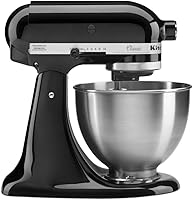
The KitchenAid Classic K45SS has a 4.5-quart stainless steel bowl and includes a coated flat beater, coated dough hook, and 6-wire whip. That covers the main tool types for batter, dough, and whipped mixtures.
The Classic suits a baker who wants those core jobs covered without choosing a larger bowl by default. Skip it if your usual recipes already strain that capacity or you need more bowl room for adding ingredients.
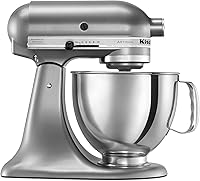
The KitchenAid Artisan KSM150PS has a 5-quart bowl and includes a pouring shield. The shield is useful when adding ingredients, though starting slowly still matters when flour or powdered sugar could escape.
Choose the Artisan if the slightly larger bowl fits the batches you actually make. Skip the upgrade if your recipes fit comfortably in the Classic and the shield isn't a feature you'd use.
For a closer model comparison, see KitchenAid Classic vs Artisan. If you're considering other KitchenAid designs, our best KitchenAid stand mixers guide lays out the options.
Does the attachment hub make the price worthwhile?
The hub is worth paying attention to when you have a specific attachment job in mind. “I make fresh pasta twice a month” is a stronger buying reason than “I might try every attachment.”
Write down the task, the compatible tool it needs, and where you'll store that tool. Include cleaning time, since an attachment you avoid washing may see little use.
Check compatibility for the exact mixer and attachment before buying. Bowl tools and hub-powered accessories are different categories, so don't assume every KitchenAid accessory fits every model.
If you already have a food grinder or pasta machine you like, another version may add little. A hub can share the mixer's motor across tasks, but the separate parts still take cabinet space.
Start with the mixer and add tools after a recurring need appears. This keeps a useful feature from becoming a reason to spend on accessories without a clear purpose.
Are KitchenAid mixers better built than alternatives?
KitchenAid isn't the only choice with metal construction or optional attachments. Compare complete packages instead of treating the brand name as proof of better value.
The Cuisinart 5.5-Qt Stand Mixer has die-cast metal construction, a stainless steel bowl, 12 speeds, and an outlet for optional attachments. It includes a chef's whisk, dough hook, flat mixing paddle, and splash guard with a pour spout.
Choose the Cuisinart if you want a larger bowl with the main mixing tools included and are open to another attachment system. Cuisinart provides a 3-year limited warranty, so read its coverage terms as part of the comparison.
Skip it if you need compatibility with a particular KitchenAid accessory. Its own outlet doesn't make the two brands' powered tools interchangeable.
The Vivohome 6-Qt Tilt-Head uses ABS, steel, and aluminum. It includes a beater, dough hook, wire whip, and egg separator, giving buyers another package to compare.
Choose the Vivohome if you need more bowl room and mainly want the included mixing tools. Skip it if your main goal is the KitchenAid hub system, or if your usual batches are small enough that bowl reach becomes the bigger concern.
For more choices, see our guide to stand mixer alternatives to KitchenAid. Compare warranty coverage and access to replacement parts alongside the accessories.
How much mixer do your recipes actually need?
Choose around your usual batch, then check the limits for your heaviest recipe. Bowl volume alone doesn't tell you how much stiff bread dough a mixer should handle.
Cookie dough, cake batter, and bread dough place different demands on the machine. Follow the model's instructions for ingredient amounts, speeds, and kneading time rather than filling the bowl to its rim.
Leave space for ingredients to move and for additions during mixing. A bowl that holds the ingredients while stationary may still be too full once the beater turns.
At the other extreme, a large bowl can be awkward for a tiny quantity if the tool doesn't reach enough of the mixture. Bigger is useful when you need room, rather than a goal by itself.
Before buying, list 3 recipes you make often and their normal batch sizes. Compare those needs with the mixer's instructions instead of choosing by advertised cookie counts.
Will it fit your counter and your routine?
A mixer needs room to work, not just room to sit. Check the footprint, clearance for the raised head, and access for removing the bowl.
Both KitchenAid models measure 14.1 inches deep, 8.7 inches wide, and 13.9 inches high. That height doesn't account for the space you need when tilting the head back.
Weight also affects convenience: the Classic weighs 22 pounds, while the Vivohome weighs 11 pounds. If you must lift a mixer from a low cabinet each time, include that step in your decision.
Choose a level, dry work surface with room around the appliance. Keep the cord away from the bowl and hot surfaces, and avoid placing the mixer near a counter edge.
If storage or setup would stop you using it, read whether a stand mixer is worth it for home baking before choosing a brand.
How do you use and care for a stand mixer well?
Secure the bowl and tool, start slowly, and clean each part according to its own care instructions. Good habits help you use the mixer effectively without buying more accessories.
Unplug it before fitting or removing tools. Seat the bowl fully and lock a tilt-head mixer as directed before starting.
Use the flat beater for most batters and cookie dough, the whisk for mixtures that need air, and the dough hook for kneading. Follow the recipe and mixer manual when they call for a specific tool.
Begin at the lowest suitable speed when adding dry ingredients. Stop the motor before scraping the bowl, and keep spatulas and fingers clear of moving tools.
Don't use high speed to force stiff dough along. If the machine struggles or moves, stop and check the recipe quantity and operating instructions.
Check washing guidance separately for the bowl, coated tools, and whisk. The Classic's stainless steel bowl is dishwasher safe, but that doesn't establish the same care rule for every attachment.
Wipe the unplugged mixer body clean without immersing it. Our step-by-step guide to using a KitchenAid mixer covers the setup sequence in more detail.
When is the KitchenAid premium worth paying?
Choose the Classic for core mixing jobs, the Artisan for extra bowl room, or an alternative when its package fits better. Make that choice from your regular recipes, available space, and accessory plans.
The Cuisinart deserves a close comparison if you want metal construction and included mixing tools in a larger bowl. The Vivohome belongs on your shortlist when bowl capacity and its included accessories meet your needs.
Why are KitchenAid mixers so expensive? The more useful final question is which part of the premium you'll use each week.
If you can name that benefit, use our KitchenAid Classic vs Artisan comparison to settle the model choice. If you can't, compare simpler options before paying more.
Frequently asked questions
Why are KitchenAid mixers so expensive?
KitchenAid's metal construction and optional powered attachments give you concrete features to weigh against its premium positioning. They don't explain the brand's full pricing, and alternatives offer similar features, so judge the expense by your recipes, available space, and plans for extra tools.
Is a KitchenAid mixer worth the extra cost?
A KitchenAid mixer can be worth the extra cost for frequent bakers who want its bowl format and have specific uses for compatible attachments. For occasional cakes or small batches, compare the included tools and storage demands with another stand mixer or a hand mixer before committing.
Should I choose the KitchenAid Classic or Artisan?
Choose the Classic for its 4.5-quart bowl and included beater, dough hook, and whip; choose the Artisan if its 5-quart bowl and pouring shield better fit your routine. Both have a tilt-head design and 10 speeds, so the smaller bowl isn't a reason by itself to reject the Classic.
Are KitchenAid mixer attachments included?
The Classic K45SS includes a coated flat beater, coated dough hook, and 6-wire whip, while the Artisan KSM150PS includes a pouring shield. Hub-powered tools such as pasta makers and food grinders are sold separately for both models, so include those extras and their storage needs in your buying plan.